Mauritius vs Maldives comes down to what you want from the trip. The Maldives is the better choice when you want a private villa over the lagoon, a house reef a few steps from your deck and a holiday that never leaves the resort island. Mauritius is the better choice when you want luxury beaches plus mountains, markets, golf and road trips, at roughly half the price for a week. For a five-night honeymoon built around privacy, I’d choose the Maldives. For families, active couples and anyone staying seven nights or more, Mauritius is usually the more complete trip.
The two are often shortlisted together because both are warm Indian Ocean islands with excellent resorts, but they work in opposite ways. The Maldives is an archipelago of tiny coral islands where most luxury resorts occupy an island of their own, so the hotel you book becomes the whole holiday. Mauritius is one large, inhabited volcanic island where the resort is a base, and a driver can have you at a waterfall, a tea estate or a Port Louis food stall within an hour. Below, they are compared side by side, with resort picks for each.
Mauritius vs Maldives at a glance
| Factor | Maldives | Mauritius |
|---|---|---|
| Beaches and water | Powder-white coral sand, glassy lagoons, house reefs | Reef-protected lagoons, longer beaches, mountain backdrops |
| Resort style | One resort per island; the island is the holiday | Large coastal resorts with easy access to the rest of the island |
| Overwater villas | Hundreds to choose from | Very few; pool villas and suites on stilts instead |
| Activities beyond the beach | Limited to the sea: diving, sandbanks, dolphin cruises | Hiking, gorges, waterfalls, golf, rum estates, markets |
| Food | Resort restaurants only; meal plans make sense | Resort dining plus Creole, Indian, Chinese and French local food |
| Transfer from airport | Speedboat, seaplane or domestic flight | Road transfer of around 45 to 90 minutes |
| Best months | December to April | May to December (west and north), September to November overall |
| 7 nights for two (excl. flights) | US$16,000–US$20,000 comfortable; US$10,000–US$15,000 smart luxury; US$30,000–US$60,000+ ultra | US$5,000–US$10,000 |
| Best for | Honeymoons, divers, total seclusion | Families, longer stays, couples who want variety |
Prices are indicative and were last updated in October 2026. Rates change with season, exchange rates and availability, so check live prices before booking.
If one of you wants to lie on a deck all week and the other gets restless after two days, take that seriously. The defining luxury of the Maldives, a whole island to yourselves and little else, is also its main limitation. Mauritius gives you the same lagoon colours for part of each day and a real country to explore for the rest.
Beaches and scenery
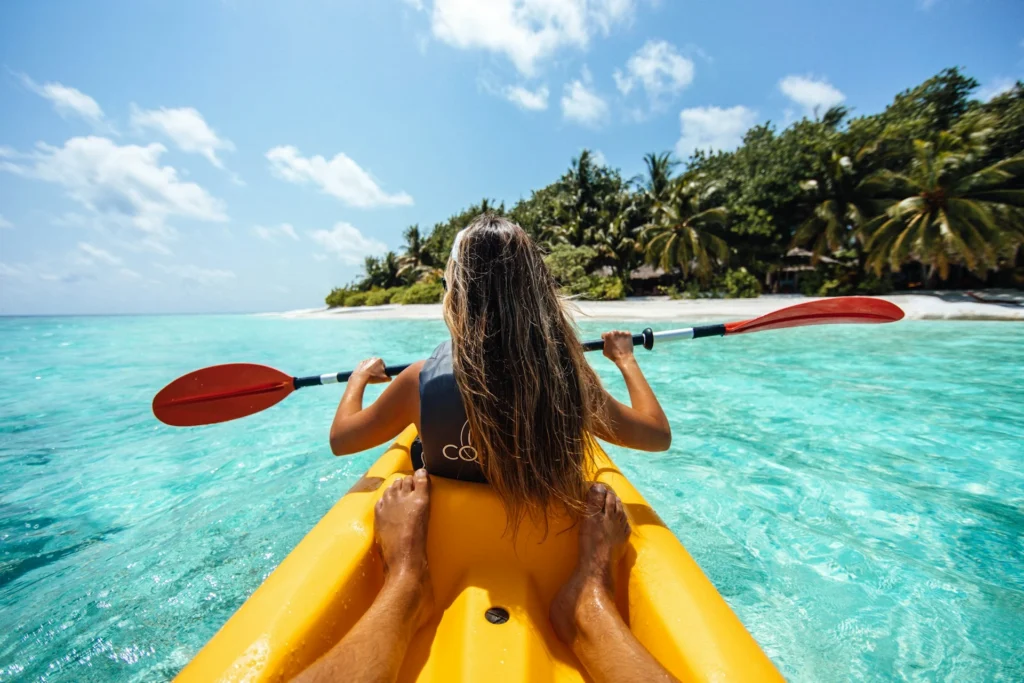
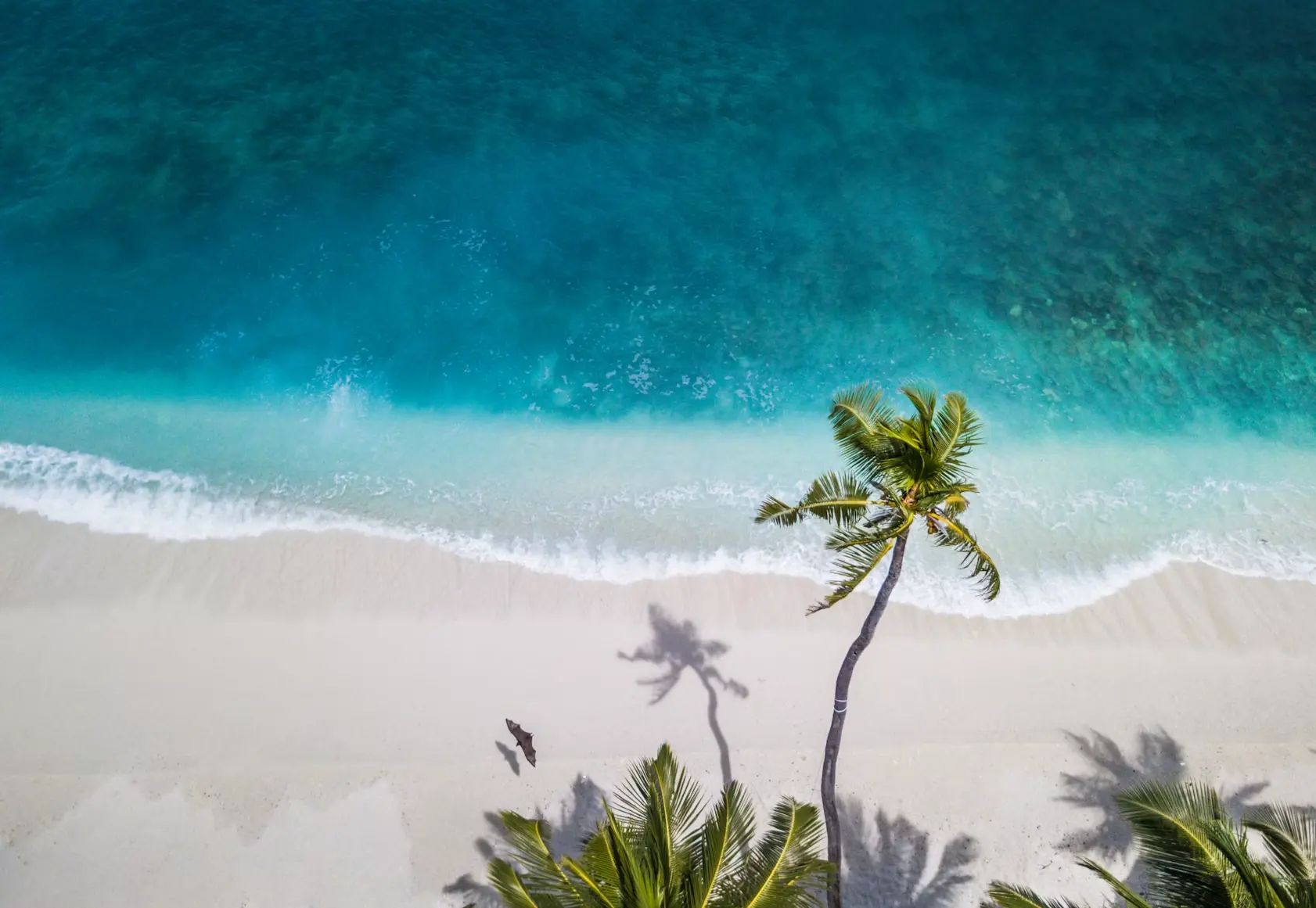
The Maldives wins on pure beach and water quality. Its islands are coral sand rising barely a metre above sea level, ringed by lagoons that shift from white to turquoise to deep blue at the reef edge. There are no mountains, no rivers and no roads on a resort island, so every view is sand, palms and water. Conditions still vary: some islands lose sand to seasonal currents, some lagoons are too shallow for comfortable swimming at low tide, and a resort’s house reef can be superb or barely there. Check the specific island before you book.
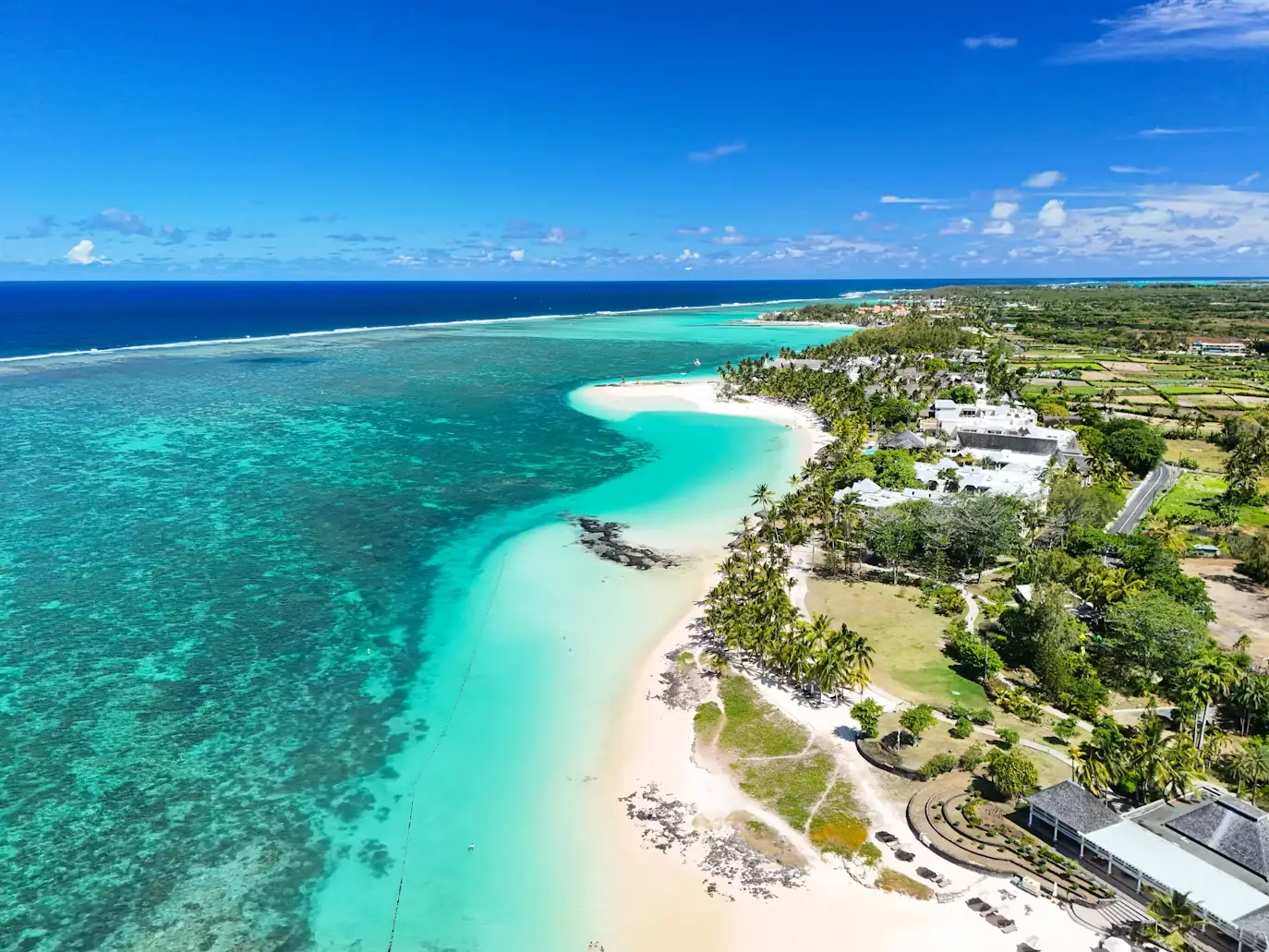
Mauritius has more varied scenery. An offshore reef encircles most of the island, creating calm lagoons that suit swimming and paddleboarding, and each coast has its own character. Where a Maldivian atoll looks much the same from one island to the next, Mauritius changes by coast: the east, around Belle Mare, has the long pale beaches and the big-name resorts, while the west, from Flic en Flac down to Le Morne, gets winter shelter and evening sun, with the basalt mass of Le Morne Brabant rising behind the lagoon. The north around Grand Baie is livelier, with restaurants and boat trips to the northern islets. Our east coast vs west coast Mauritius guide explains how to pick a side.
Resort style, villas and privacy
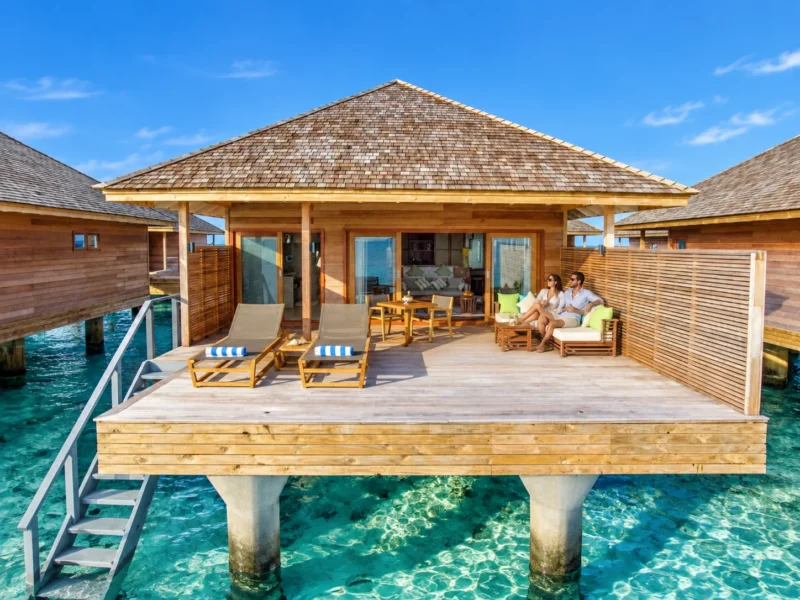
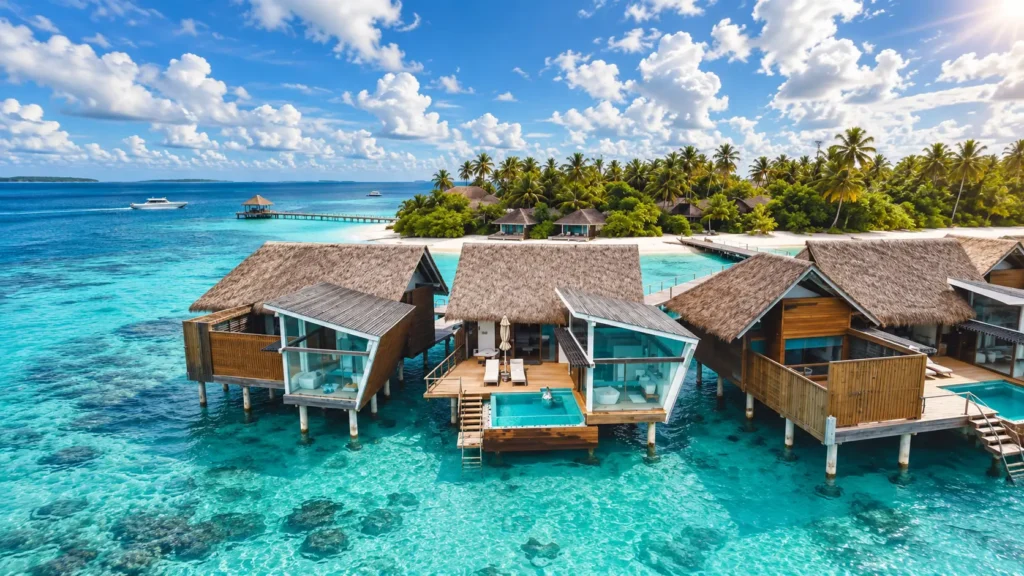
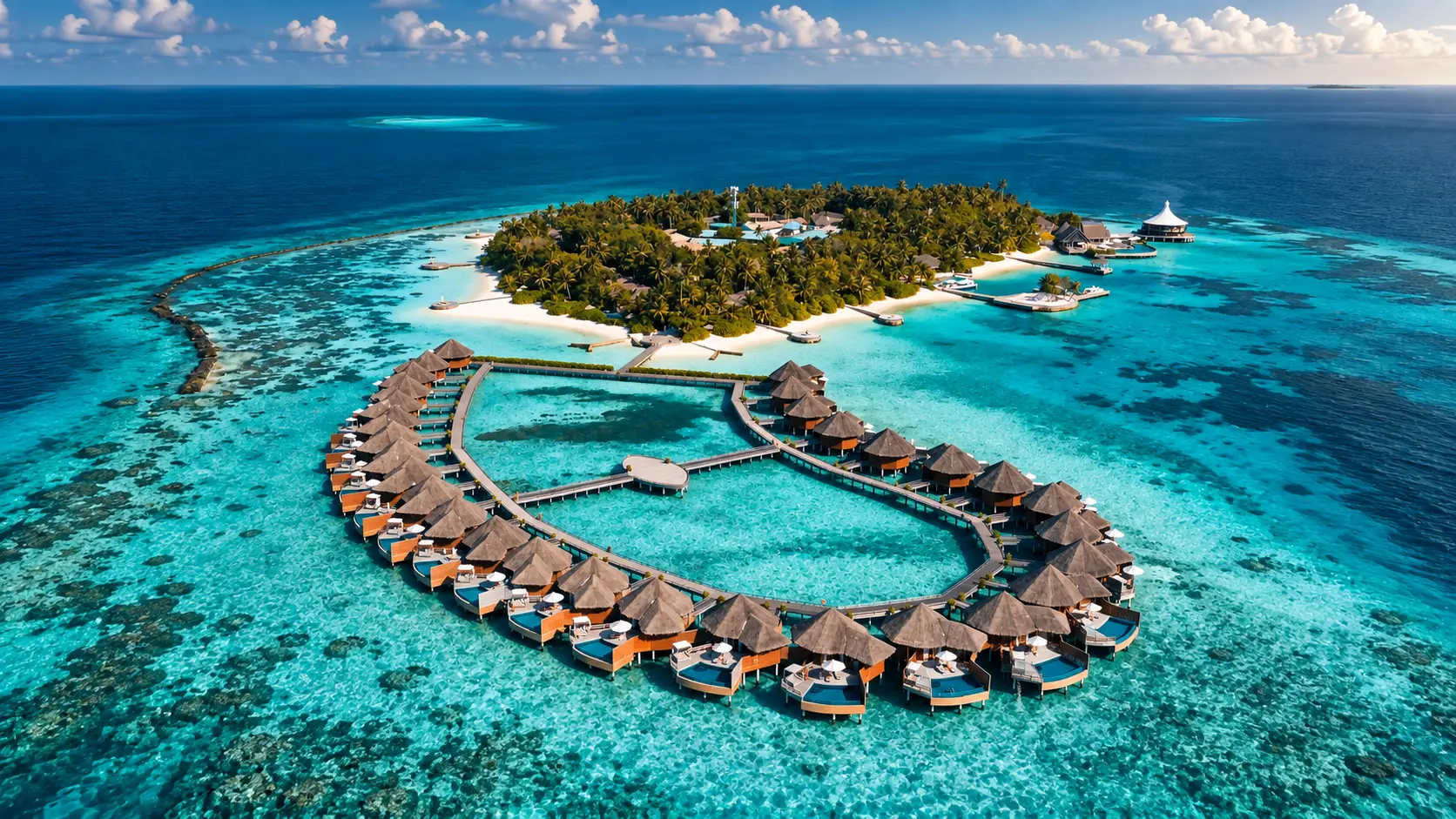
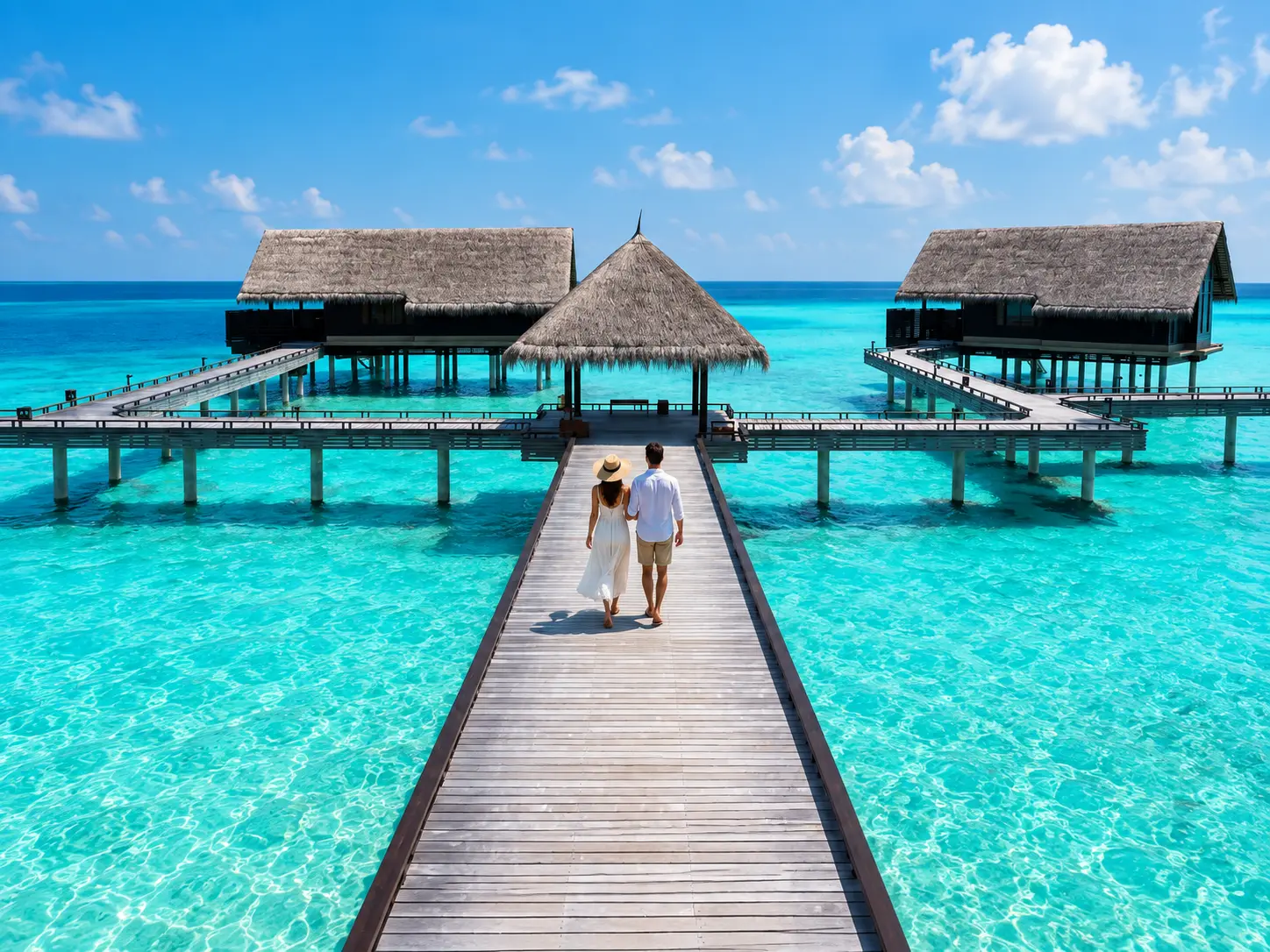
Maldivian resorts are self-contained islands. Choosing the resort means choosing the beach, reef, restaurants, spa and transfer for the entire stay, and leaving is an excursion by boat. Privacy can be exceptional: many villas have their own pool and direct steps into the lagoon, and on the best-designed islands you rarely see another guest outside the restaurants. The Maldives is also the world’s deepest market for overwater villas, from compact water bungalows to multi-storey retreats with slides.
Mauritian resorts are larger coastal properties, often on a private peninsula, with several restaurants, a big spa, kids’ clubs, water-sports centres and golf nearby. You get privacy from a pool villa or a large suite, where in the Maldives the island itself provides it. Overwater accommodation barely exists; the closest equivalent is the handful of suites on stilts above the lagoon at Constance Prince Maurice. If an overwater villa is non-negotiable, the decision is made. If you value space, service and the option to leave, Mauritius competes strongly.
Food and dining
Mauritius wins on food. Its cuisine mixes Indian, Creole, Chinese and French cooking: dholl puri and roti from street stalls, octopus curry, rougaille, boulettes in broth and fresh seafood. Resorts serve it well, and a driver can take you to Port Louis, Mahébourg or a family restaurant on the coast for a fraction of resort prices. Eating out is part of the destination, not only a way to save money.
Maldivian resorts can be very ambitious, with overwater restaurants, teppanyaki counters, wine cellars and visiting chefs, but you are tied to one property’s menus and prices. On a remote island a half-board or full-board plan usually saves money, because à la carte dinners with drinks add up quickly once the 10% service charge and 17% GST are applied.
Activities beyond the beach
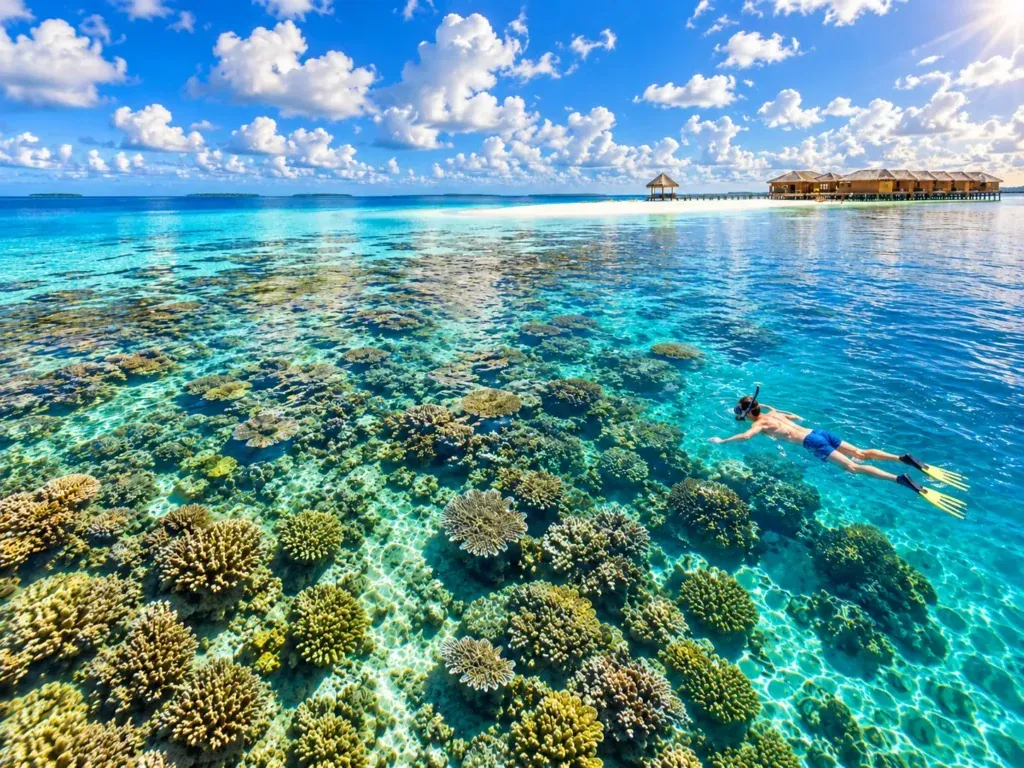
Maldives days revolve around the sea: snorkelling the house reef, diving with manta rays and reef sharks, sunset dolphin cruises, sandbank picnics, fishing and paddleboarding. Divers and snorkellers will find more marine life within reach than almost anywhere in the Indian Ocean. On land the options are the spa, the gym, a tennis court and perhaps a cooking class.
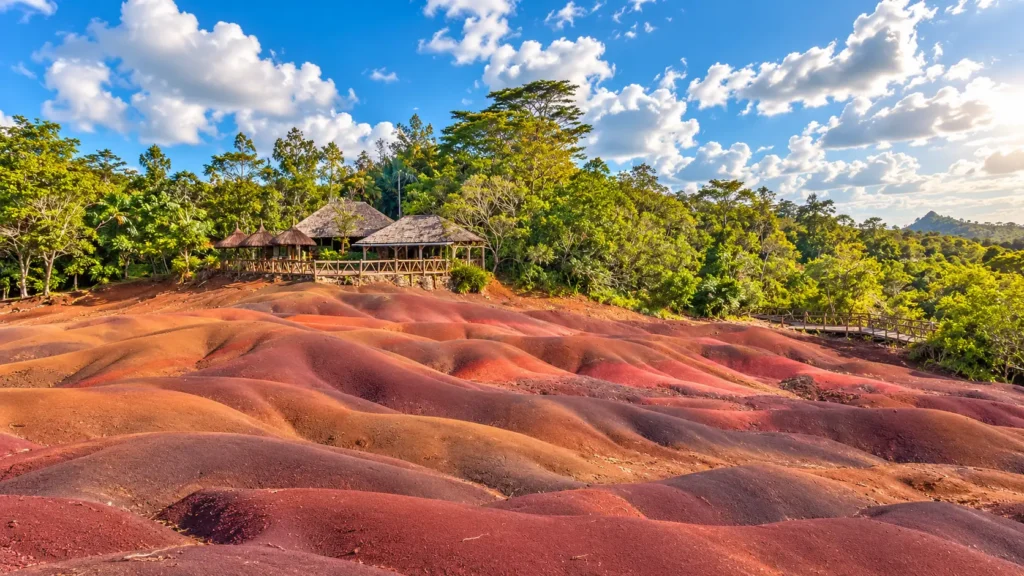
Mauritius offers most of the same water activities, plus kitesurfing in the Le Morne lagoon, deep-sea fishing and catamaran trips to Île aux Cerfs or the northern islets. Inland you can hike Le Morne Brabant or the Black River Gorges trails, see the Seven Coloured Earths at Chamarel, visit the Pamplemousses botanical garden, tour a rum distillery or tea estate and play several championship golf courses. For families and couples with mixed interests, that range is the strongest argument for Mauritius.
Weather by month
Both are warm all year, but their good seasons only partly overlap. The Maldives has a dry northeast monsoon from December to April and a wetter, windier southwest monsoon from May to November. Mauritius is in the southern hemisphere: summer runs from November to April with heat, humidity and the cyclone risk peaking from January to March, while winter from May to October is drier, cooler and windy on the east coast. Month-by-month detail is in the guides to the best time to visit the Maldives and the best time to visit Mauritius.
| Months | Maldives | Mauritius | Better pick |
|---|---|---|---|
| December to February | Dry season, calm seas, peak prices | Hot and humid, rain likely, cyclone season | Maldives |
| March and April | Dry, hottest, excellent visibility | Still humid, cyclone risk easing by April | Maldives |
| May and June | Monsoon arrives, showers and wind | Cooler, drier, good on the west and north coasts | Mauritius |
| July and August | Changeable, lower prices, manta season in some atolls | Winter, around 22–26°C, breezy in the east | Mauritius |
| September to November | Improving, good value shoulder months | Dry, warming, excellent all round | Mauritius, narrowly |
Flights and transfers from the Gulf and Europe
From the Gulf, the Maldives is closer. Dubai to Malé is roughly four hours on Emirates or flydubai, with similar times from Doha and Abu Dhabi, which makes a long weekend realistic. Mauritius is about six and a half hours from Dubai, with two Emirates departures a day. From London, British Airways and Virgin Atlantic reach Malé non-stop in around 10 hours 30 minutes; for Mauritius, the non-stops are British Airways and Air Mauritius out of Gatwick, taking around 12 hours. Elsewhere in Europe, most travellers connect through the Gulf or Istanbul to either destination, with Air France and Air Mauritius offering non-stops from Paris to Mauritius.
The bigger difference comes after landing. In Mauritius you clear immigration and drive: around an hour to Belle Mare, a little more to the northwest and up to about 75 minutes to Le Morne. In the Maldives the onward leg depends on the resort: 20 to 50 minutes by speedboat in the North and South Malé atolls, 30 to 60 minutes by seaplane further out, or a domestic flight plus speedboat to distant atolls. Because seaplanes only operate in daylight, your international flight normally has to touch down in Malé by about 3.30pm, and anything later may leave you sleeping near the airport. Pack for the seaplane, too: Trans Maldivian Airways takes 20kg in the hold and 5kg as hand luggage for each passenger, a limit that does not apply to a car transfer in Mauritius. Our speedboat vs seaplane guide covers the choice in detail.
What a week costs
Mauritius is far cheaper for the same level of comfort. A week for two in a five-star Mauritian resort, including half board, transfers and a couple of excursions, usually costs US$5,000–US$10,000 before international flights. The tourist fee introduced in October 2025, €3 a night for each guest aged 12 or over, is small change beside the Maldivian taxes below.
In the Maldives, a comfortable week for two usually runs to US$16,000–US$20,000, a carefully chosen smart-luxury week to US$10,000–US$15,000, and the top private-island resorts to US$30,000–US$60,000 or more. The room rate is only the start: add the 10% service charge, 17% GST, the US$12 per person per night Green Tax, return seaplane or speedboat transfers (often US$850–US$1,400 per person at outer-atoll resorts) and meals you cannot buy anywhere else. Our breakdown of what a luxury Maldives holiday costs shows where the money goes.
How long to stay
Five to seven nights suits one Maldivian resort. Fewer than four nights wastes too much of the trip on transfers, and beyond seven a split between two islands only helps if the second offers a clearly different reef or style. Mauritius rewards seven to ten nights: enough for several slow resort days plus two or three excursions. Ten nights supports a split between the east and west coasts, and our seven-day luxury Mauritius itinerary shows how to balance coast and interior.
Combining the two in one trip is possible but awkward, because there are few direct flights between Malé and Mauritius and most routings go via Dubai. Unless you have two weeks, choosing one and doing it properly makes a better holiday.
The best resorts in Mauritius
These three cover the island’s main coasts and styles. For a wider shortlist, see our guide to the best luxury resorts in Mauritius.
One&Only Le Saint Géran: best for classic full-service luxury
Le Saint Géran is the clearest example of what Mauritius does that a Maldivian island cannot: scale and variety on one site. It covers its own peninsula at Belle Mare, lagoon on one side and open beach on the other, and since its full redesign it offers 143 rooms and suites, 52 private homes and Villa One, a stand-alone villa with an infinity pool. You can eat at seven venues, among them PRIME for steaks and seafood, Tapasake for Asian-Japanese cooking and La Terrasse beside the water. Forbes gave Five-Star ratings to the resort and to its spa in 2025, and the KidsOnly club keeps it near the top for families.
- Best for: families and couples who want polished service and plenty of facilities
- Transfer: roughly an hour’s drive, or a helicopter if you prefer
- Rates: a Lagoon or Ocean Room from around US$900 a night in low season (June to September) and around US$1,250 in high season, with breakfast, before 15% VAT
- Don’t miss: a sunset dinner on the lagoon side of the peninsula
Good to know: the east coast is breezier from June to September; the wind keeps it fresh but makes the ocean side choppier, so ask for a lagoon-facing room in winter.
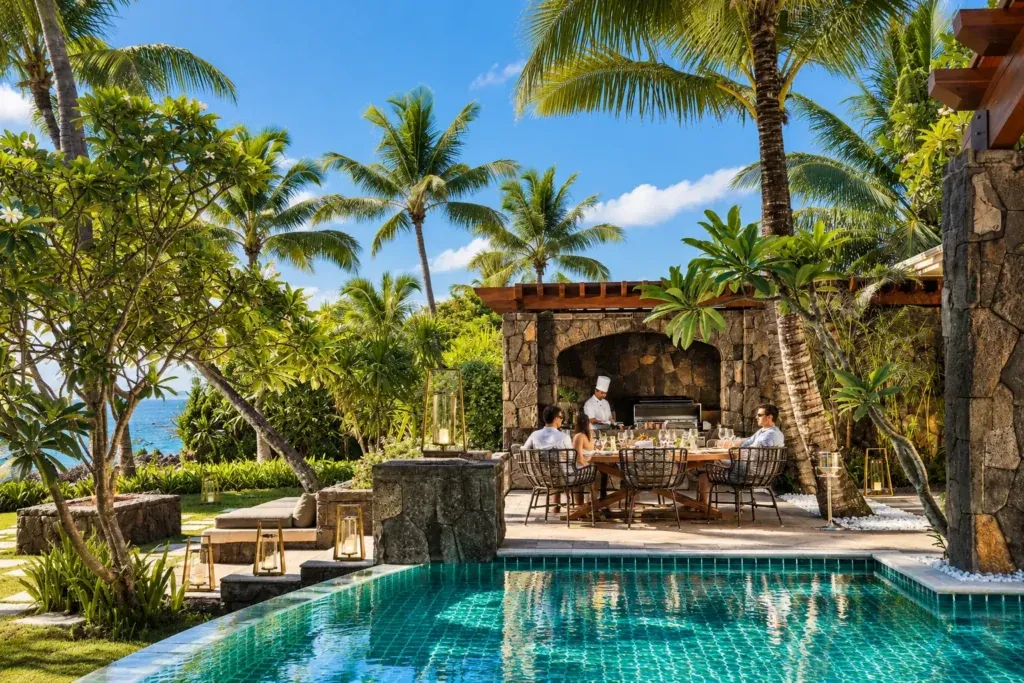
LUX* Le Morne: best for scenery and sunsets
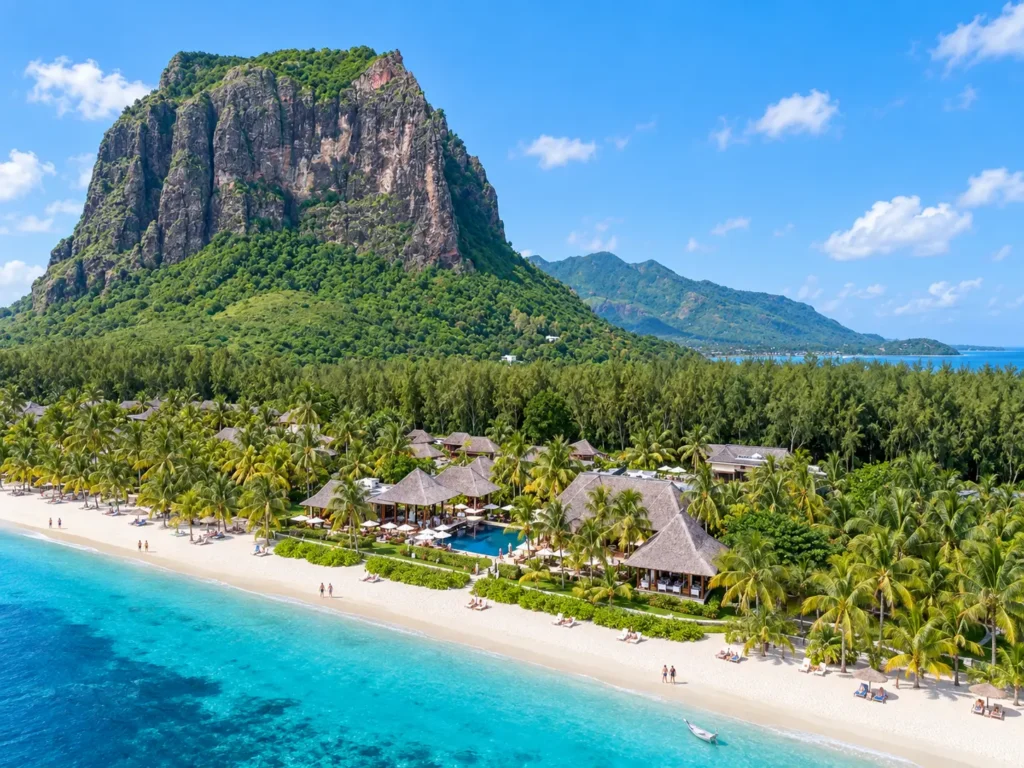
LUX* Le Morne sits on the southwest peninsula directly beneath Le Morne Brabant, with a long beach facing west over one of the island’s clearest lagoons. The mood is relaxed and design-led, with junior suites close to the sand, a smaller number of villas with private pools, five restaurants including the Asian-inspired East, and several bars. This is where Mauritius pulls ahead of the Maldives on things to do: Chamarel, the Black River Gorges and the trail up Le Morne are all a short drive away, and kitesurfers come from around the world for the lagoon. Note that the resort closes for a full renovation from 1 May to 31 October 2027, so for those months look at the other west-coast options.
- Best for: couples who want dramatic views, sunsets and easy excursions
- Transfer: a drive of around 60 to 75 minutes
- Rates: a sea-facing Deluxe Room from around US$380 a night in low season (June to August) and around US$700 in high season, with breakfast; some sites add 15% VAT at checkout, so compare final totals
- Don’t miss: an early-morning hike up Le Morne Brabant before the heat
The Oberoi Beach Resort, Mauritius: best for villa privacy
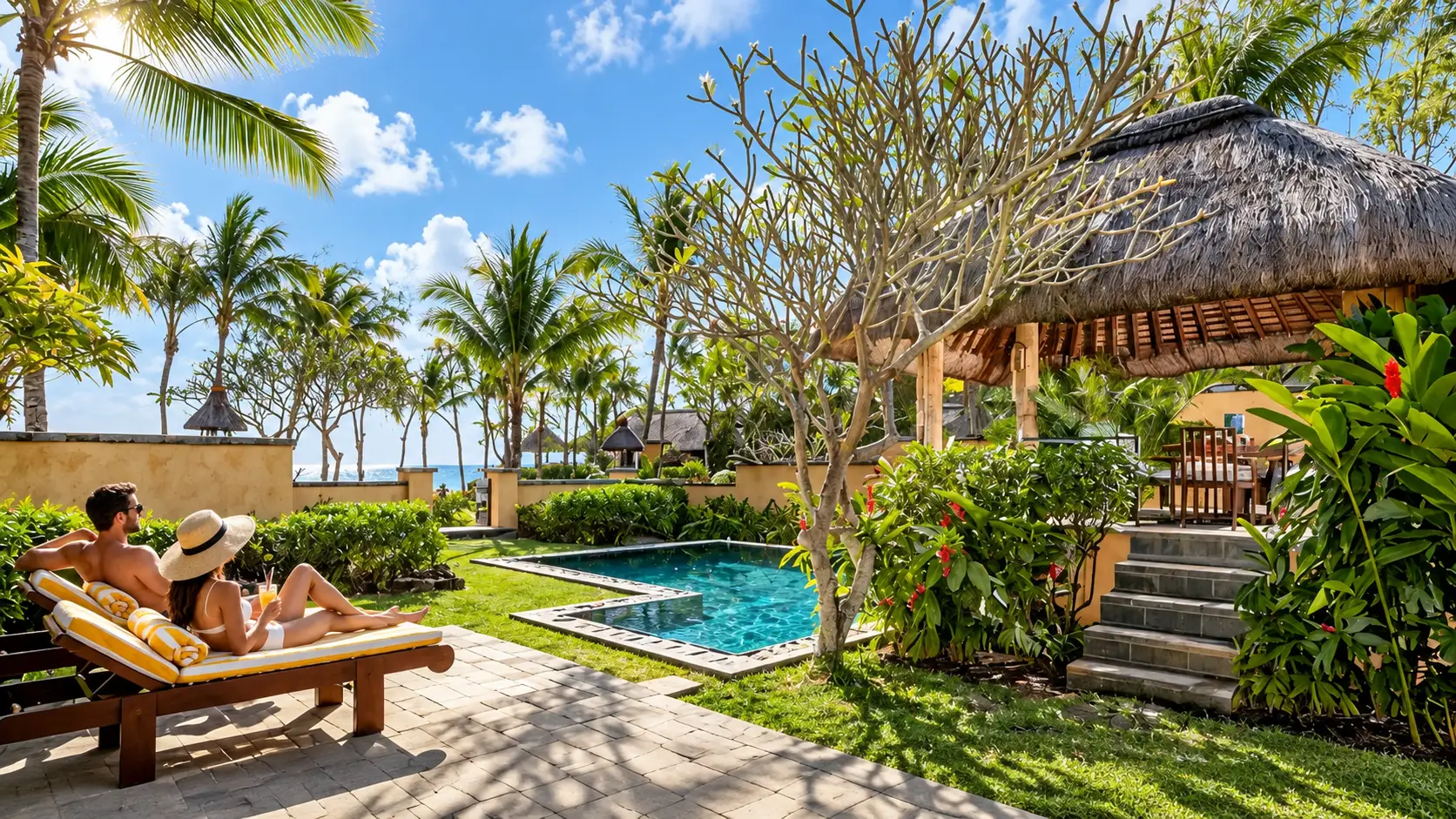
The Oberoi is the closest Mauritius gets to the hushed, villa-led feel of a Maldivian resort. It spreads across 20 acres of gardens on Turtle Bay at Pointe aux Piments in the northwest, with 71 thatched pavilions and villas, many with walled gardens and private pools. The low-rise layout keeps it quiet, the bay sits beside a protected marine park for snorkelling, and the west-facing beach gets the sunset. Service is attentive in the Oberoi tradition and the atmosphere suits couples more than young families.
- Best for: couples who want a private-pool villa and a calm atmosphere
- Transfer: around an hour by road from the airport
- Rates: a Luxury Pavilion from around US$550 a night in low season (June to September) and around US$750 in high season, with breakfast, taxes and service included; festive dates reach about US$1,150, and pool villas start at around US$1,300
- Don’t miss: snorkelling in the Turtle Bay marine park off the resort beach
The best resorts in the Maldives
These three cover three price points and transfer types. Our full guide to the best luxury resorts in the Maldives has more options by atoll.
Soneva Jani: best for statement overwater villas
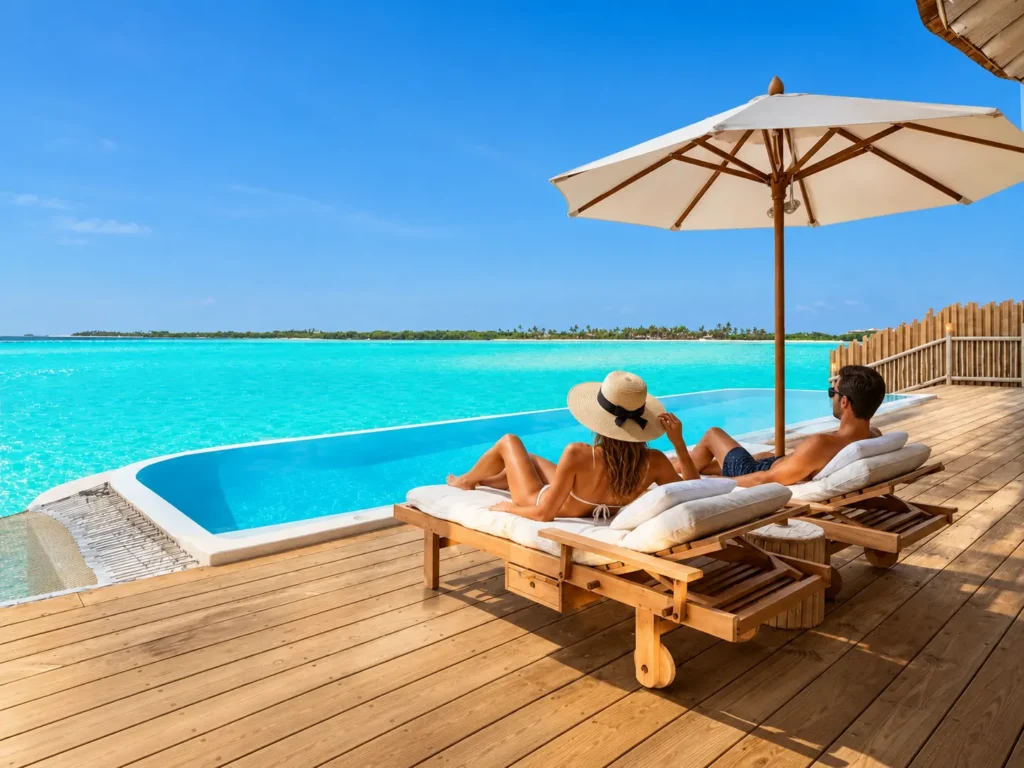
Soneva Jani sits on Medhufaru island in the Noonu Atoll, with a huge lagoon that its water villas use to full effect. Many of the overwater villas have a slide from the upper deck into the lagoon, a private pool and a retractable roof above the bed for stargazing. There is an overwater observatory with a resident astronomer, an open-air cinema and several restaurants, including the overwater Out of the Blue. It is one of the most imaginative resorts in the Indian Ocean, and its prices reflect that.
- Best for: honeymooners and celebrations with an ultra-luxury budget
- Transfer: around 40 to 45 minutes by seaplane from Malé
- Rates: a one-bedroom Water Retreat from around US$2,600 a night between May and October and around US$3,500 in high season, before taxes and charges
- Don’t miss: an evening session at the observatory
Good to know: the lagoon is vast and shallow, which is perfect for swimming from the villa but means the best snorkelling is by boat.
Baros Maldives: best for a short, easy-to-reach stay
Baros is a small, green island in the North Malé Atoll, about 25 minutes from the airport by speedboat. It has 75 beach and water villas, a house reef reachable from the shore and a quiet atmosphere helped by a minimum guest age of eight. Dining runs to three restaurants and two bars, led by The Lighthouse, an overwater restaurant focused on seafood. The quick transfer suits late arrivals and stays of four or five nights, when a seaplane leg would eat too much time.
- Best for: couples on a short trip and snorkellers who want a shore-access reef
- Transfer: around 25 minutes by speedboat from Malé, day or night
- Rates: Deluxe Beach Villas from around US$650 a night in the May to October low season and around US$900 in high season, before taxes and service
- Don’t miss: snorkelling the house reef at high tide
One&Only Reethi Rah: best for space and longer stays
Few Maldivian resorts have as much land as Reethi Rah, which has 12 beaches and 122 villas split between beach villas, water villas and residences, all generously sized. Its restaurant line-up covers Tapasake for Japanese, Rabarbaro for Italian, Botanica under a banyan tree and a Middle Eastern menu at Fanditha, which keeps a ten-night stay varied. A big spa, a kids’ club and plenty of land to walk or cycle make it the Maldivian resort that comes closest to the breadth of a Mauritius property.
- Best for: families and couples planning seven nights or more
- Transfer: around 45 to 50 minutes by speedboat from Malé
- Rates: Beach Villas from around US$1,950 a night in low season (mid-July to mid-December) and around US$2,700 in high season, before taxes and service
- Don’t miss: a bike ride around the island to find your own beach
Who should choose which
- Honeymooners on five to seven nights: the Maldives, for an overwater villa and total privacy. Our Mauritius honeymoon guide shows the alternative if you want exploration too.
- Families: Mauritius, for road access, bigger kids’ clubs and days out; Reethi Rah is the Maldivian exception.
- Divers and snorkellers: the Maldives, choosing a resort with a strong house reef.
- Golfers, hikers and food lovers: Mauritius, without much debate.
- Budget-conscious luxury: Mauritius, where US$5,000–US$10,000 buys a full week at a five-star resort.
- Short trips from the Gulf: the Maldives, four hours away with a speedboat resort like Baros.
Resort comparison and booking links
| Resort | Destination | Best for | Transfer | Booking |
|---|---|---|---|---|
| One&Only Le Saint Géran | Mauritius | Families, classic service | About 1 hour by road | Check rates |
| LUX* Le Morne | Mauritius | Scenery, sunsets, value | 75–90 minutes by road | Check rates |
| The Oberoi, Mauritius | Mauritius | Private-pool villas, quiet | About 1 hour by road | Check rates |
| Soneva Jani | Maldives | Statement overwater villas | 40–45 minutes by seaplane | Check rates |
| Baros Maldives | Maldives | Short stays, house reef | 25 minutes by speedboat | Check rates |
| One&Only Reethi Rah | Maldives | Space, families, long stays | 45–50 minutes by speedboat | Check rates |
The verdict
Choose the Maldives if luxury means seclusion: a villa over the water, a reef at the foot of the steps and nothing on the schedule. It is the better honeymoon for five to seven nights, the better choice for divers and the easier short break from the Gulf, but it costs two to three times as much for a week. Choose Mauritius if luxury means choice: beach in the morning, a gorge or market in the afternoon, and a different restaurant every evening. It is the better pick for families, for stays of a week or more, for European summer dates and for anyone who wants top-tier resorts at a far lower total cost.
If you are weighing Mauritius against other Indian Ocean islands, our Seychelles vs Mauritius comparison and Mauritius vs Zanzibar guide cover the other common pairings. Or browse the full sets of Mauritius guides and Maldives guides.
Some links on this page are affiliate links. If you book through them, Lagoon Edit may earn a commission at no extra cost to you. It never affects which resorts we recommend.