East or west coast Mauritius? Book the east coast if you want a big lagoon, sunrise breakfasts and a resort you never need to leave; book the west coast if you want sunsets, calmer winter weather and Le Morne on your doorstep. The east (Belle Mare, Poste de Flacq, Trou d’Eau Douce and Beau Champ) has the island’s longest white beaches and its grandest resorts. The west (Le Morne, Tamarin, Wolmar and Flic en Flac) sits in the lee of the central mountains, so it stays drier and less breezy when the south-east trade winds blow from June to September. For a first trip in the southern winter, I’d lean west. From October to May, both coasts work, and the hotel you choose decides the holiday.
East or west coast Mauritius: the quick answer
| Question | East coast | West coast |
|---|---|---|
| Main areas | Belle Mare, Poste de Flacq, Trou d’Eau Douce, Beau Champ | Le Morne, Tamarin, Wolmar, Flic en Flac |
| Light | Sunrise over the lagoon; the sun sets behind you | Sunset over the sea every clear evening |
| June to September | Breezy and fresher under the south-east trades; more passing showers | Sheltered, drier and warmer; the island’s winter beach coast |
| Beaches and lagoon | Long, wide white beaches; broad reef-protected lagoon | Le Morne’s lagoon is spectacular; beaches elsewhere are narrower and vary more |
| Signature day out | Île aux Cerfs by boat | Le Morne Brabant hike, Chamarel, Black River Gorges |
| Kitesurfing | Good winter wind, gentler spots for learners | Le Morne: the island’s kite capital and the One Eye wave |
| Airport transfer | Around 40–60 minutes | Around 60–80 minutes |
| Seven nights for two (excluding flights) | US$5,000–US$10,000 | US$5,000–US$10,000 |
Prices are indicative and were last updated in October 2026. Rates change with season, exchange rates and availability, so check live prices before booking.
The north and north-west (Grand Baie, Trou aux Biches and Turtle Bay) sit outside this two-coast comparison, but they share the west’s sheltered winter weather and evening light. If neither coast quite fits, the best luxury resorts in Mauritius guide covers the northern hotels too.
Wind, weather and seasons on each coast
Mauritius has two broad seasons. Summer runs from November to April: hot, humid and wetter, with the cyclone risk concentrated between January and March. Winter runs from May to October: cooler, drier and dominated by the south-east trade winds. The Mauritius Meteorological Services notes that these trades bring more winter rain to the central plateau, the east and the south than to the west.
In practice, that gives you a simple pattern. From June to September, the east coast takes the wind head-on, typically 15 to 30 knots on the windiest days. The sea gets choppier, sunbeds need a sheltered corner and the air is pleasantly fresh, around 24°C in the afternoon. The west, shielded by the Black River mountains, is a few degrees warmer, noticeably drier and often glassy in the morning.
The east comes into its own in the shoulder months. October, November, April and May bring lighter winds, warm water and long, clear mornings, and the big east-coast resorts look their best. In high summer, both coasts are hot and humid, and short tropical downpours can hit anywhere. My rule: for July and August, start with the west or north; for October to May, choose on the hotel. The best time to visit Mauritius guide breaks this down month by month.
Good to know: the trade winds are not a reason to avoid the east altogether. A sheltered east-coast pool and a south-facing terrace are perfectly comfortable on a breezy day, and the wind keeps the humidity down. What changes is the swimming: on blowy days, the lagoon is less inviting and boat trips can be cancelled.
Sunsets, sunrises and the shape of the day
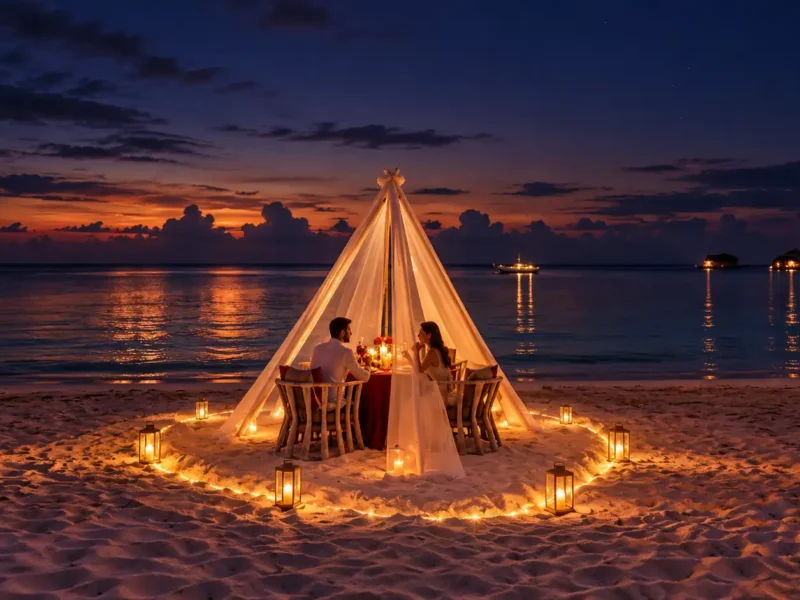
Light is the most obvious difference, and it shapes the rhythm of a holiday more than people expect. On the west coast, the sun drops into the Indian Ocean every clear evening, at around 5.45pm in June and closer to 7pm in January. Bars, beach dinners and boat trips are built around that moment.
On the east coast, the reward comes at the other end of the day. The sun rises over the reef, the lagoon is at its calmest and clearest in the early morning, and breakfast terraces face straight into the light. Evenings are softer: the sky turns pink behind the resort, not over the water. If an evening drink with the sun going down is part of how you picture the trip, the west wins without argument. If you are an early riser who swims before breakfast, the east suits you better.
Beaches and lagoons compared
The east has the classic Mauritius beach. Belle Mare and Palmar form one of the longest continuous stretches of white sand on the island, backed by casuarina trees and fronted by a wide, shallow lagoon protected by an offshore reef. Further south, Trou d’Eau Douce looks out to Île aux Cerfs and the Îlot Mangénie, whose sandbars and turquoise channels are reached by boat in around 10 to 15 minutes. If your idea of luxury is a long beach walk every morning, the east delivers more of it.
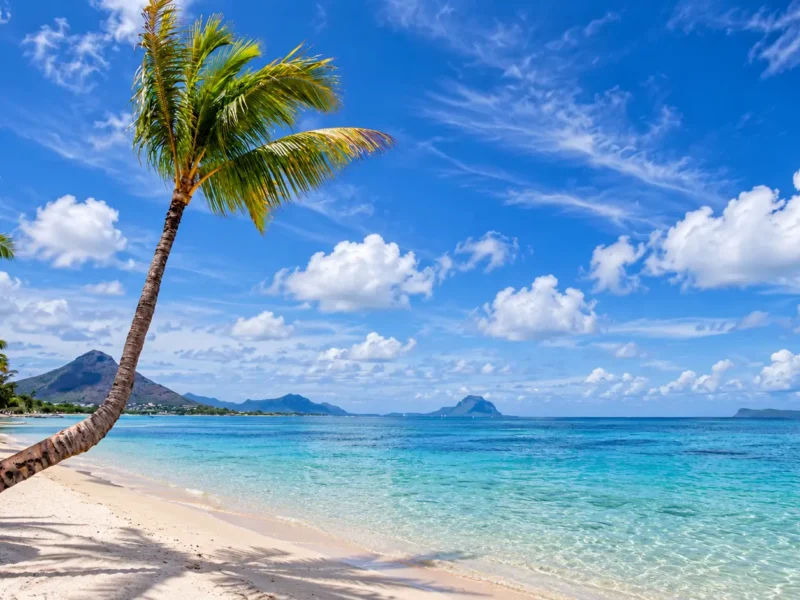
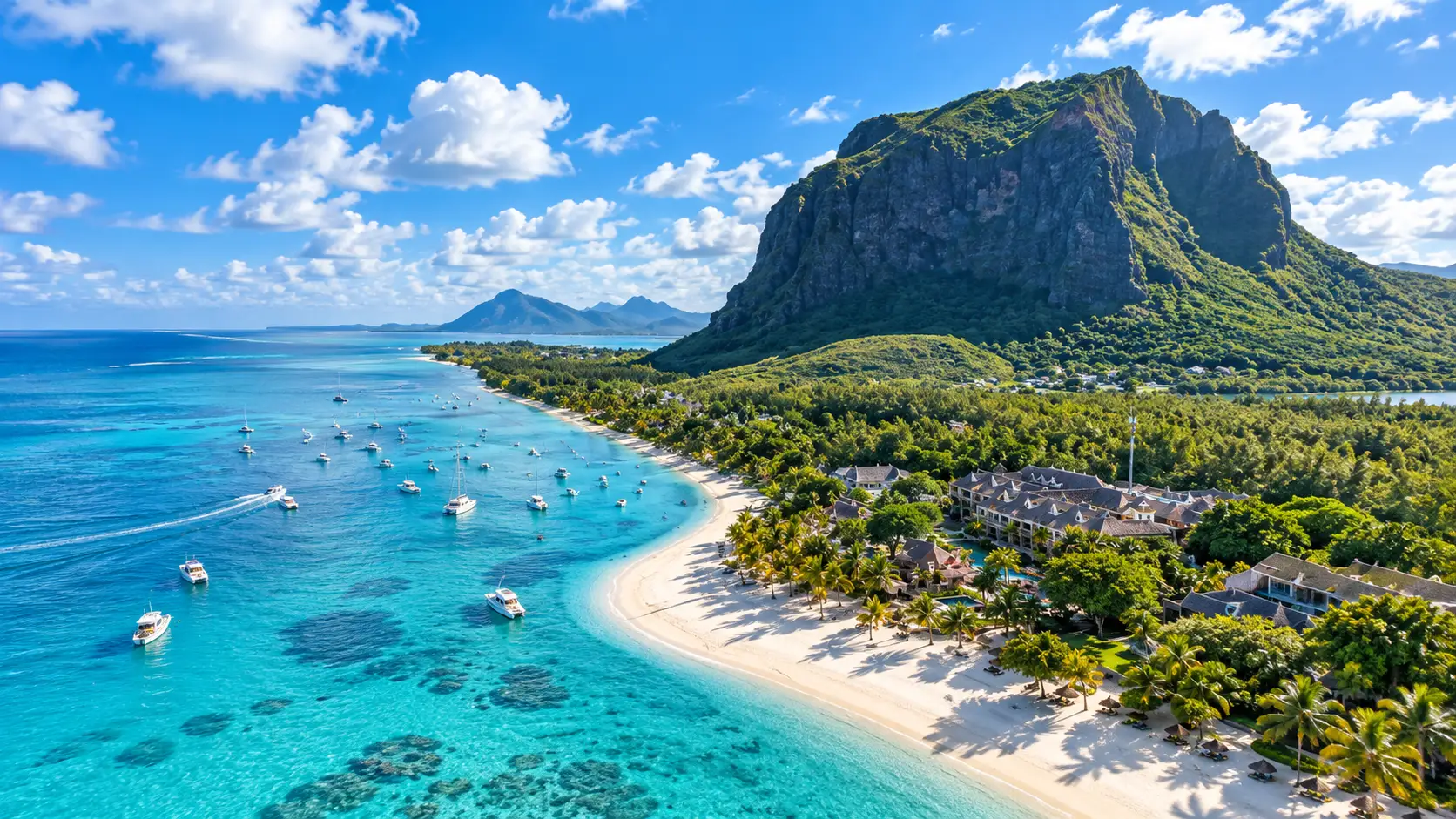
The west is more varied. Le Morne has a superb lagoon, white sand and the mountain rising directly behind, though parts of the shoreline double as kitesurfing zones in winter. Flic en Flac has a long public beach that gets busy at weekends, while Wolmar and Tamarin have narrower sand, more coral underfoot in places and a stronger sense of a lived-in coast with restaurants and villages. Snorkelling around the reef passes is good on both coasts. The Mauritius beaches guide compares the individual shorelines in detail.
Kitesurfing and water sports
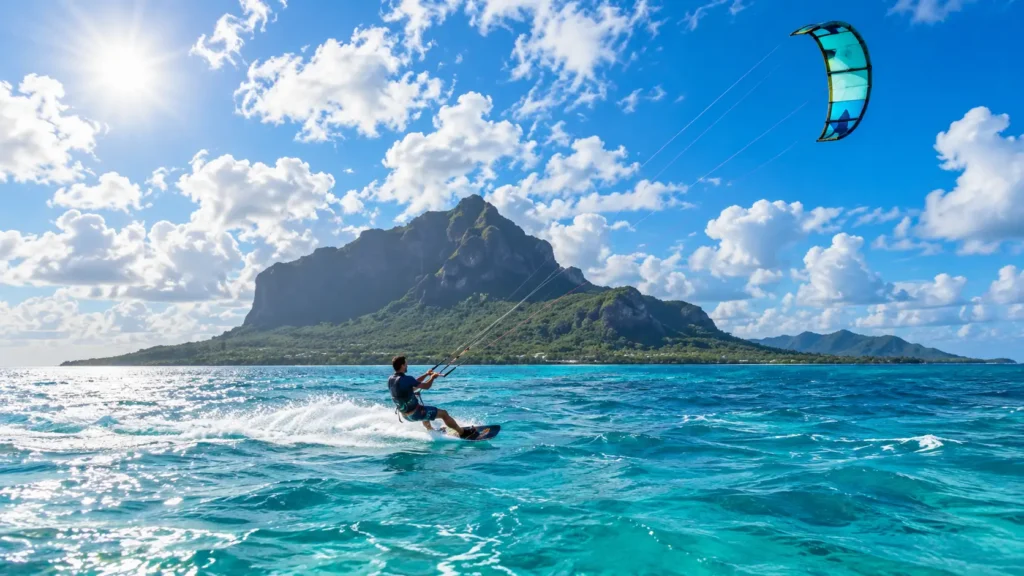
Le Morne is the kitesurfing capital of Mauritius. Between May and October, the south-east trades blow across a large, shallow, reef-fringed lagoon that suits progression, while experienced riders head to One Eye, a reef-break wave regarded as one of the best kite waves in the world. Several kite centres operate on the peninsula, including one at The St. Regis Le Morne. If kitesurfing is the point of the trip, book Le Morne in July or August and do not look further.
The east gets the same winter wind, and the long reef keeps the water flatter, which suits beginners and windsurfers around Belle Mare. For everyone else, the east’s broad lagoon is better for paddleboarding, kayaking and glass-bottom boats in the calmer months. The west is the base for deep-sea fishing out of Black River and for dolphin-watching boats from Tamarin Bay, which leave early in the morning.
Getting there: travel times from the airport
Sir Seewoosagur Ramgoolam International Airport is in the south-east, near Mahébourg, which gives the east coast a clear advantage on arrival day. Expect around 40 minutes to Beau Champ and Anahita, 45 to 50 minutes to Trou d’Eau Douce, and 50 to 60 minutes to Belle Mare and Poste de Flacq. The west takes longer: around 60 to 75 minutes to Le Morne, roughly an hour to Flic en Flac and Wolmar, and 60 to 80 minutes to Turtle Bay and Grand Baie in the north-west, depending on traffic around Port Louis.
An independent private driver typically charges around US$45 to US$115 each way, while a resort’s own car can cost US$200 or more. On a short stay, the east’s quicker run back to the airport helps on departure day.
Days out from each coast
From the east, the obvious excursion is Île aux Cerfs, with its sandbars, lagoon and the Bernhard Langer-designed golf course. Speedboats also run to the Grand River South East waterfall. The east is built for a slow week at the resort with one or two outings.
From the west, you have more on your doorstep. Le Morne Brabant, inscribed on UNESCO’s World Heritage List in 2008 and a powerful symbol of resistance to slavery, can be hiked in around three to four hours with a guide for the final section. Chamarel’s Seven Coloured Earths and waterfall are around 30 minutes from Le Morne, Black River Gorges National Park is just beyond, and the Tamarin salt pans and the beach restaurants of La Preneuse are nearby. If you plan to explore, the south-west is the easier base.
The best east coast resorts
East-coast hotels are large, self-contained and built for a stay-put holiday: several restaurants, a full spa, kids’ clubs and golf within reach. These are the ones I’d compare first.
One&Only Le Saint Géran: best for a classic family resort
Le Saint Géran shows how the east coast handles its wind. The resort fills a palm-shaded peninsula at Poste de Flacq, so open sea breaks on one shore while a sheltered lagoon lies flat on the other, and you can always pick the calm side. Around 140 rooms and suites, recently refreshed in island colours, have patio doors that slide away completely, and the top of the range runs to interconnecting suites with two or three bedrooms and a butler, plus Villa One, a beachfront villa of two bedrooms with an infinity pool and dedicated staff. Of the seven restaurants, Tapasake sits on a small island in the lagoon and serves pan-Asian food, while PRIME is the grill. With KidsOnly for younger children and OneTribe for teenagers, few east-coast hotels suit families as well.
- Best for: families and couples who want sunrise over the ocean and a lagoon that stays calm
- Transfer: about 50–60 minutes north from the airport, one of the shorter east-coast drives
- Rates: lagoon rooms with breakfast cost from around US$900 a night between June and September and nearer US$1,250 from October, before the 15% VAT
- Don’t miss: an evening at Tapasake, across the lagoon footbridge, as the sky behind the resort turns pink
Good to know: ocean-side and lagoon-side rooms feel different. The lagoon side is calmer in the winter trades; the ocean side has the surf and the sunrise.
Four Seasons Resort Mauritius at Anahita: best for private-pool villas and golf
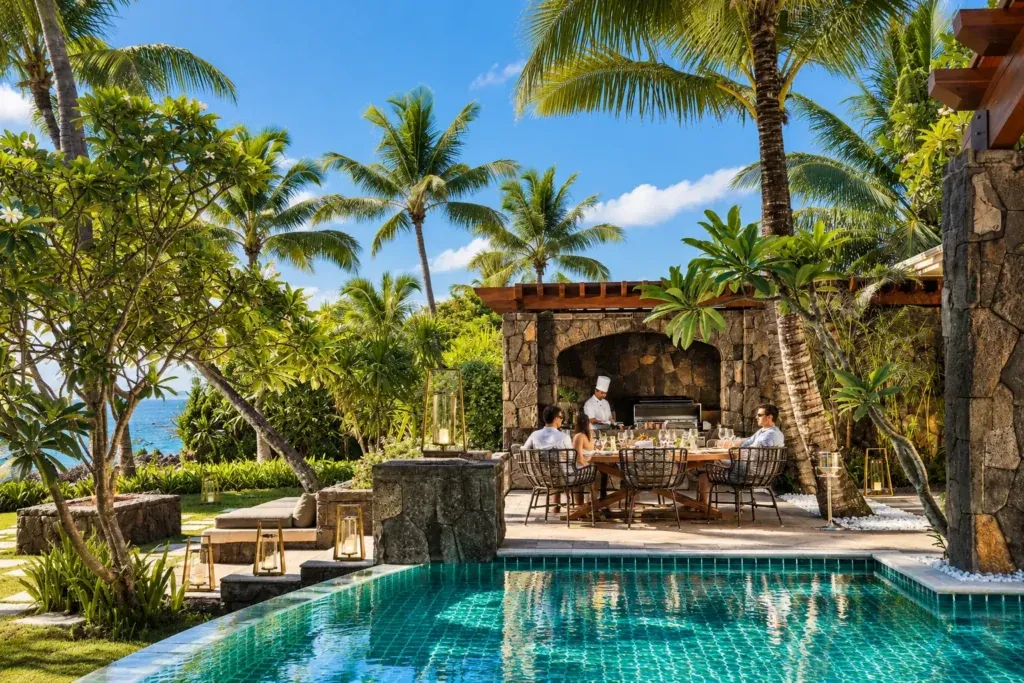
Anahita is the east coast’s best answer to the winter trades: a pool and walled garden of your own are far more sheltered than an open beach. At Beau Champ every villa and residence has its pool, garden walls, an outdoor shower and a terrace, while the bigger residences bring kitchens and spare bedrooms that work for a family or a group of friends. Ernie Els designed the 18-hole championship course, several of whose holes run beside the ocean, and a resort boat crosses the lagoon to a private beach on Île aux Cerfs. Dining spans an oceanfront grill, an Italian and an Asian restaurant, children aged 4 to 12 have their own club, and no luxury hotel on this coast is closer to the airport.
- Best for: golfers and families who want a pool away from the wind
- Transfer: around 40 minutes by car from the airport
- Rates: a one-bedroom garden pool villa is from around US$950 a night in the May to September winter and about US$1,350 in high season; check whether a quote includes the 15% VAT
- Don’t miss: a day on the resort’s Île aux Cerfs beach
Good to know: the resort sits on a mangrove-fringed bay, so the beach on site is smaller than the Belle Mare sands. Book an ocean-view villa if being near the water is a priority.
Shangri-La Le Touessrok: best for beaches and island days
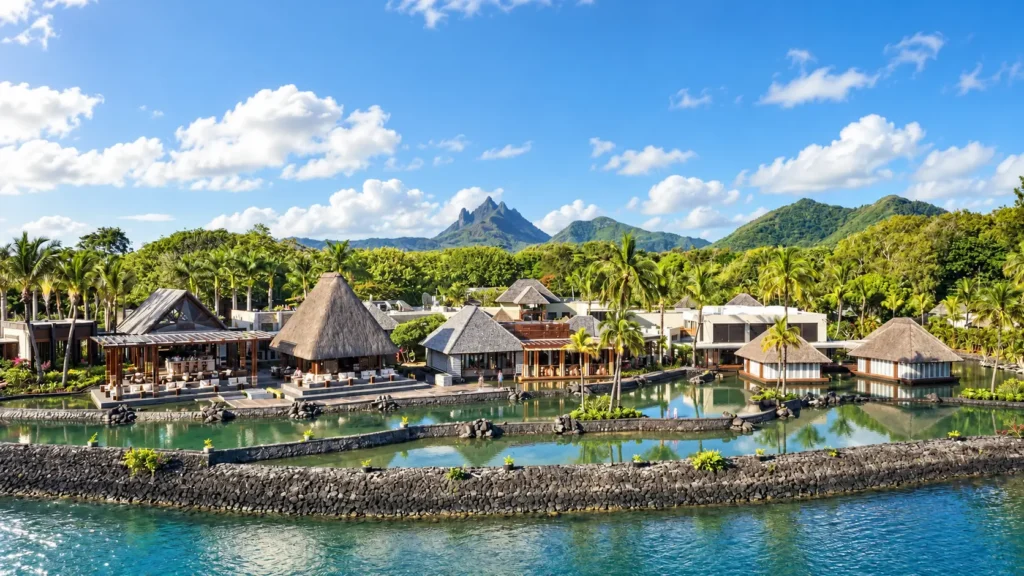
Le Touessrok makes the most of the east’s broad lagoon and offshore islands. Its roughly 200 rooms and suites at Trou d’Eau Douce are shared by the Coral wing, the Hibiscus wing and Frangipani Island, a footbridge-linked islet that is the most peaceful corner. The resort’s boats reach Îlot Mangénie, its private island about 10 minutes out, where cabanas come with butlers and there is a beach restaurant, and they also carry golfers to the course on Île aux Cerfs. Safran cooks Indian dishes and Kushi Japanese, the club for 4- to 11-year-olds is among the biggest in Mauritius and teenagers get a club of their own. Three-bedroom beach villas with infinity pools head the range.
- Best for: couples and families who want sand, boats and plenty of choice
- Transfer: about 45–50 minutes up the east coast from the airport
- Rates: ocean-view rooms run from around US$600 a night in the June to September low season to roughly US$1,000 in high season, VAT included
- Don’t miss: a lagoon crossing to Îlot Mangénie on a calm morning
Good to know: Îlot Mangénie boats depend on sea conditions, so plan the day early in your stay and keep a back-up date.
Constance Prince Maurice: best for a quiet, food-led escape
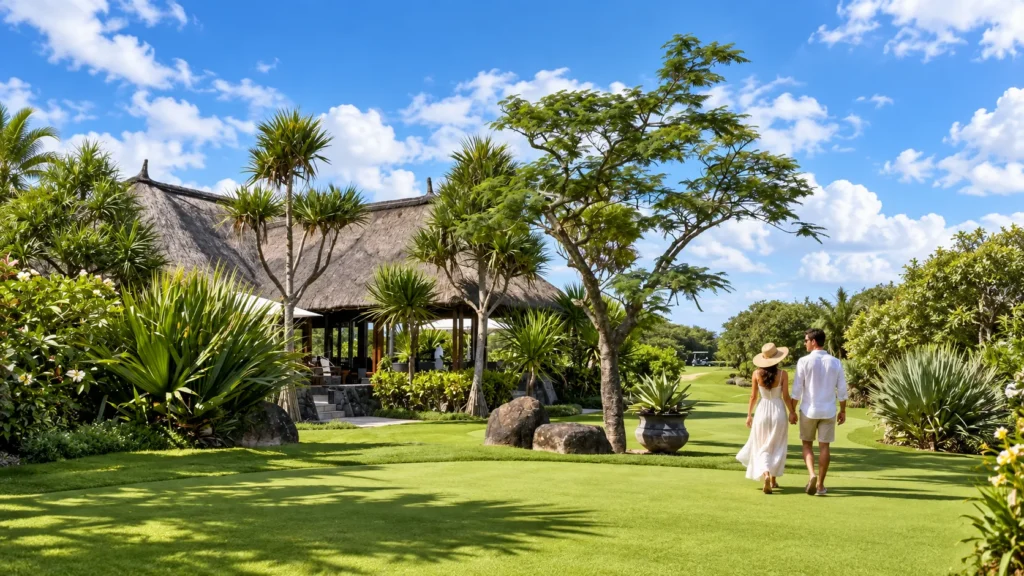
Prince Maurice gets its shelter from geography. This Relais & Châteaux hotel at Poste de Flacq has around 89 junior suites, family suites and villas facing both a beach and an inlet fringed with mangroves, and the inlet stays still on the breeziest winter days. A few junior suites are built on stilts above that water, while all the villas come with private pools. Le Barachois, the floating restaurant moored on pontoons over a natural fish reserve, is the reason many people book, and the cellar behind it holds around 25,000 bottles. A shuttle runs golfers to the Legend and Links courses at Constance Belle Mare Plage, its sister resort.
- Best for: couples and honeymooners who care about food and wine
- Transfer: about 55–60 minutes from the airport
- Rates: garden-view junior suites with breakfast start at around US$700 a night from mid-May to September and climb to about US$1,250 from October to December, VAT included
- Don’t miss: dinner at Le Barachois
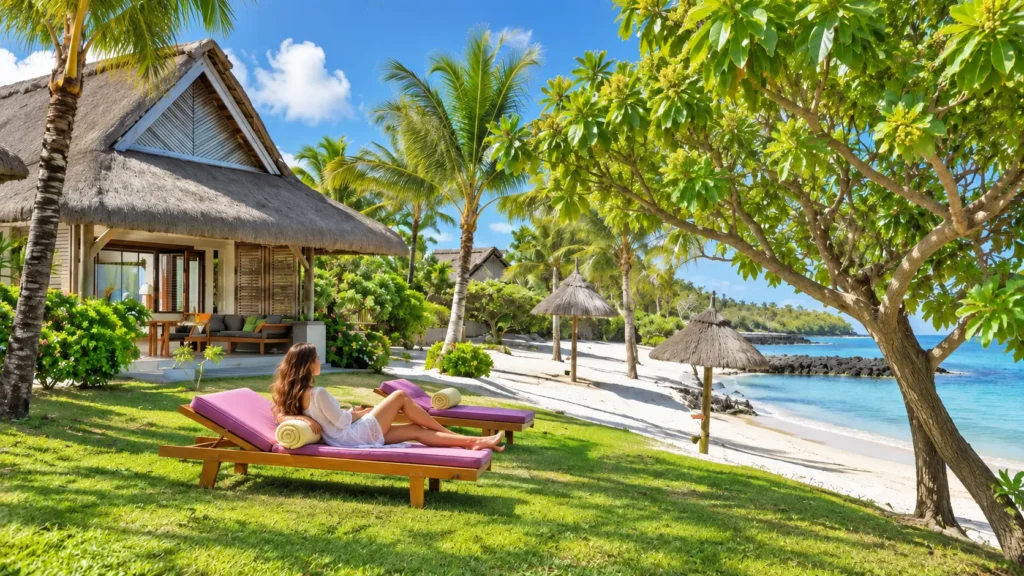
SALT of Palmar: best for a design-led, adults-only stay
SALT of Palmar, an adults-only boutique hotel with 59 rooms, sits on the beach at Palmar, a few minutes north of Belle Mare. It is a different idea of luxury: bold colours, farm-to-table cooking, a rooftop bar, a small spa and a programme that connects guests with local people and skills. Rooms are compact compared with the big resorts, but rates are a fraction of theirs, and you get the same east-coast sand.
- Best for: couples on a shorter or smarter-budget trip who like design hotels
- Transfer: around 50 minutes by car from the airport
- Rates: garden-view rooms go from around US$150 a night in the June to September low season to about US$300 in high season, VAT included
- Don’t miss: sunrise from the beach and an evening on the rooftop
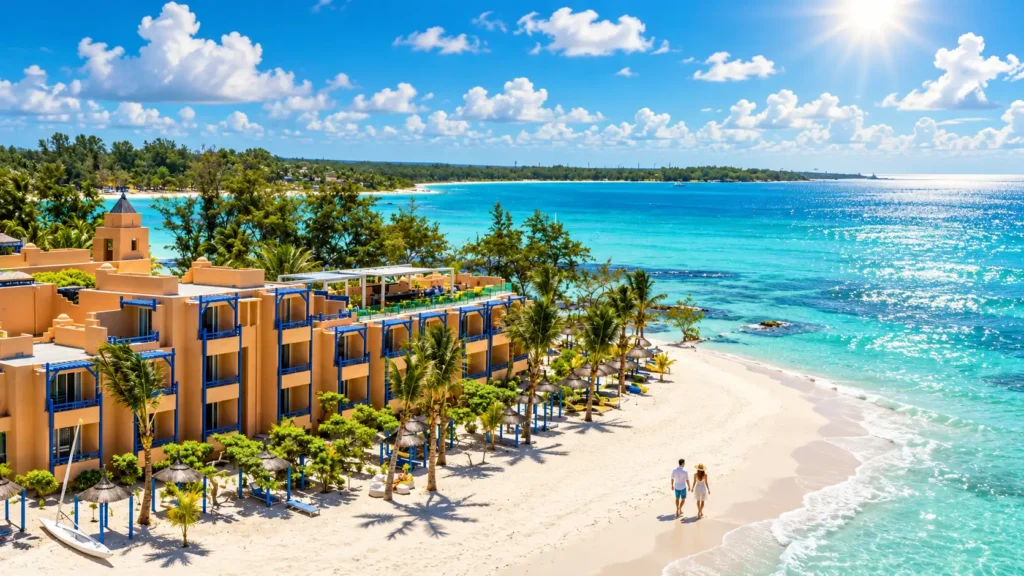
The best west coast resorts
The west splits into two quite different stretches. Le Morne is a resort peninsula at the foot of the mountain, with the best lagoon on this coast. Flic en Flac and Wolmar, further north, are livelier, with restaurants, villages and an easier drive to Port Louis.
LUX* Le Morne: best for sunsets on a relaxed budget
LUX* Le Morne sits on the lagoon directly beneath Le Morne Brabant, and almost every room category is a junior suite, including Sunset and Honeymoon junior suites whose terraces face west over the water. There are five restaurants, including the Asian-inspired East, plus beach bars and a swim-up bar, and the atmosphere is more relaxed than at the grander resorts. Kitesurfing, sailing and diving are all on hand, and the Le Morne hike starts a few minutes away.
- Best for: couples who want sunsets and the mountain without a top-tier price
- Transfer: about 60–75 minutes across the south of the island
- Rates: a sea-facing Deluxe room with breakfast is from around US$380 a night in June to August and about US$700 in high season; sunset junior suites cost more
- Don’t miss: a sunset drink on the beach with the mountain behind you
Good to know: ask for a Sunset or Ocean junior suite if the view matters; the classic category faces the gardens. The resort closes for renovation from 1 May to 31 October 2027, so book The St. Regis or Maradiva for those months.
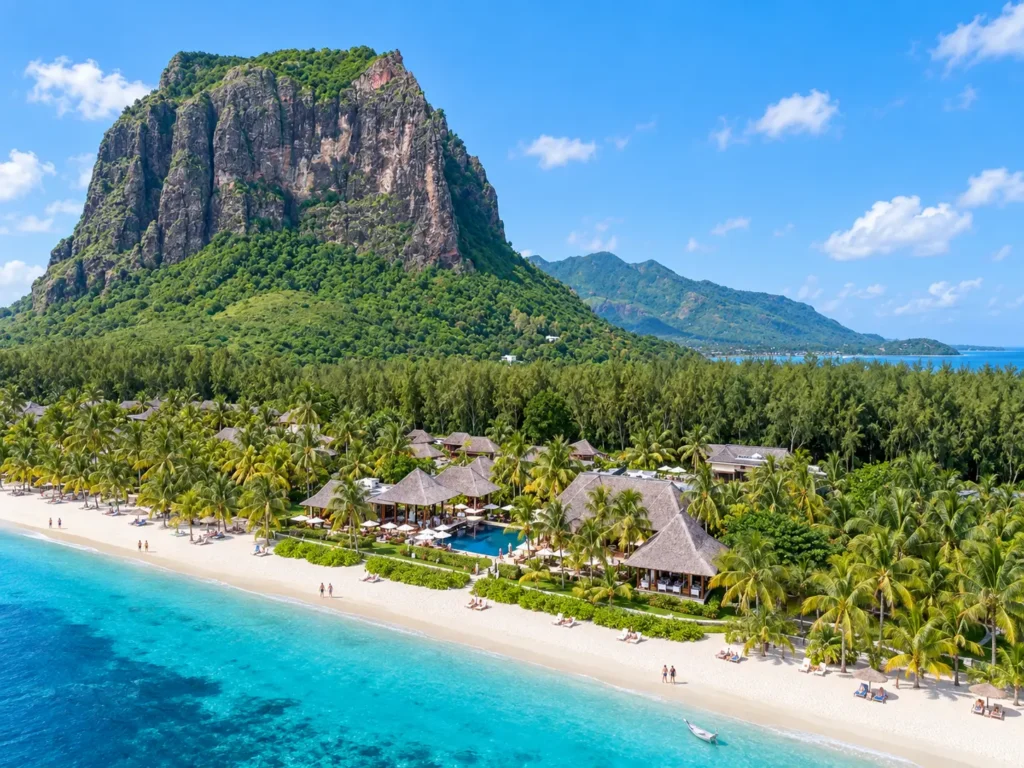
The St. Regis Le Morne Resort: best for butler service and kitesurfing
The St. Regis is the west-coast resort built around the wind. Its kite centre launches straight onto the Le Morne lagoon and gives riders a direct route out to One Eye, and the hotel’s long stretch of beach on the peninsula faces the evening sun. The 172 rooms and suites have a colonial-plantation look, and every guest is looked after by the brand’s butlers. Six restaurants and the Iridium Spa, with twelve treatment rooms, fill the calmer hours, children have the Kite Flyers Club, and the four-bedroom St. Regis Villa adds its own pools, a private chef and a path to the sand.
- Best for: kitesurfers, and couples or families who want butlers on the sunset coast
- Transfer: about 60–75 minutes from the airport via the south coast
- Rates: junior suites with breakfast are from around US$650 a night in June to September and about US$1,000 from October, including VAT
- Don’t miss: a kitesurfing lesson in the lagoon in July or August
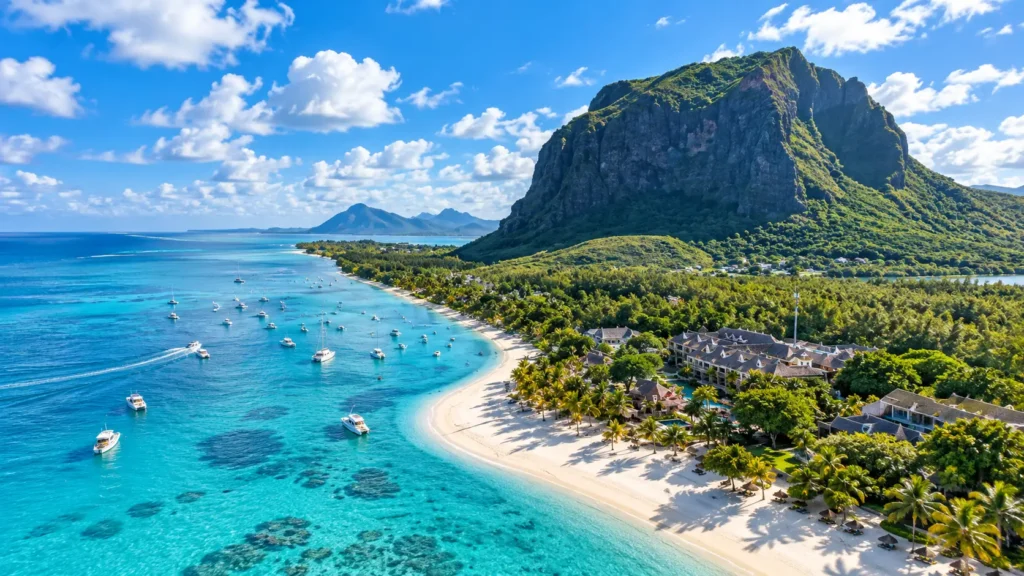
Maradiva Villas Resort & Spa: best for an all-villa stay in the west
Maradiva gives the west coast what Anahita gives the east, a villa with its own pool, but here the pool faces the sunset. The resort sits at Wolmar, just south of Flic en Flac, with 65 villas spread through 27 acres of gardens behind a beach of around 750 metres. Each villa has a heated pool, walls around its garden and an outdoor sala, and a villa host can be called whenever you need one. Ayurveda shapes the spa menu, Cilantro is the pan-Asian restaurant, and the bars and restaurants of Flic en Flac are a few minutes away when you want a change.
- Best for: couples who want a private pool and evenings facing the sea
- Transfer: about an hour west from the airport
- Rates: a Luxury Pool Villa costs from around US$720 a night from May to September and about US$900 in high season, with breakfast and VAT included
- Don’t miss: an Ayurvedic massage, timed so you are back on your terrace for sunset
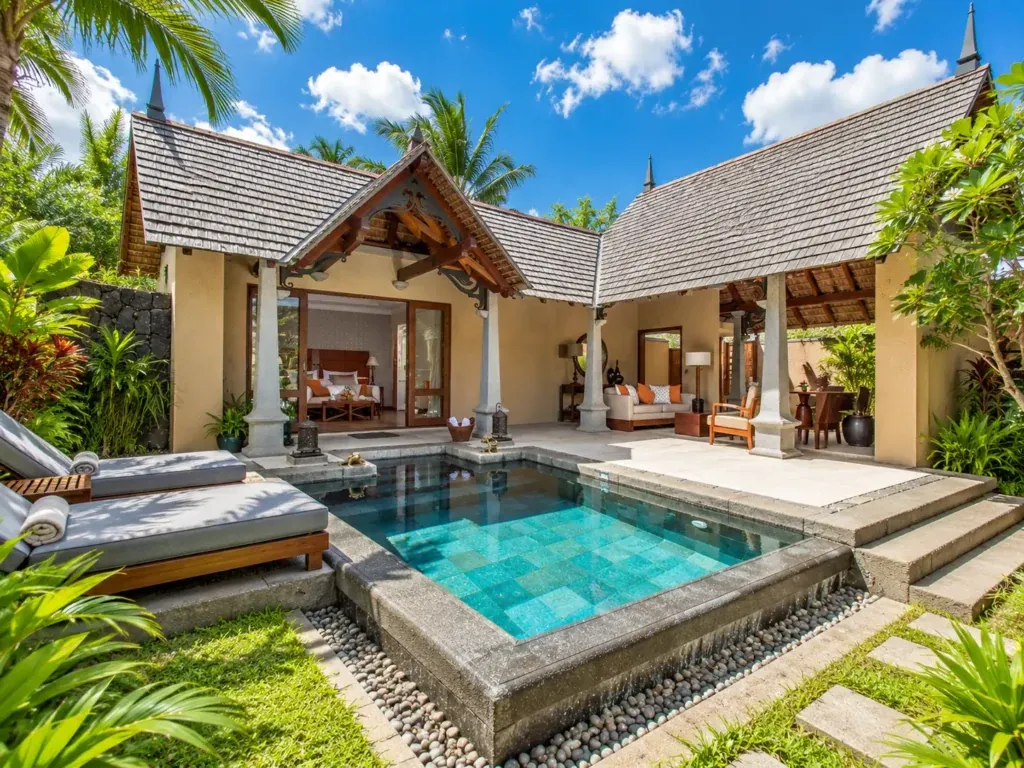
Which coast suits your trip?
Honeymoon in October or November: both coasts are at their best. Choose the east for long beaches and a big resort (Prince Maurice or Le Saint Géran), or the west for sunsets and the mountain (St. Regis or Maradiva). The Mauritius honeymoon guide goes further.
Family holiday in July or August: I’d start west, where the lagoon is calmer in the trade winds. If the east’s kids’ clubs appeal, Le Saint Géran’s lagoon side and Le Touessrok’s sheltered pools are the strongest choices.
Golf: the east, without much debate. Anahita, Île aux Cerfs and the two courses at Belle Mare are all within half an hour of each other.
Kitesurfing or hiking: Le Morne. The wind, the lagoon, One Eye, the mountain trail, Chamarel and Black River Gorges are all close by.
Ten nights or more: split the stay. Three or four nights east followed by four or five nights west gives you sunrises and sunsets, and the cross-island drive takes around 90 minutes. The one resort or a split stay guide helps decide whether moving is worthwhile, while the seven-day Mauritius itinerary sets out a week spent at one base.
East and west coast resorts compared
| Resort | Coast | Best for | From around | Booking |
|---|---|---|---|---|
| One&Only Le Saint Géran | East, Poste de Flacq | Classic family resort | US$900 | Check rates |
| Four Seasons Resort Mauritius at Anahita | East, Beau Champ | Pool villas and golf | US$950 | Check rates |
| Shangri-La Le Touessrok | East, Trou d’Eau Douce | Beaches and island days | US$600 | Check rates |
| Constance Prince Maurice | East, Poste de Flacq | Quiet, food-led escape | US$700 | Check rates |
| SALT of Palmar | East, Palmar | Adults-only design hotel | US$150 | Check rates |
| LUX* Le Morne | West, Le Morne | Sunsets on a relaxed budget (closed May to October 2027) | US$380 | Check rates |
| The St. Regis Le Morne Resort | West, Le Morne | Butler service and kitesurfing | US$650 | Check rates |
| Maradiva Villas Resort & Spa | West, Wolmar | All-villa stay with sunsets | US$720 | Check rates |
My verdict
If you travel between June and September, or if sunsets, hiking and kitesurfing are part of the plan, choose the west coast and base yourself at Le Morne. If you travel between October and May and want the island’s longest beaches, a short airport transfer and a resort with everything on site, choose the east. Belle Mare and Trou d’Eau Douce have the beaches, Le Morne has the scenery, and with ten nights or more you can have both.
Booking links are affiliate links. I may earn a commission at no extra cost to you.
Some links on this page are affiliate links. If you book through them, Lagoon Edit may earn a commission at no extra cost to you. It never affects which resorts we recommend.