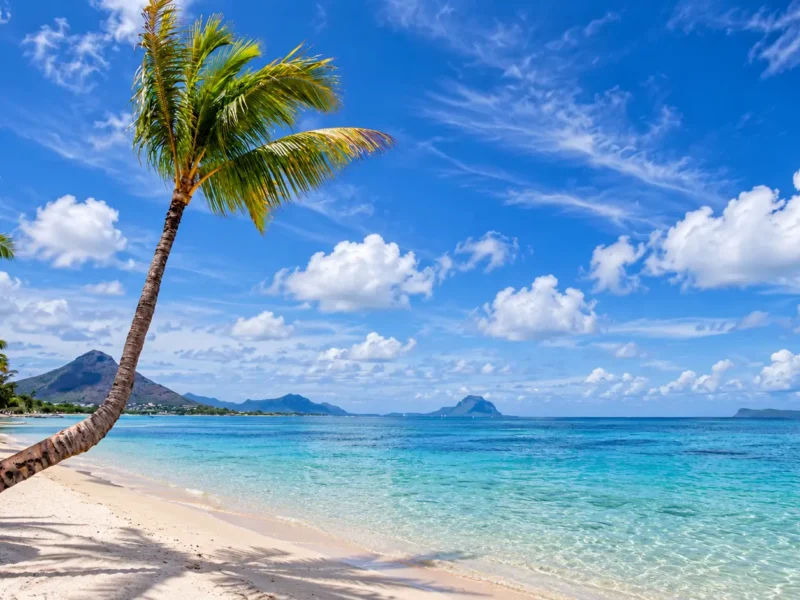
The best beaches in Mauritius for a luxury trip are Le Morne for scenery and sunsets, Belle Mare for a long walk on white sand, Trou aux Biches and Pereybère for calm water and snorkelling, and Île aux Cerfs for a day of sandbars and lagoon. Blue Bay has the best coral close to shore, Flic en Flac the most life, and Grand Gaube the most local character. Tamarin is the odd one out: grey sand, surf and dolphins, not a lounging beach.
The shoreline in Mauritius is shared space: a hotel can reserve its loungers and facilities, but it cannot fence off the sea, and the popular public beaches fill with Mauritian families on Sundays and holidays. The island’s coast also changes by season: the east and south take the south-east trade winds from June to September, while the west and north stay sheltered.
Mauritius beaches at a glance
| Beach | Coast | Best for | Sunset view | Luxury base on or near it |
|---|---|---|---|---|
| Belle Mare | East | Long walks, wide sand | No (sunrise) | One&Only Le Saint Géran, from around US$900 |
| Trou d’Eau Douce | East | Boat trips, village life | No | Shangri-La Le Touessrok, from around US$600 |
| Île aux Cerfs | East | Sandbars, lagoon day | No | Four Seasons Anahita, from around US$950 |
| Blue Bay | South-east | Snorkelling, calm water | No | None in this guide |
| Le Morne | South-west | Scenery, kitesurfing | Yes | LUX* Le Morne (closed May to October 2027), The St. Regis Le Morne |
| Tamarin | West | Surf, dolphins | Yes | None in this guide |
| Flic en Flac | West | Long beach, restaurants | Yes | Maradiva Villas, from around US$720 |
| Trou aux Biches | North-west | Soft sand, snorkelling | Yes | The Oberoi (Turtle Bay), from around US$550 |
| Mont Choisy | North | Longest northern beach | Yes | Royal Palm (Grand Baie), from around US$750 |
| Pereybère | North | Clear water, lively cove | Partly | LUX* Grand Baie, from around US$500 |
| Grand Gaube | North-east | Quiet fishing village | No | None in this guide |
Prices are indicative and were last updated in October 2026. Rates change with season, exchange rates and availability, so check live prices before booking.
Belle Mare: the classic white-sand beach
Belle Mare is the beach most people imagine when they think of Mauritius: a wide band of pale sand running south towards Palmar, shaded by casuarina trees and fronted by a shallow, reef-protected lagoon. It is superb for a long walk at sunrise, when the water is flat and almost nobody is about. From June to September the trade winds blow straight onshore, the lagoon chops up and the afternoons turn breezy, so a resort with a sheltered pool helps. Weekends bring picnicking families to the public stretches, and boats and jet skis work parts of the lagoon, so swim in the marked areas. There is no sunset over the sea here.
One&Only Le Saint Géran: best luxury hotel at Belle Mare
Le Saint Géran occupies the peninsula at the northern end of the Belle Mare coast, and its beach is the reason to choose it: more than 2km of sand wrapping around the point, with open ocean on one side and a calm lagoon on the other. That double frontage is useful in the windy months, because the lagoon side stays swimmable when the ocean side is rough. Every room faces the sand, the lagoon or the sea.
- Best for: a beach-first stay with plenty of restaurants
- Location: the Belle Mare peninsula at Poste de Flacq, a drive of roughly an hour from SSR airport
- Rates: a lagoon room with breakfast starts at about US$900 a night from June to September and about US$1,250 in high season, with 15% VAT on top
- Don’t miss: an early swim on the lagoon side before breakfast
Trou d’Eau Douce: the jumping-off point for the lagoon
Trou d’Eau Douce is a fishing village first and a beach second. Its small public strip is where speedboats and catamarans leave for Île aux Cerfs and the Grand River South East waterfall, so expect boat touts, moorings and a cheerful bustle in the morning. The water is calm and shallow, and the view across the lagoon to the islands is lovely, but I wouldn’t plan a lounging day on the village beach itself.
Shangri-La Le Touessrok: best luxury hotel at Trou d’Eau Douce
Le Touessrok turns the Trou d’Eau Douce lagoon into a private playground. The main beach faces Île aux Cerfs, and Frangipani Island, the quietest wing, sits on its own islet across a footbridge. A complimentary boat also runs guests ten minutes across the water to Îlot Mangénie, an islet reserved for the hotel, with butler-served cabanas and a seafood restaurant.
- Best for: couples and families who want several beaches in one resort
- Location: on the lagoon just outside the village, under an hour by car from SSR airport
- Rates: ocean-view rooms are usually upwards of about US$600 a night in the June to September low season and about US$1,000 from October, VAT included
- Don’t miss: a cabana day on Îlot Mangénie
Good to know: the islet boats stop in strong wind, so book your Mangénie day early in the stay.
Île aux Cerfs: sandbars and turquoise channels
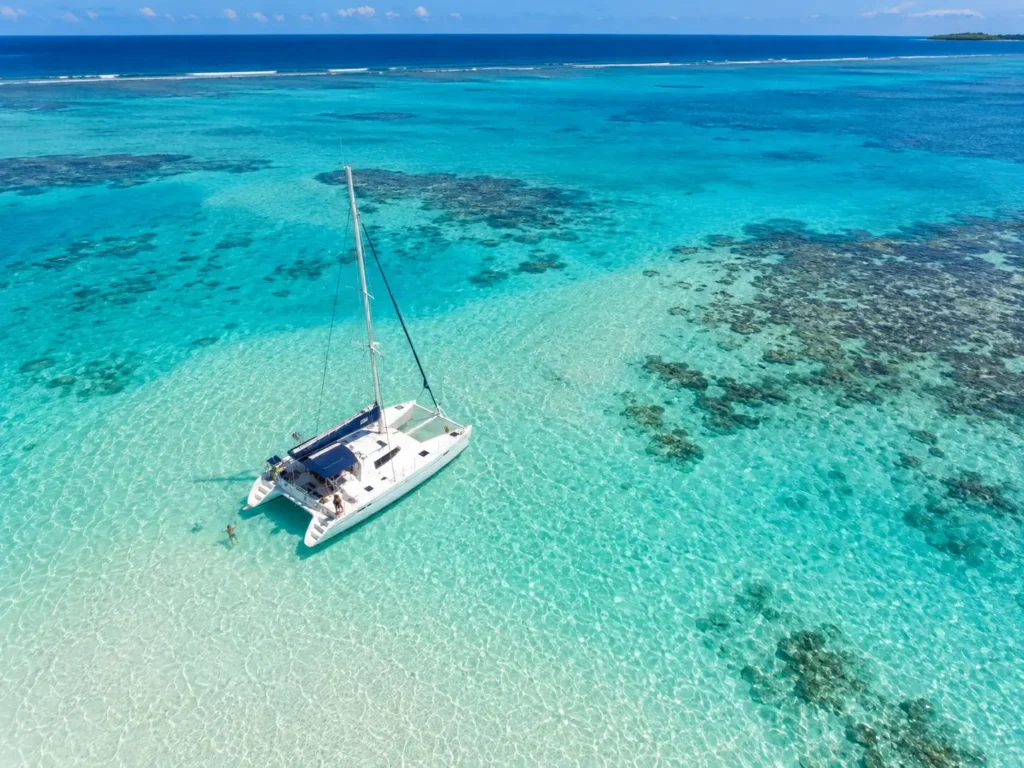
Île aux Cerfs sits in the lagoon a short boat ride from Trou d’Eau Douce, and it has the most photogenic water on the east coast: sandbars, pale channels and very shallow, warm lagoon. The main landing beach gets busy from late morning, when the day boats arrive with parasailing, banana boats and lunch crowds. Walk ten or fifteen minutes around the shore and it thins out quickly.
Four Seasons Resort Mauritius at Anahita: best luxury base for Île aux Cerfs
Nobody sleeps on Île aux Cerfs, but Four Seasons Anahita gives its guests the next best thing. A speedboat from the resort’s Bambou Beach jetty runs throughout the day to the Four Seasons Exclusive Beach, a cove on the quieter eastern side of the island with around 40 loungers, a beach grill and its own waiters. Back at Beau Champ, the resort has two smaller beaches within its grounds, kayaks and daily snorkelling trips, and every villa has a private pool for the afternoons when the wind is up.
- Best for: a private-pool villa with a guest-only island beach
- Location: Beau Champ, opposite Île aux Cerfs; the closest of these hotels to SSR airport by road
- Rates: garden pool villas start at about US$950 a night between May and September and run to about US$1,350 in high season; confirm whether VAT is in the quote
- Don’t miss: lunch at the beach grill on Île aux Cerfs
Good to know: the beaches at the resort itself are modest; the island cove is the beach you are paying for.
Blue Bay: the best snorkelling from the sand
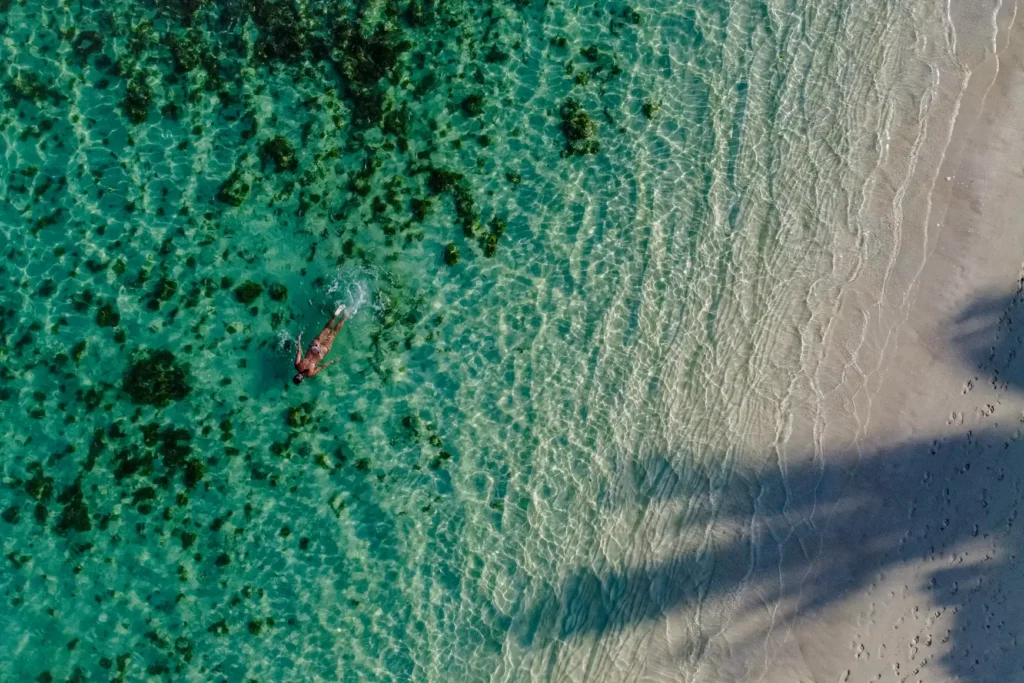
Blue Bay, near Mahébourg and close to the airport, is a sheltered horseshoe of white sand above the island’s largest coral reserve. The water is calm, clear and shaded in every tone of blue, and glass-bottom boats leave from the beach for one-hour trips with a snorkelling stop over the coral, where turtles are sometimes seen. The marine park has zones, and yellow buoys mark the swimming areas, so use licensed operators and keep off the coral. It is busy on weekends, and there are no luxury hotels of the calibre in this guide on the bay itself, so I’d treat it as a day out from the east coast, perhaps combined with lunch on Île des Deux Cocos. Mauritius’s Marine Conservation Division manages the park.
Le Morne: the most dramatic beach on the island
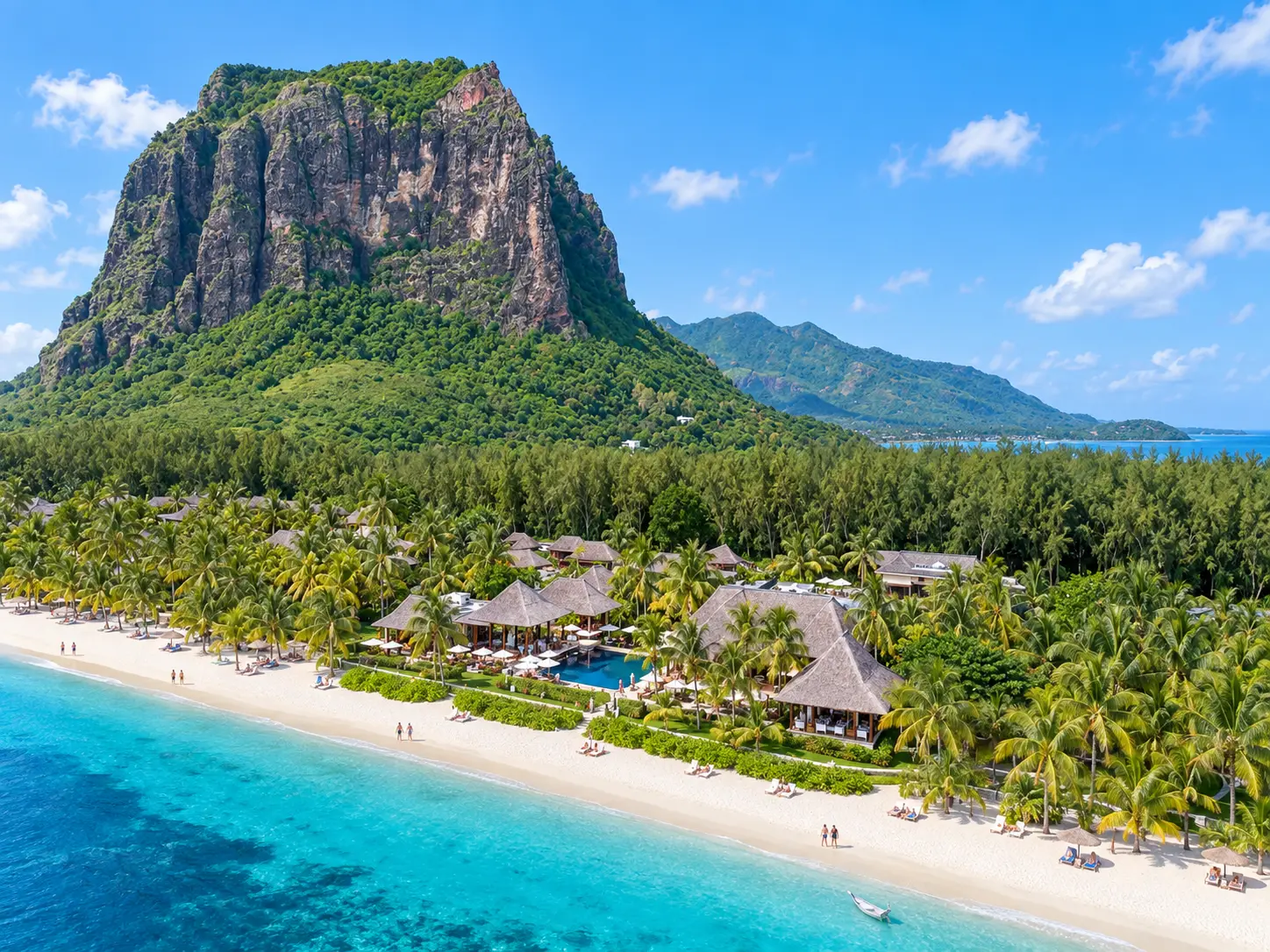
Le Morne has the view that sells Mauritius: a long, curving beach of white sand with the basalt bulk of Le Morne Brabant rising straight behind it and a wide lagoon in front. The mountain is a UNESCO World Heritage cultural landscape, remembered as a refuge for escaped slaves. The west-facing beach gets the sunset, the lagoon is excellent for swimming in calm weather, and the public beach under the casuarinas is a relaxed local spot. In winter, the trade winds turn parts of the lagoon into one of the world’s best-known kitesurfing spots, with the One Eye wave out on the reef, so keep clear of the launch zones and swim where the hotels or lifeguards suggest.
LUX* Le Morne: best for lagoon swimming at Le Morne
LUX* Le Morne sits on a quieter, sheltered stretch of the peninsula with the mountain directly behind and a calm lagoon in front, which makes it the better pick of the two Le Morne resorts if swimming matters more to you than kitesurfing. It has a boutique, couples-leaning feel, five pools and sunset-facing suites that look out over the water.
- Best for: couples who want calm water and the view
- Location: the sheltered side of the peninsula, roughly an hour and a quarter by road from SSR airport
- Rates: sea-facing Deluxe rooms on bed and breakfast are usually upwards of about US$380 a night in June to August and about US$700 in high season
- Don’t miss: a swim at dusk with the mountain turning pink behind you
Good to know: the resort closes for renovation from 1 May to 31 October 2027.
The St. Regis Le Morne Resort: best for kitesurfers and a long beach
The St. Regis has one of the longest beach frontages on the peninsula, which gives room for long walks and a feeling of space even when the resort is full. Its kitesurfing centre launches straight onto the lagoon and gives riders access to the One Eye area, so it suits a couple where one person kites and the other lies on the sand.
- Best for: kitesurfers, long beach walks and formal service
- Location: the long western beach of the peninsula, beside the kite zone
- Rates: junior suites with breakfast start at about US$650 a night from June to September, rising to around US$1,000 from October, VAT included
- Don’t miss: a kitesurfing lesson in the July and August trades
Tamarin: surf, dolphins and grey sand
Tamarin is the beach for a morning, not a week. The bay sits at the mouth of the Tamarin River, so the sand is greyish and the water is cooler and less clear than on the reef-fringed beaches. Its left-hand reef break has drawn surfers since the 1970s, and spinner and bottlenose dolphins come into the bay early in the morning, which is why dolphin-watching boats leave from here and nearby Black River at dawn. Sunsets over the bay and the West Coast mountains are excellent, and the beach is mostly local, with no luxury resort on it. Visit for the dolphins, then retreat to Le Morne or Flic en Flac to swim.
Flic en Flac: a long beach with a town behind it
Flic en Flac has one of the longest beaches on the island, around 8km of white sand protected by a coral reef, with calm water and good snorkelling along the reef edge. Unlike most beaches in this guide, it has a lively town behind it: restaurants, bars, shops and picnic areas, which makes it popular with families and very busy on weekends. The sand is softer in the central stretch and coral appears underfoot at the southern end towards Wolmar, where it becomes quieter. Sunsets are the main event.
Maradiva Villas Resort & Spa: best luxury hotel at Flic en Flac
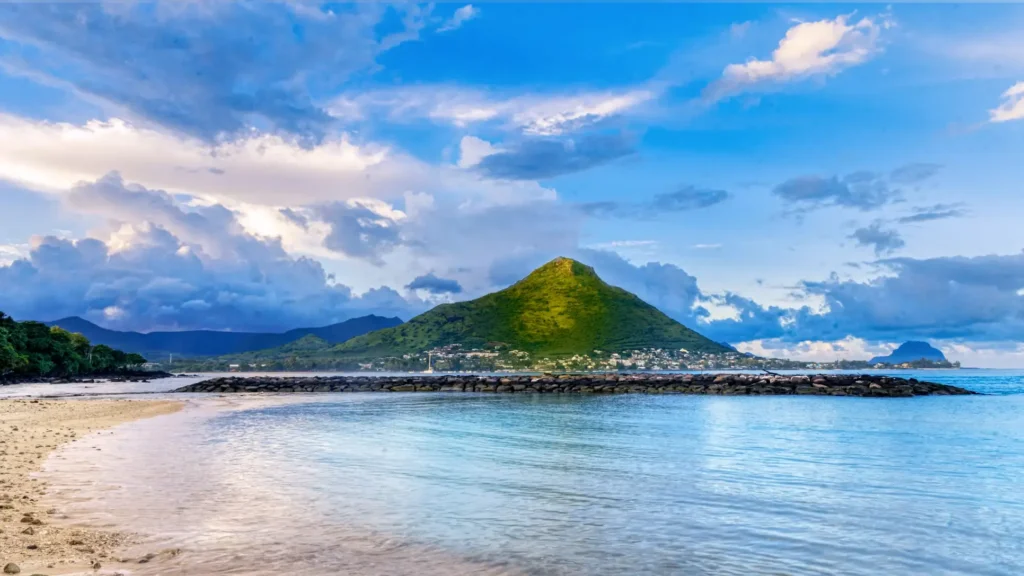
Maradiva sits at Wolmar, on the calmer southern end of the Flic en Flac beach, with around 750m of sand in front of 27 acres of gardens. All 65 villas have a heated private pool, so you can retreat from the busier public stretches without leaving the coast.
- Best for: a private pool on a sunset beach
- Location: the Wolmar end of the Flic en Flac beach, about an hour by car from SSR airport
- Rates: Luxury Pool Villas start at about US$720 a night from May to September and about US$900 in high season, breakfast and VAT included
- Don’t miss: an evening walk north along the sand towards Flic en Flac
Good to know: wear reef shoes in the shallows, as coral and rock appear underfoot along parts of this shore.
Trou aux Biches: soft sand and reef close to shore
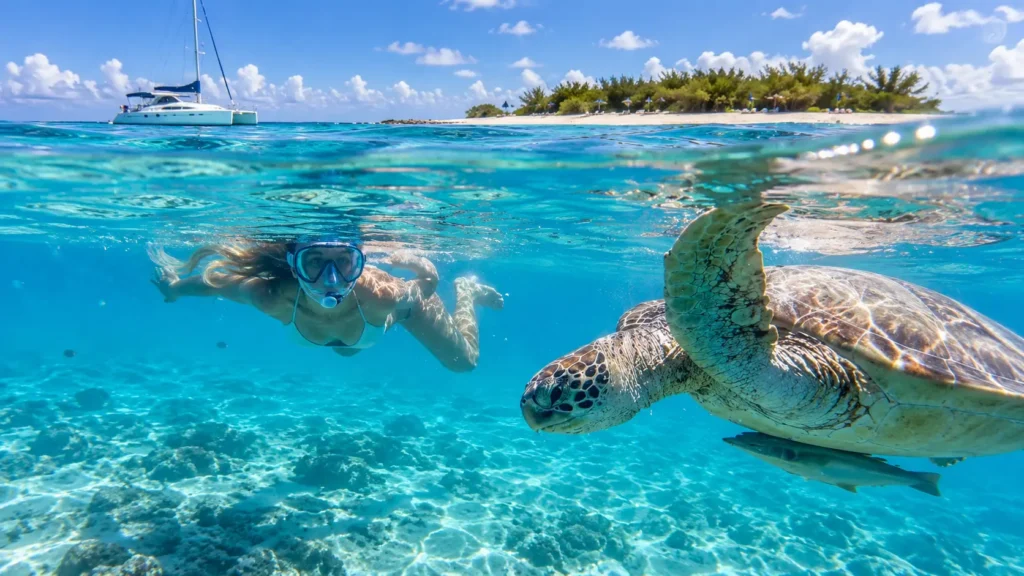
Trou aux Biches has some of the softest sand in Mauritius and a calm, shallow lagoon that is ideal for paddling. The reef comes close to shore here, so you can snorkel straight off the beach, and the area is a long-established base for dive centres. The water faces west, which means a clear sunset most evenings in the dry season.
The Oberoi, Mauritius: best luxury hotel near Trou aux Biches
The Oberoi is not on Trou aux Biches but a short drive south on Turtle Bay, a protected marine park with the same calm, west-facing water. Its 600m of beach is broken into small coves between rocks, which gives each stretch a private feel, and the snorkelling in the bay is some of the best you will find from a hotel beach in the north-west.
- Best for: privacy and snorkelling in calm water
- Location: Turtle Bay at Balaclava, a few minutes’ drive south of Trou aux Biches
- Rates: Luxury Pavilions start at about US$550 a night from June to September and about US$750 in high season (around US$1,150 at Christmas); pool villas from about US$1,300, taxes included
- Don’t miss: a mask and fins in the marine park straight off the hotel’s coves
Mont Choisy: the longest beach in the north
Mont Choisy is a 3km crescent of white sand lined with casuarina trees, between Trou aux Biches and Grand Baie. There is plenty of space for a long walk or a run, an offshore reef for snorkelling and water sports such as windsurfing and speedboat rides. On weekdays it is spacious and calm; on weekends and public holidays it is one of the busiest family beaches in the north. There is no luxury hotel directly on the sand, so most visitors come from Grand Baie a few minutes up the road.
Royal Palm Beachcomber Luxury: best luxury hotel near Mont Choisy
Royal Palm sits on its own beach on Grand Baie, a short drive north of Mont Choisy, and offers the calm, sheltered water of the bay with all 69 suites facing the sea. The beach is small compared with Mont Choisy, but it is beautifully kept and quiet, and the bar on the sand is the hotel’s sundowner spot. Choose it for a polished hotel beach, with the long public strand down the road for walks.
- Best for: calm water and very personal service
- Location: the southern shore of Grand Baie, a short hop from Mont Choisy
- Rates: junior suites start at about US$750 a night from mid-May to September and about US$1,350 in high season, breakfast and VAT included
- Don’t miss: a sundowner on the sand as the bay turns gold
Pereybère: the clearest water in the north
Pereybère is a small cove between Grand Baie and Cap Malheureux, with soft white sand and a deep, very clear lagoon inside the reef. It is one of the best places on the island to snorkel from the beach. It is also lively: food vans, restaurants and umbrella rentals line the road behind it, and the little beach fills up at weekends. Go early on a weekday for clear water and space.
LUX* Grand Baie: best luxury hotel near Pereybère
LUX* Grand Baie stands on Merville beach, about a 12-minute walk from Pereybère, so you can stroll to the cove for an early snorkel and be back for breakfast. The resort’s own beach is smaller, and much of the appeal is up top: Bisou, an adults-only rooftop with a 30-metre infinity pool, looks out over the bay. Beach Rouge, the brand’s beach club, brings a social atmosphere to the sand.
- Best for: design-led couples and friends who want a lively base
- Location: Merville beach, a short walk from Pereybère
- Rates: junior suites with breakfast are around US$500 a night from June to September and US$750 in high season, VAT included; rates vary widely by date, so check live prices
- Don’t miss: an early-morning swim at Pereybère, then sunset on the rooftop
Grand Gaube: the quiet north-east
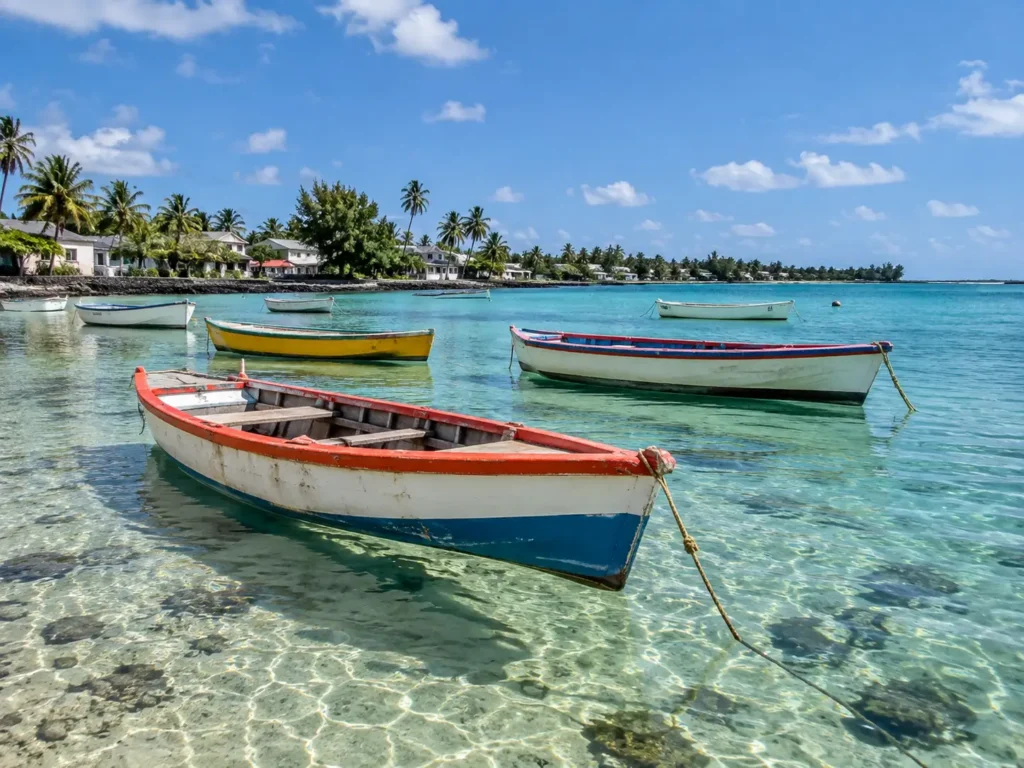
Grand Gaube is a fishing village about six kilometres beyond Grand Baie, founded in the 1830s and still full of painted pirogues and a morning fish market. Its coast is a series of small bays and rocky headlands with coral sand and a calm, shallow lagoon where children can paddle safely. None of the hotels in this guide is here; treat it as a short drive from Grand Baie.
Which beach for which season
From June to September, choose the west and north-west: Le Morne for the view, Flic en Flac and Trou aux Biches for calm water, Pereybère for snorkelling. The east coast beaches are breezier and better for walks than for long swims in these months. From October to May, the east is at its best, with Belle Mare and Île aux Cerfs calm and clear. January to March is hot, humid and the main cyclone period everywhere. The best time to visit Mauritius has month-by-month detail, and the east coast versus west coast comparison explains how the wind shapes each side of the island. If you want to try beaches on both coasts, the one resort or split stay guide shows when moving hotel is worth it, and the seven-day Mauritius itinerary fits several of these beaches into one week.
Compare the best beach hotels in Mauritius
| Hotel | Beach | Beach strength | Booking |
|---|---|---|---|
| One&Only Le Saint Géran | Belle Mare | 2km peninsula beach, lagoon and ocean sides | Check rates |
| Shangri-La Le Touessrok | Trou d’Eau Douce | Three beaches, including a private islet | Check rates |
| Four Seasons Resort Mauritius at Anahita | Île aux Cerfs | Guest-only island cove | Check rates |
| LUX* Le Morne | Le Morne | Sheltered lagoon and sunsets | Check rates |
| The St. Regis Le Morne Resort | Le Morne | Long beach and kitesurfing | Check rates |
| Maradiva Villas Resort & Spa | Flic en Flac (Wolmar) | 750m sunset beach and pool villas | Check rates |
| The Oberoi, Mauritius | Turtle Bay, near Trou aux Biches | Marine-park snorkelling | Check rates |
| Royal Palm Beachcomber Luxury | Grand Baie, near Mont Choisy | Calm, quiet bay beach | Check rates |
| LUX* Grand Baie | Merville, near Pereybère | Walk to the clearest cove in the north | Check rates |
My verdict
If you want one beach that does everything, I’d choose Le Morne: white sand, a swimmable lagoon, sunsets and the island’s most striking backdrop. For long walks and sunrise, Belle Mare and Le Saint Géran are hard to beat between October and May. Snorkellers should base themselves in the north-west, near Trou aux Biches or Turtle Bay, and add a Blue Bay day. For more on the resorts themselves, see the best luxury resorts in Mauritius, and if you are still choosing between islands, the Mauritius versus Maldives and Seychelles versus Mauritius comparisons set out how the beaches differ. Couples should also read the Mauritius honeymoon guide.
Some links on this page are affiliate links. If you book through them, Lagoon Edit may earn a commission at no extra cost to you. It never affects which resorts we recommend.