If you are wondering how many nights in Tahiti to plan before the outer islands, two is my answer for most first trips. Two nights give you one clear day on the island after a long-haul arrival, which is enough to sleep off the flight, walk Papeete market, eat at the roulottes and see one stretch of coast. Give Tahiti zero or one night only when your flights force it, and three or four when the island itself (Tahiti Iti, the waterfalls, the valleys) is part of the reason you are travelling.
Tahiti is the island most visitors pass through and few plan for. It holds the international airport at Faa’a, the capital and most of the country’s population, so it behaves like a working island, not a resort. That is exactly its value on an itinerary built around lagoons: it is where you see markets, churches, food trucks, surf villages and black-sand bays that the motu resorts cannot offer.
Quick answer: nights in Tahiti and what each one buys
| Nights | What you actually get | Best for | Hotel style that fits |
|---|---|---|---|
| 0 | An airport connection and perhaps a ferry crossing to Moorea | Daytime arrivals with a same-day onward ticket | None, or a day room |
| 1 | Sleep, a shower and perhaps a morning at the market | Arrivals in the small hours followed by an onward trip the next day | Pool hotel close to town |
| 2 | One full free day: Papeete plus one coast or the museum | Most first-time island hoppers | Sightseeing base or lagoon resort |
| 3 | Papeete day plus a full day on Tahiti Iti or in a valley | Curious travellers on 12–14 day trips | Resort with space to recover between outings |
| 4 | Town, peninsula, waterfalls and one slow day by the pool | Hikers, surfers, culture lovers and Heiva visitors | Beach resort outside the city |
Count usable daylight, not nights. Two nights with a 4am arrival and a late-evening departure can hold close to two full days, while two nights between a midnight landing and a dawn flight hold very little. Pin down your flight and ferry times first, then decide.
How flight times shape your Tahiti stay
Long-haul flights into Faa’a tend to land at unsociable hours. Air Tahiti Nui’s overnight service from Los Angeles, for example, typically leaves LAX close to midnight and reaches Papeete somewhere between about 3.30am and 5am local time, depending on the season and the day. Travellers from Europe usually connect through Los Angeles or Paris onto that same pattern, and flights from Auckland and Tokyo have their own timings, so check your specific schedule.
An early-morning landing creates a choice. You can push straight on to a domestic flight or the Moorea ferry, arriving at your resort exhausted and often before check-in, or you can book Tahiti from the previous night so your room is ready the moment you land. That second option costs one extra night but turns the first day into a real one. On a two-night stay it is the most useful planning move for long-haul arrivals.
Departures follow a similar logic. Many flights back to North America leave late in the evening, which means your last Tahiti day can be a full one if you keep the room or book a late check-out. If your onward flight leaves at dawn instead, the hotel choice becomes about the morning drive; that scenario has its own guide on where to stay in Tahiti before an early flight, so this post sticks to how much time to give the island.
Zero nights: when skipping Tahiti works
Skipping Tahiti is reasonable when you land in daylight and have a domestic flight or ferry the same afternoon. Moorea is the easiest hop, since the fast ferries cross from Papeete in well under an hour, and plenty of travellers are on a Moorea deck by lunchtime. The risk comes with tight connections on separate tickets: a late international arrival can unpick the whole day, and you lose your buffer.
Zero nights also means seeing nothing of the capital unless you fold in a short stop on the way home. I’d only skip Tahiti entirely on a trip of a week or less, where every night on a lagoon island counts.
One night: recovery, not sightseeing
One night is a reset button. Land, sleep, swim and move on. If you arrive in the small hours on a pre-booked room, you may wake with a free morning: take a taxi to the Marché de Papeete, which opens daily and is at its busiest early (the Sunday market starts from around 4am), and buy a coconut, some pastries and a pareo before checking out.
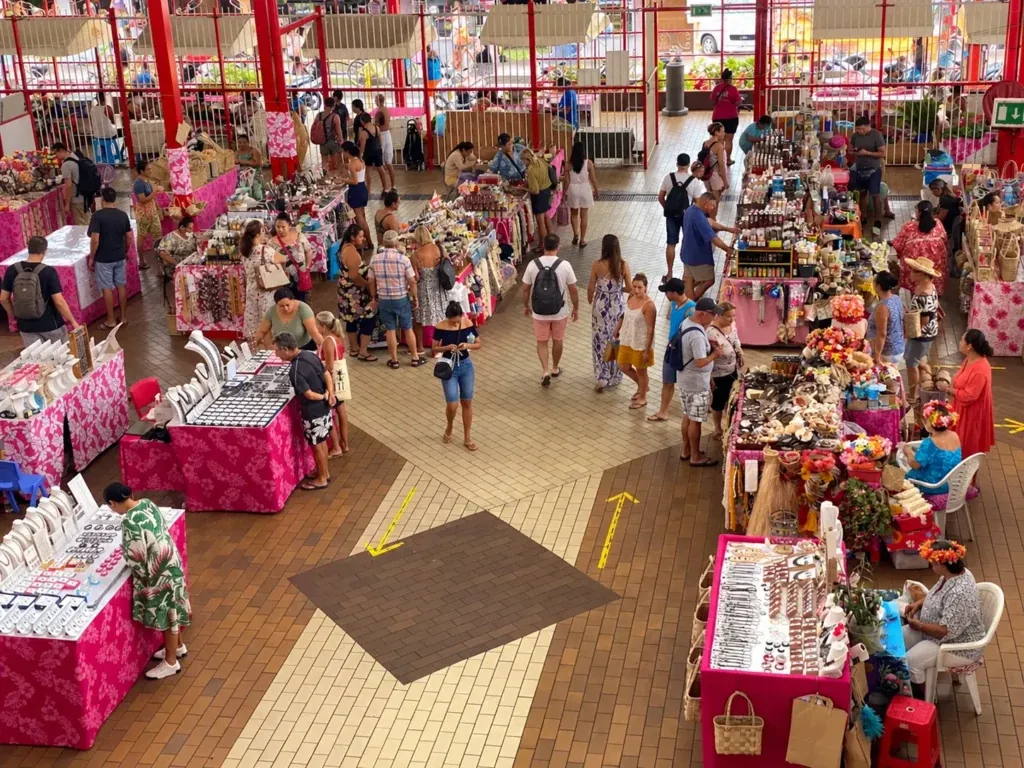
What one night will not give you is any real sense of the island. Waterfalls, the peninsula and the museum all need half a day or more, and attempting them between two long travel days tends to leave people frazzled. Treat a single night as logistics with a small bonus, and do not count it as having seen Tahiti.
Two nights: the sweet spot for most itineraries
Two nights let the first day absorb the jet lag and the second do the work. A sensible full day looks like this: the market and Papeete waterfront in the morning, then south along the west coast to the Musée de Tahiti et des Îles in Puna’auia, about 15km from the city. Its main hall reopened in 2023 after a long renovation, and it gives the clearest introduction you will find to Polynesian navigation, tapa, tattoo and the arrival of Europeans. Opening days have shifted over the years, so check the museum’s site before going.
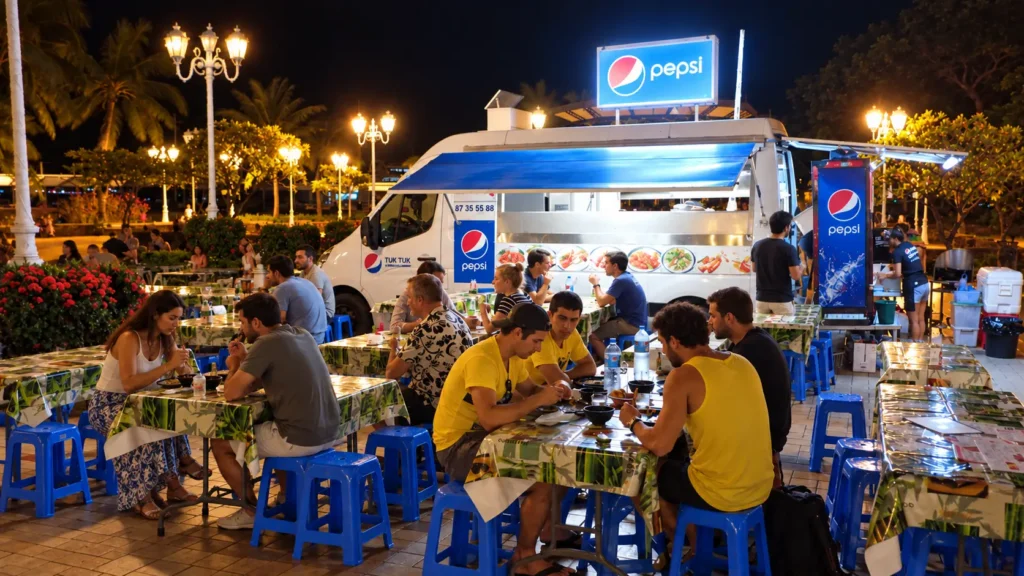
Come back to town for the evening, when Place Vaiete on the seafront fills with roulottes. These food trucks trade from about 6pm until late every evening, and they are the most affordable meal you will have in French Polynesia: poisson cru, steak frites, chow mein, crêpes and grilled fish, eaten at shared tables by the harbour. For many visitors it is the highlight of the Tahiti stop.
If waterfalls appeal more than museums, swap the west coast for the east. Head out past Pointe Vénus and its black-sand bay, stop at the Arahoho blowhole, then walk in to the Faarumai waterfalls near Tiarei, around 45 minutes’ drive from Papeete. Vaimahutu, the first and tallest fall, is a short stroll through the forest, and two more falls lie about 20 minutes further on. Swimming in the pools is not allowed because of rockfall.
This two-night pattern is what the 10-day French Polynesia itinerary uses before moving on to Moorea, Taha’a and Bora Bora. It is also the allocation I’d recommend when deciding between islands: two nights here leaves the bulk of the trip for the lagoon you came for, and the Bora Bora vs Moorea vs Taha’a comparison can help you split the rest.
Three or four nights: Tahiti as a destination
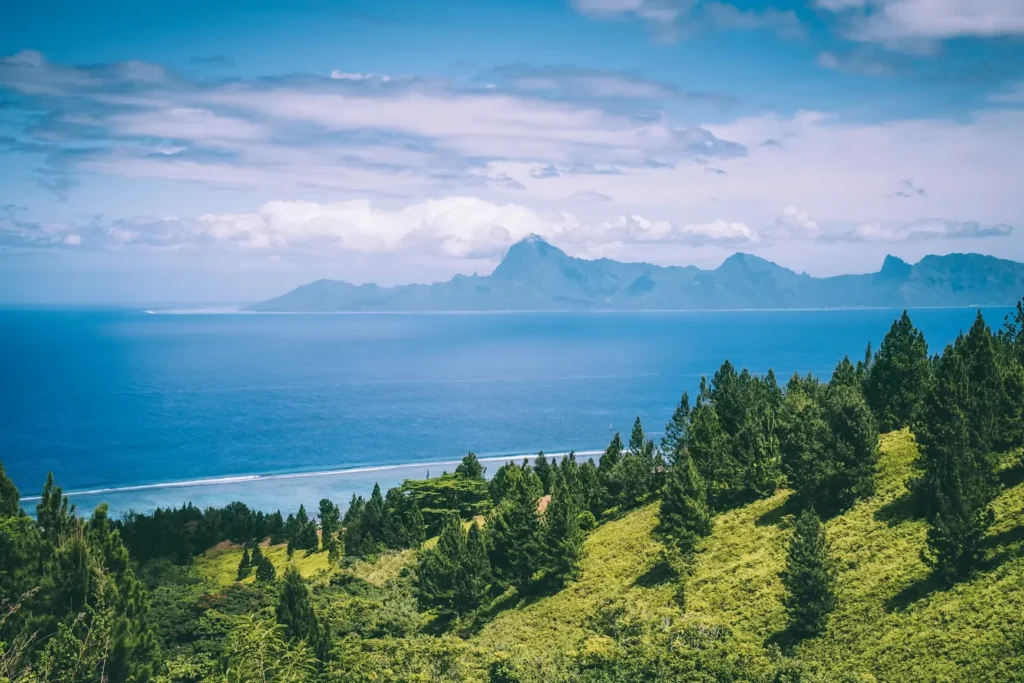
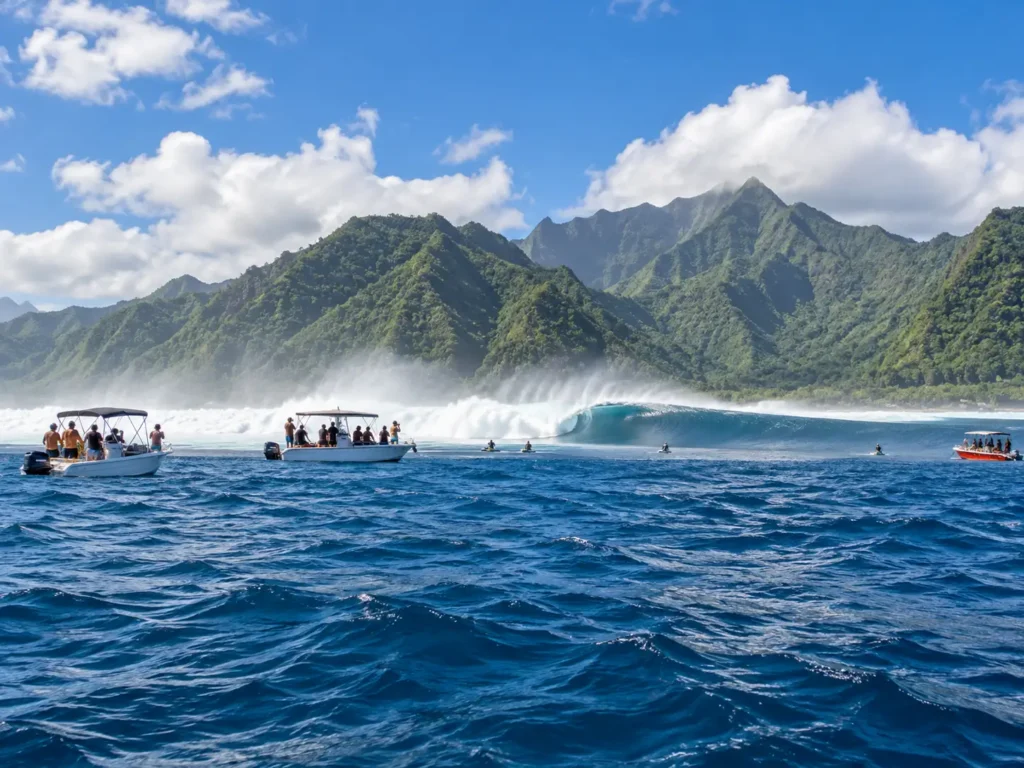
A third night opens up Tahiti Iti, the smaller peninsula joined to the main island at Taravao. The road runs out at Teahupo’o, the village behind the reef wave that hosted the surfing at the Paris 2024 Olympics. From the marina there, boat tours run along the roadless coast of Fenua Aihere, with half-day trips of around three and a half hours and full days of roughly seven, often including a short jungle walk to the Vaipoiri cave. Guided tours from Papeete usually take a full day, so do not try to squeeze this into a two-night stay.
A fourth night lets you add the interior. The Fautaua valley, just behind Papeete, leads to one of the island’s tallest waterfalls, and access requires a dated permit from Papeete town hall (around 600 XPF per adult, issued on weekdays). The trail is not always well marked, so most people go with a guide and allow anything from three to six hours. Papenoo valley on the north coast is the 4×4 alternative, with river crossings and waterfalls best left to a local operator.
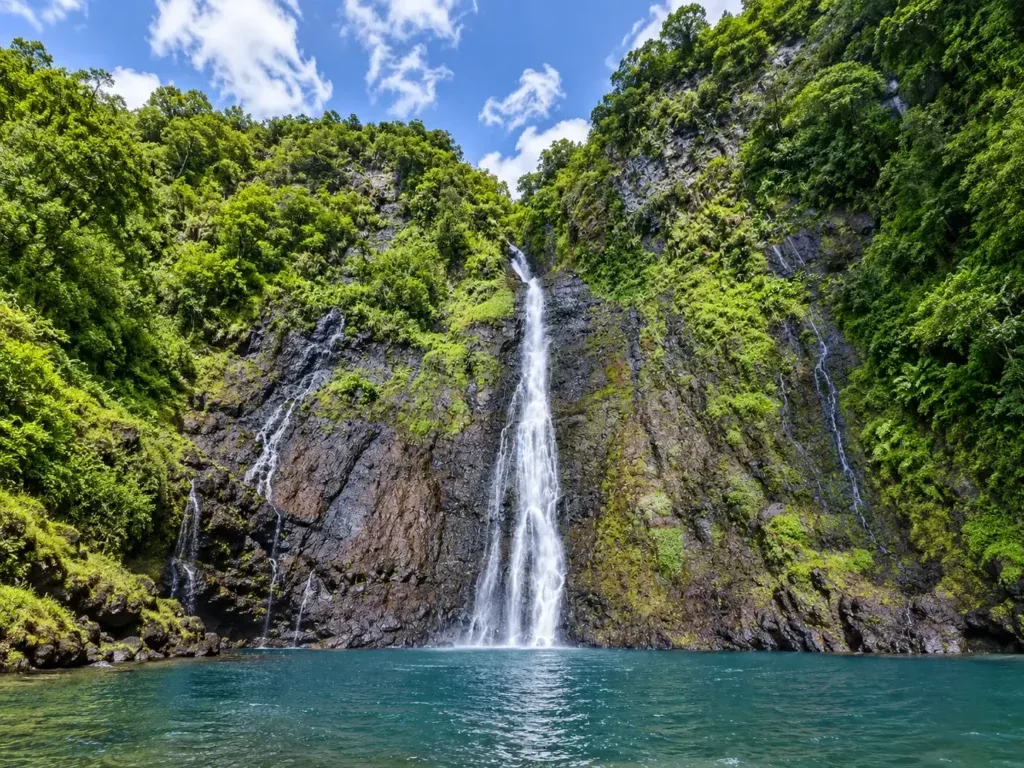
Four nights also leave room for a slow day: a pool morning, the market without a schedule, sunset over Moorea from a black-sand beach. In July the Heiva festival brings dance, singing and traditional sports competitions to Papeete, and that alone justifies a longer stay if your dates fit. Book event tickets early, and keep hiking days flexible whatever the season, since heavy rain can close valley trails at short notice.
Where to stay for each length of Tahiti stay
The right hotel follows the shape of your stay. On a short stopover you want a base that gets you into Papeete easily; on a longer one you want somewhere to come back to after a long day out, or somewhere you will not mind doing nothing. Rates below are for a standard room for two before taxes and move a lot with dates.
Prices are indicative and were last updated in October 2026. Rates change with season, exchange rates and availability, so check live prices before booking.
Hilton Hotel Tahiti: best for a one- or two-night sightseeing base
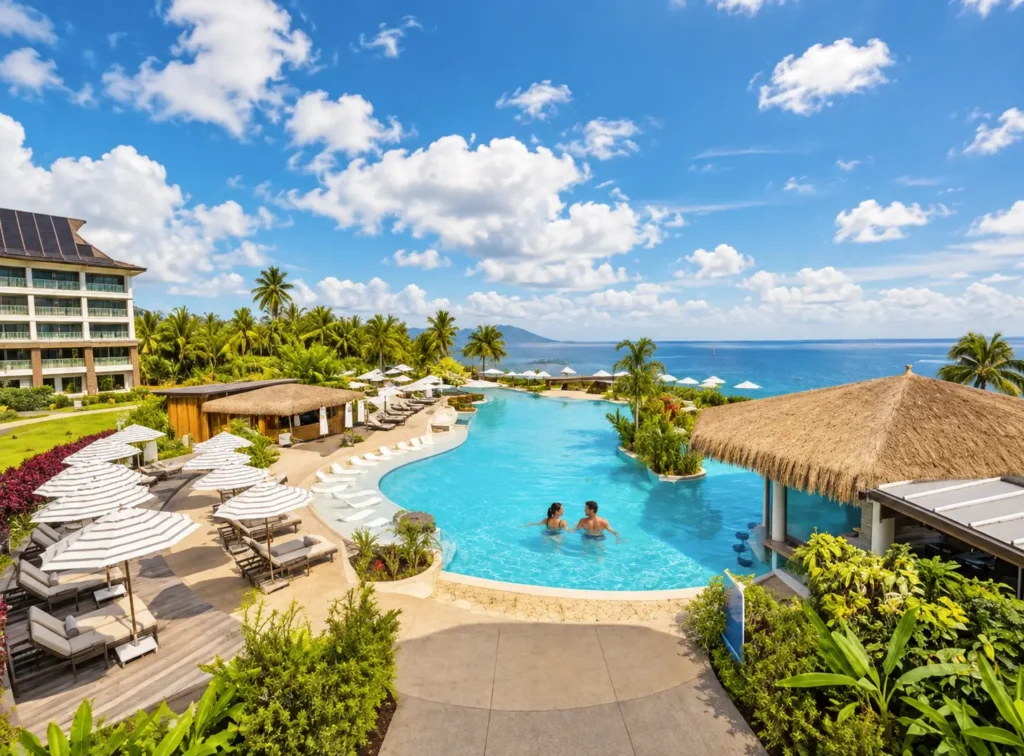
The Hilton suits stays where you plan to be out for most of the daylight hours. It sits in Faa’a on the edge of the city, so the market, the waterfront and the roulottes at Place Vaiete are a short taxi ride away, and the west-coast road to the museum starts close by. When you get back, the large pool with its six private cabanas looks straight across to Moorea, which is a good way to spend a jet-lagged afternoon. Three restaurants, including a Japanese one, mean you are not forced into town every night.
- Best for: one or two nights centred on Papeete, the museum and the roulottes
- Location: Faa’a, a few kilometres from both the city centre and the airport
- Rates: standard king rooms cost about US$350 a night from November to May and US$420 from June to October, room only, with 13% VAT, a resort fee of about XPF 1,356 per room and local tax added at the hotel
- Don’t miss: a cabana by the pool at sunset on the evening you skip town
Good to know: this is a city hotel with a resort pool, not a beach hotel, so it fits a stay built around sightseeing better than one built around the lagoon.
InterContinental Tahiti Resort & Spa: best for a two- or three-night rest stop
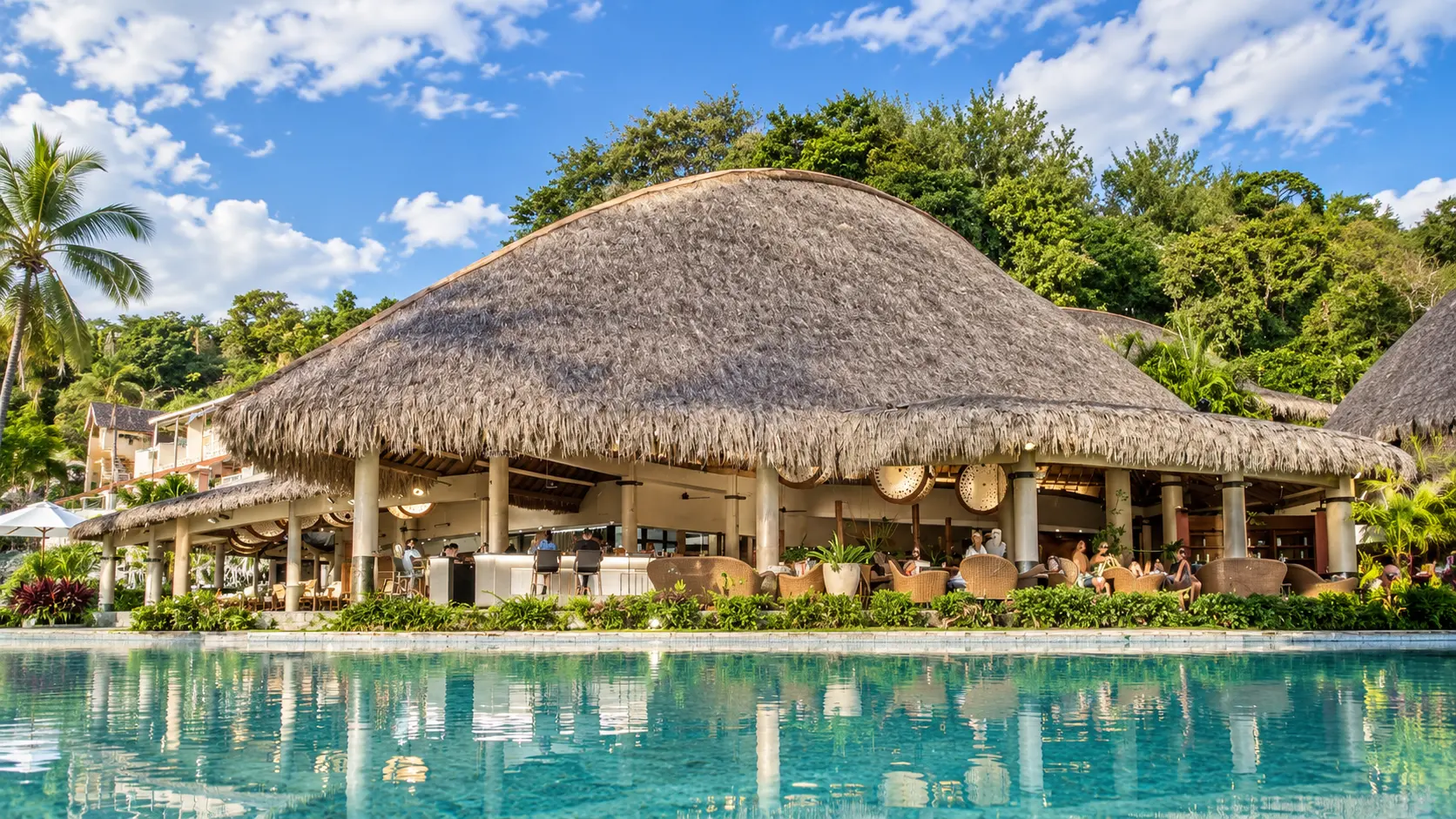
The InterContinental is the choice when your Tahiti nights are mainly about recovery. Its grounds run along the lagoon on the west side of the airport, with two infinity pools (one with a swim-up bar), the Lagoonarium for snorkelling, a spa and overwater bungalows looking towards Moorea. That means you can spend the first day in the water without leaving the property, then take the short drive south to the museum on day two. It is the one hotel of the three where a stay with almost no sightseeing still feels like part of the holiday.
- Best for: two or three nights of jet-lag recovery with optional outings
- Location: Faa’a lagoon front, a few minutes’ drive from the airport and on the way to Puna’auia
- Rates: Classic rooms range from roughly US$340 (November to May) to US$450 (June to October), and ocean-view overwater bungalows from about US$1,100 to US$1,250, room only and before 13% VAT and city tax
- Don’t miss: a morning snorkel in the Lagoonarium before the day’s first heat
Good to know: if Bora Bora’s overwater bungalow is the splurge, I wouldn’t double up here; a Moorea-view room gives you the same outlook for far less.
Tahiti Pearl Beach Resort: best for three or four nights exploring the east
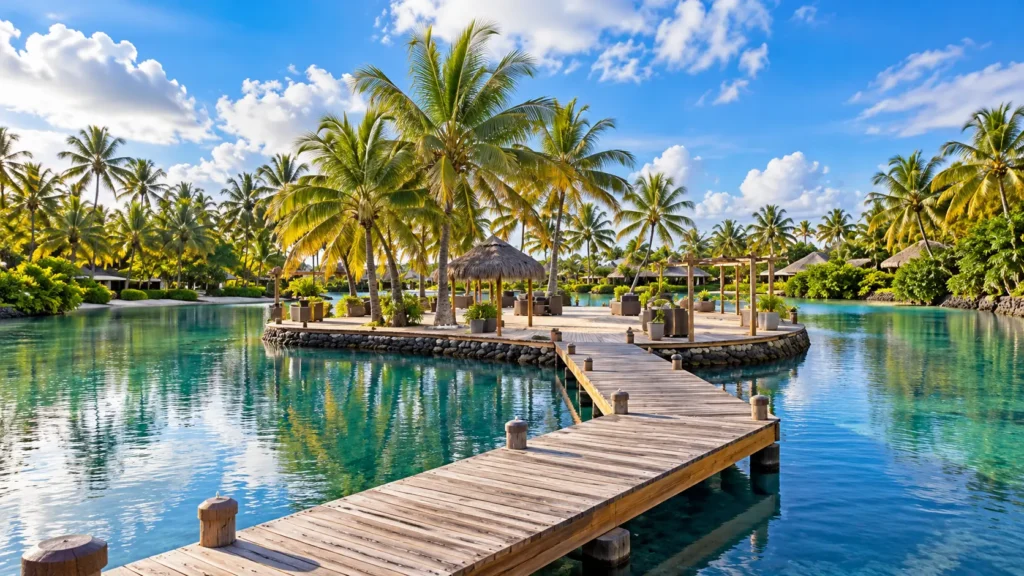
Tahiti Pearl Beach Resort (also marketed as Le Tahiti by Pearl Resorts) sits on Lafayette Beach in Arue, east of Papeete, on a stretch of black sand facing Matavai Bay. That location is the point for a longer stay: Pointe Vénus, the Arahoho blowhole, Faarumai and the road towards Papenoo are all on your side of the city, so east-coast days start without crossing Papeete traffic. The infinity pool, spa and Hita Mahana restaurant, with sunset views across to Moorea, make the evenings feel like a beach holiday, not a stopover.
- Best for: three or four nights with waterfall, valley and black-sand days
- Location: Arue, about 13km east of the airport and roughly 20 to 30 minutes’ drive depending on traffic
- Rates: ocean-view rooms from around US$400 a night in low season (November to May) and around US$450 in high season, before 13% VAT, city tax and a nightly resort fee of XPF 1,800–1,950 per room
- Don’t miss: an early swim off the black sand before setting off for Faarumai
Good to know: the Tahiti Iti day is longer from here than from the west coast, so plan it for the middle of the stay when you are fully over the flight.
How Tahiti fits into the rest of the trip
A simple rule of thumb: on a 7-night trip, give Tahiti zero or one night; on 10 nights, two; on 12 to 14 nights, three; and beyond that, four if the island interests you. The nights you save go to the islands with the lagoons. Moorea pairs most naturally with a short Tahiti stay because the ferry is so quick, and the guide to how many days to spend in Moorea covers the other half of that equation.
If you are adding a quieter island as well, read whether Taha’a is worth visiting before you lock in the split, since every night given to Tahiti comes from somewhere. Splitting Tahiti into one night at the start and one at the end is also an option, and it suits travellers who would rather see Papeete fresh after a week of resort calm.
Comparison: which Tahiti hotel for which stay
| Hotel | Ideal nights | Strongest for | From around | Booking |
|---|---|---|---|---|
| Hilton Hotel Tahiti | 1–2 | Papeete sightseeing, museum, roulottes | US$350 | Check rates |
| InterContinental Tahiti Resort & Spa | 2–3 | Jet-lag recovery on the lagoon | US$340 | Check rates |
| Tahiti Pearl Beach Resort | 3–4 | East coast, waterfalls, black sand | US$400 | Check rates |
The verdict
Two nights is the right default for Tahiti: one to recover, one to see the market, the museum or a waterfall coast and eat at the roulottes. Drop to one night or none when your flights leave no choice, and stretch to three or four when Teahupo’o, Fautaua or the Heiva is on your list. For a short stay I’d base myself at the Hilton, for a rest stop at the InterContinental, and for a longer exploration of the east at Tahiti Pearl Beach Resort.
Some links on this page are affiliate links. If you book through them, Lagoon Edit may earn a commission at no extra cost to you. It never affects which resorts we recommend.