If you can only pick one of Bora Bora, Moorea or Taha’a, choose Bora Bora for the lagoon everyone pictures, Moorea for mountains and the most to do, and Taha’a for quiet, vanilla-scented days on a lagoon you will share with very few people. The three islands sit within an hour’s flight or boat ride of Papeete, yet they look, cost and feel different enough that the right answer usually becomes obvious once you know what each one is like from breakfast to sunset.
This guide compares the islands themselves: the scenery, what a normal day looks like, how you get there from Tahiti, roughly what you will spend and who each one suits. The hotels come last, and only as evidence of what their island is good at. If you have ten nights or more, the best plan is often two islands with different personalities, and the final section shows how to pair them.
The quick answer
- Bora Bora: the headline lagoon and Mount Otemanu, a celebration trip where the resort is the destination. The most expensive of the three.
- Moorea: jagged green peaks, two deep bays, hiking, whale watching in season and a road you can drive. The easiest to reach and the most flexible on budget.
- Taha’a: vanilla farms, pearl farms, a famous coral garden and almost no crowds. No airport, so you arrive by boat from Raiatea.
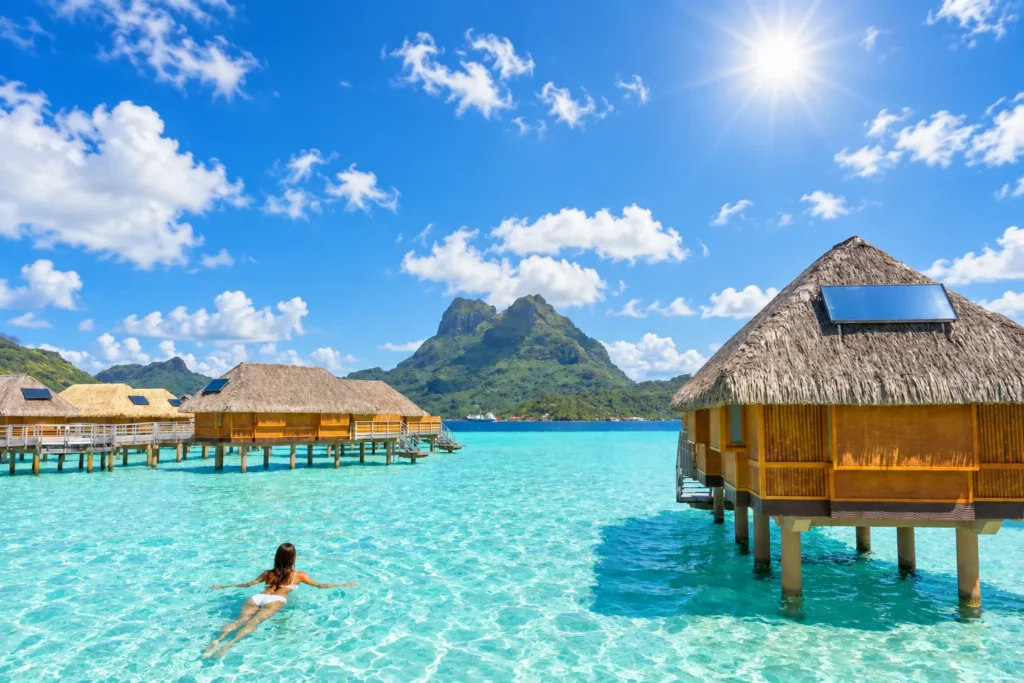
Bora Bora vs Moorea vs Taha’a at a glance
| Bora Bora | Moorea | Taha’a | |
|---|---|---|---|
| Signature scenery | Mount Otemanu (727 m) above a wide, pale-turquoise lagoon | Serrated ridges, Cook’s Bay and Opunohu Bay, Mount Rotui between them | Low green hills, vanilla groves, motu facing Bora Bora on the horizon |
| Getting there from Papeete | About 50 minutes by Air Tahiti, then a resort boat | Ferry of around 25–45 minutes | About 40–45 minutes to Raiatea, then a boat of around 35 minutes |
| Typical day | Lagoon tour, rays and sharks, long lunch, sunset at the resort | Hike or lookout, snorkel, drive the coast road, eat out | Coral garden drift, vanilla or pearl farm, motu picnic |
| Cost level | Highest; top resorts from around US$1,250 a night | Widest range; good luxury for much less | Mid to high; one main luxury resort plus transfer fees |
| Independence | Low once you are on a motu | High; hire a car or scooter | Low to medium; trips are by boat |
| Best for | Honeymoons, milestone trips, short luxury stays | First visits, active couples, families, value seekers | Second or third stop, privacy, repeat visitors |
| Minimum stay I’d suggest | 3 nights | 3–4 nights | 3 nights |
Prices are indicative and were last updated in October 2026. Rates change with season, exchange rates and availability, so check live prices before booking.
Scenery: three very different views
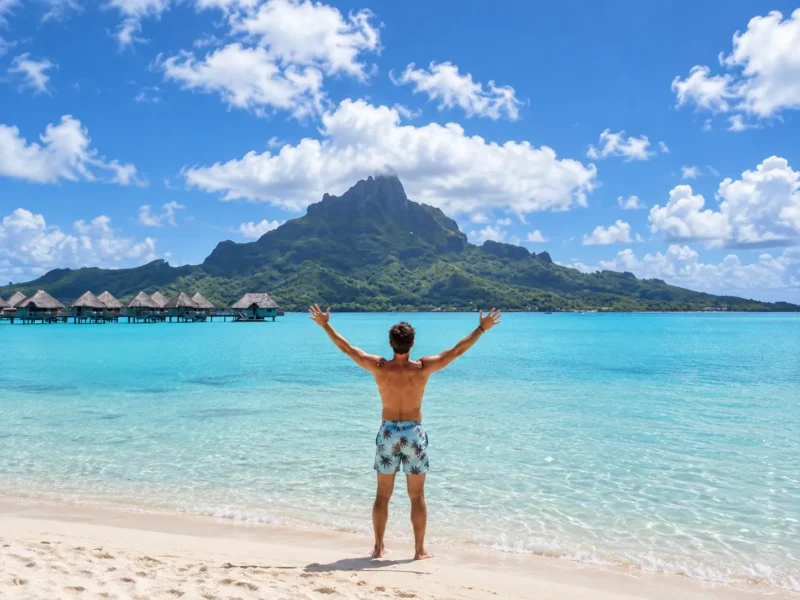
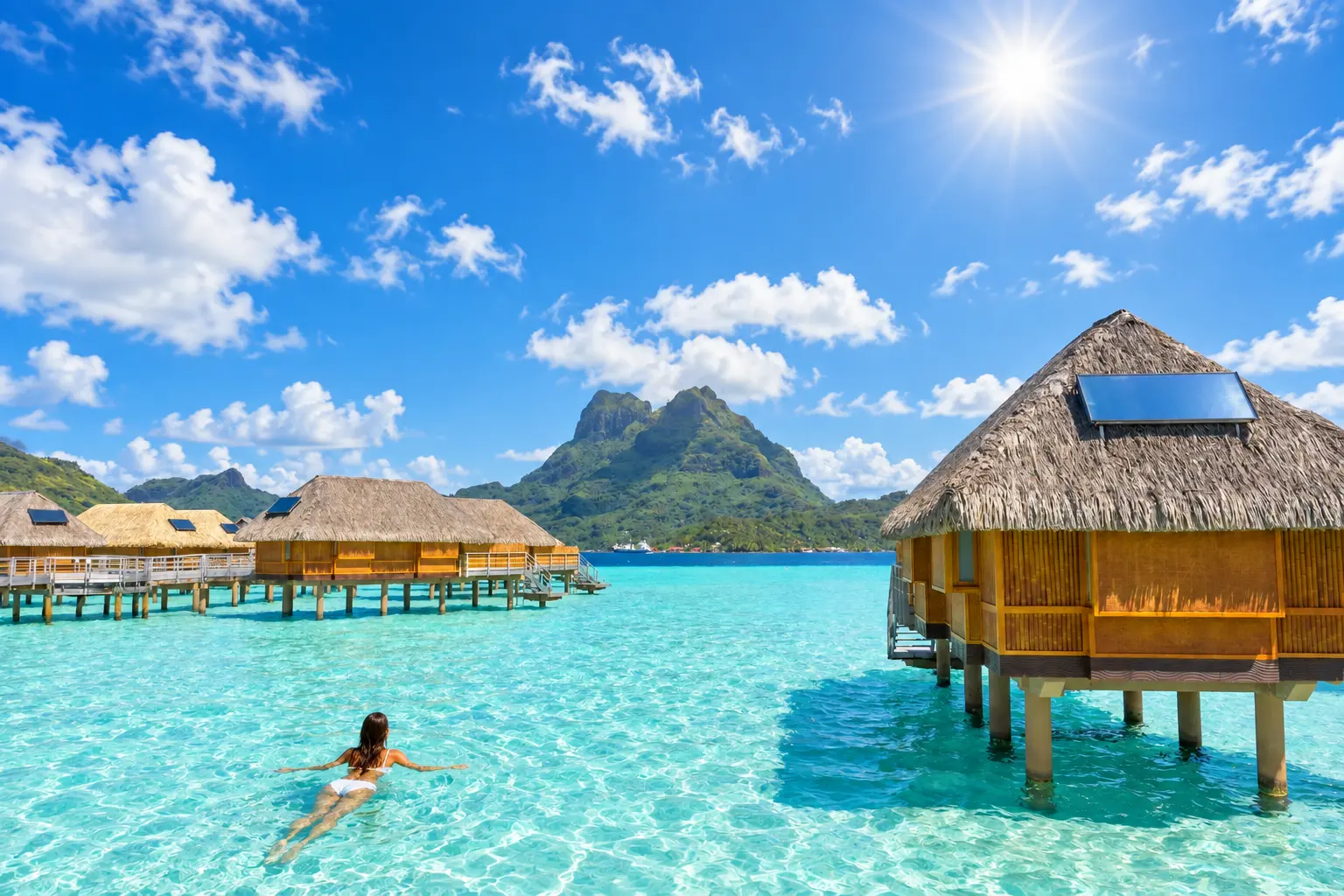
Bora Bora is defined by one mountain and one lagoon. Mount Otemanu, the island’s highest point at 727 metres, rises from the centre like a dark basalt tooth, and almost every resort is angled to look at it. Around it, the lagoon is unusually wide and shallow, which is what produces that pale, almost luminous turquoise. The island itself is small and partly built up along the coast road; the drama is in the view across the water.
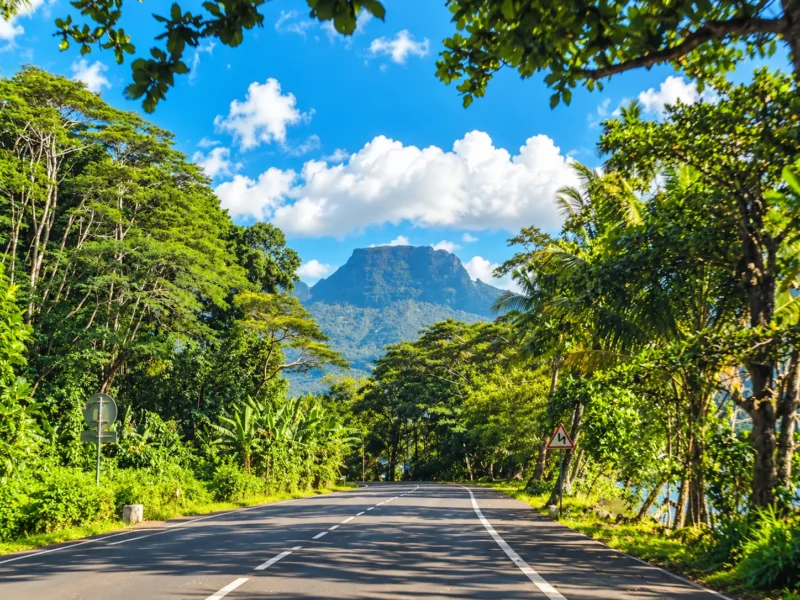
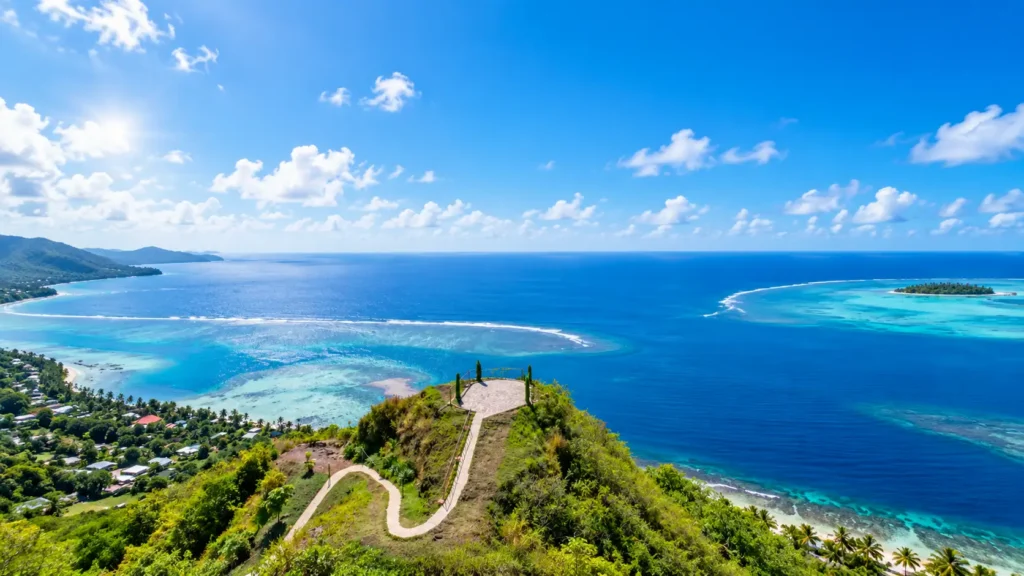
Moorea is the most mountainous of the three. Its ridges are jagged and steep, with Mount Rotui standing between Cook’s Bay and Opunohu Bay, two fjord-like inlets that cut deep into the north coast. The Belvedere lookout puts both bays in one frame. The lagoon is narrower than Bora Bora’s, so the scenery reads as green mountains first and water second, which is exactly why some people prefer it.
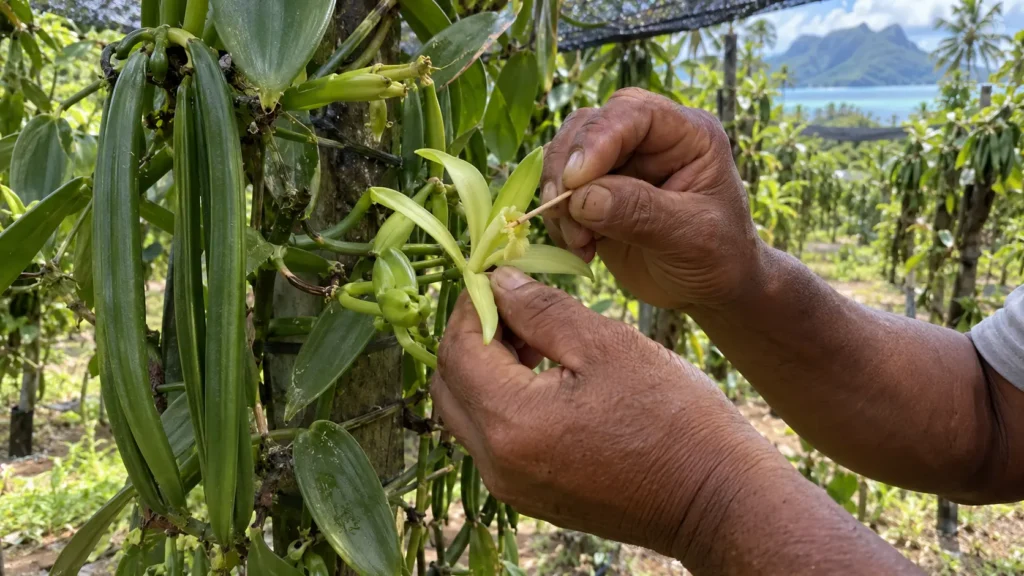
Taha’a is gentler. Its hills are rounded and forested, its villages small, and its shoreline lined with vanilla plots and pearl farms. It shares a lagoon with Raiatea, and from the motu on its western reef you look straight across the sea to the outline of Bora Bora. Nothing here is designed to impress at first glance; the appeal is the texture of an island that still lives off vanilla and pearls.
What you actually do each day
On Bora Bora, days revolve around the lagoon. A half-day boat tour typically combines snorkelling in coral spots, swimming with rays and blacktip reef sharks in the shallows and a stop on a motu. Matira Beach, on the southern tip, is the island’s main public beach and the one place where you can swim from the sand without being a resort guest. Beyond that, most visitors spend their time at the resort: spa, paddleboard, dinner with a view of Otemanu. If you dislike staying put, that rhythm may wear thin after four or five nights.
Moorea gives you the fullest list. You can drive the coast road in a day, hike up Magic Mountain (a short, steep walk with a lagoon panorama), take a 4×4 or ATV tour through the pineapple fields of the interior, and snorkel with stingrays and nurse sharks on a sandbank. From roughly July to November, humpback whales come close to the reef, and Opunohu Bay is one of the better places in French Polynesia to see them. There are roadside snack bars and local restaurants too, so you are not tied to the resort for every meal. My view is that this variety makes Moorea the strongest single island for a first visit.
Taha’a runs at a slower pace. The classic day is a boat or outrigger-canoe tour that stops at a vanilla plantation, a pearl farm and often a rum distillery, then finishes at the coral garden, a shallow channel between two motu where the current carries you gently over coral and fish. Add a picnic on a motu and that is the island’s highlight reel. Expect one outing every day or two, with the rest given over to the lagoon in front of your room.
Getting there from Papeete
All international flights land at Faa’a airport on Tahiti, so each island starts from Papeete. Moorea is the simplest: Aremiti and Terevau run ferries across the channel several times a day, with a crossing of roughly 25 to 45 minutes and passenger fares typically around 1,350 to 2,000 XPF one way. That makes it easy to arrive on a morning international flight and be on Moorea by lunchtime.
Bora Bora is about 50 minutes from Papeete on Air Tahiti, with several flights a day. The airport is on a motu, and the luxury resorts collect you by boat straight from the terminal, so the transfer is short but you are dependent on the resort’s schedule.
Taha’a has no airport. You fly around 40 to 45 minutes to Raiatea, then take a boat across the shared lagoon. Le Taha’a’s transfer takes about 35 minutes and is charged per person each way (currently listed at about 7,100 XPF, or roughly US$140 return per adult). Because Raiatea is only about 20 minutes’ flying time from Bora Bora, Taha’a slots neatly before or after a Bora Bora stay. The guide to whether Taha’a is worth adding covers the logistics in more detail.
What each island costs
Bora Bora sits at the top. Its best-known resorts start from around US$1,250 to US$1,650 a night for an overwater villa in the November to April wet season, and US$2,200 to US$2,600 from May to October, before 13% VAT and the XPF 200 per person nightly city tax; multi-bedroom options climb well past US$4,000. Meals add up quickly because, once you are on a motu, almost every dinner is a resort dinner. Budget for a lagoon tour or two on top.
Moorea covers the widest range. Luxury overwater bungalows can start from around US$700 a night in the wet season, garden and beach bungalows from around US$480 to US$500, and there are pensions and small hotels well below that. Hiring a car and eating at local restaurants also brings daily costs down.
Taha’a sits in between. Its luxury choice is essentially one resort, which limits room to shop around, and you should add the boat transfer and the Raiatea flight to the total. Most packages put it below Bora Bora’s top tier, but it is not a budget island.
Who each island suits
- Bora Bora suits honeymooners, anniversary couples and anyone who has waited years for one specific view. It also works for a short stay of three or four nights when the resort itself is the reason for the trip.
- Moorea suits first-time visitors, couples who like to hike or drive, families who need space and variety, and anyone watching the budget. The comparison of Moorea vs Bora Bora for a honeymoon goes further if you are deciding between those two.
- Taha’a suits repeat visitors, couples who want privacy over nightlife, and anyone adding a calm final stop after a busier island. If the choice is between the quiet one and the active one, read the Taha’a vs Moorea comparison.
Five hotels and what they tell you about their island
Each island’s best hotels reveal its character. I have chosen five that show what a stay on each island is really built around.
Four Seasons Resort Bora Bora: proof that the lagoon is the main event
The Four Seasons has its own Ruahatu Lagoon Sanctuary, where resident marine biologists run snorkels, coral-planting sessions and talks on reef life. That tells you something important about Bora Bora: the island’s real attraction is the water, and the leading resorts invest in it as a daily activity. You can spend a full stay here without leaving the property and still feel you have seen the lagoon properly. It is the right base if you want Bora Bora’s water to be the subject of your holiday.
- Best for: couples who want to learn about the reef they are swimming over
- Transfer: resort boat from Bora Bora airport
- Rates: a beach- or lagoon-view overwater bungalow suite runs from around US$1,650 a night in the wet season (November to April) to about US$2,600 in the dry months, room only, before 13% VAT, resort charges and city tax
- Don’t miss: a coral-planting session in the sanctuary
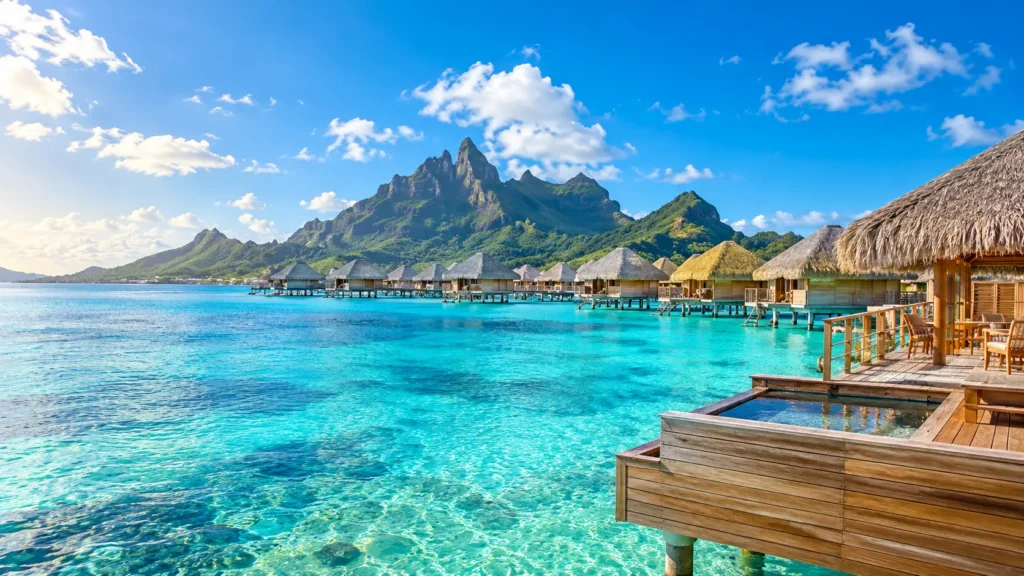
The St. Regis Bora Bora: evenings belong to the resort
Lagoon by Jean-Georges, the St. Regis’ dinner-only restaurant, sits over the water facing Mount Otemanu and uses local produce and fresh catch on a menu designed by Jean-Georges Vongerichten. It shows how Bora Bora’s evenings work: the most memorable dining on the island is inside the luxury resorts, not in town. If a special dinner is part of the reason you are going, the St. Regis makes that easy, and its butler service suits a celebration trip where you would rather not plan anything.
- Best for: milestone trips built around food and service
- Transfer: resort boat from Bora Bora airport
- Rates: Overwater Superior Villas start from around US$1,250 a night between November and April and reach about US$2,200 from May to October, room only and before 13% VAT and the city tax
- Don’t miss: dinner at Lagoon by Jean-Georges (closed Wednesdays)
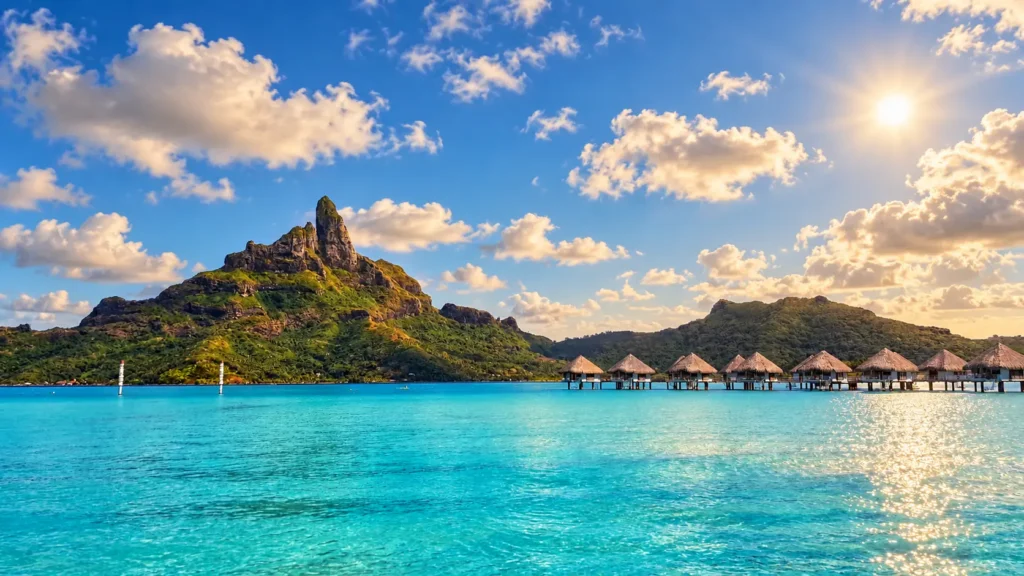
Hilton Moorea Lagoon Resort & Spa: a base for getting out
The Hilton sits at Papetoai on Moorea’s north coast, close to the mouth of Opunohu Bay, with the island’s ridges rising behind it. Its location says a lot about Moorea: the best resorts are a short drive from lookouts, hiking trails and whale-watching departures, so the hotel works as a base, not a bubble. Overwater bungalows have glass floor panels, while garden bungalows with plunge pools make sense if you plan to be out exploring most days. Pick it if you want resort comfort with the island’s interior on your doorstep.
- Best for: active couples and first-time visitors
- Location: Papetoai, about 20 to 25 minutes’ drive from the ferry dock
- Rates: garden pool bungalows from around US$480 a night, overwater bungalows from around US$700 in the wet season and about US$950 in the dry season, room only before 13% VAT
- Don’t miss: the Belvedere lookout, a short drive inland
Good to know: a resort fee of about XPF 1,356 per room per night and a city tax of XPF 200 per adult per night are added on top of the room rate, so check the final total when you compare quotes.
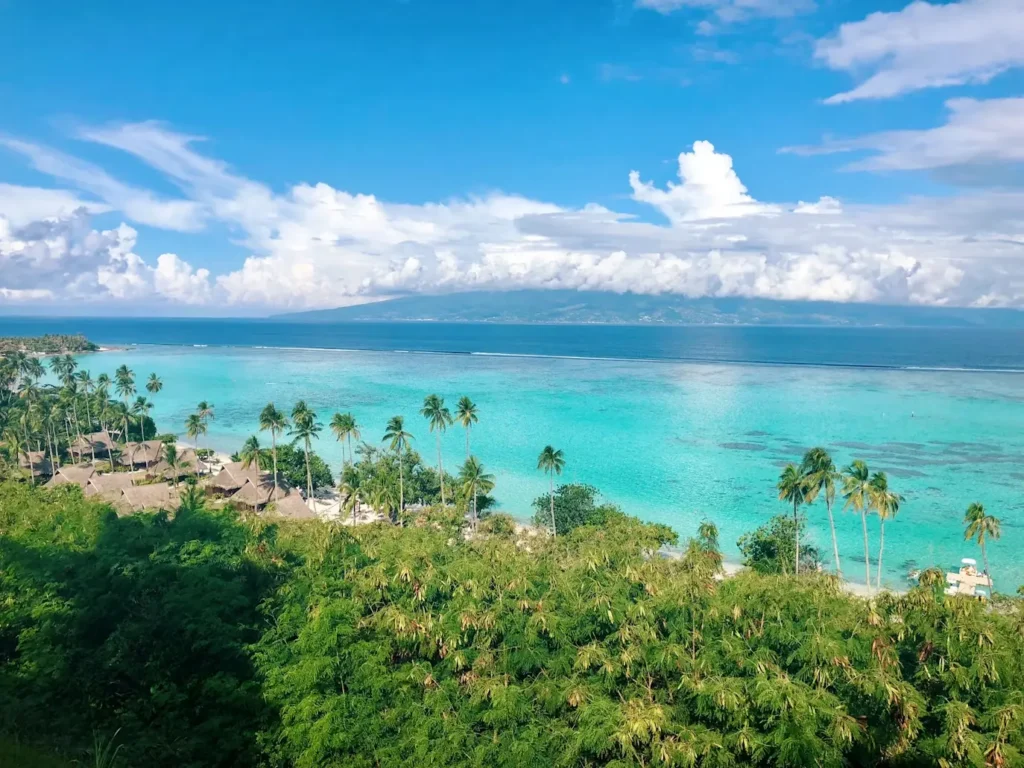
Sofitel Kia Ora Moorea Beach Resort: Tahiti is always in view
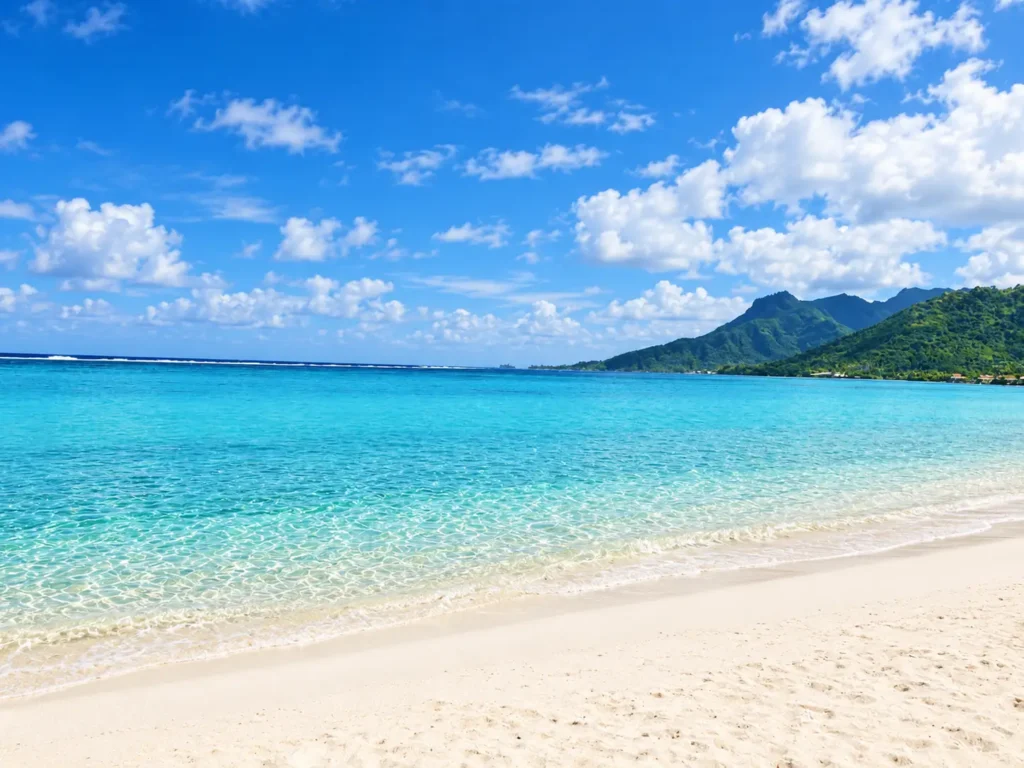
The Sofitel sits on Moorea’s north-east coast near Temae, one of the island’s best stretches of white sand, with Tahiti visible across the channel. It shows how close Moorea is to the main island: you are minutes from the ferry dock, which suits a first or last night of a trip. The resort has around 110 bungalows over the water, on the beach and in the gardens, plus a two-bedroom villa. Choose it for an easy start or finish, or for beach time without much travelling.
- Best for: short stays bookending an international flight
- Location: Temae area, close to the ferry dock and Moorea’s small airport
- Rates: garden villas are quoted from around US$500 a night with breakfast in the wet season and about US$700 in the dry months, overwater villas from around US$1,100, plus 13% VAT and city tax
- Don’t miss: sunrise over Tahiti from the beach
Le Taha’a: the island’s luxury is out on the reef
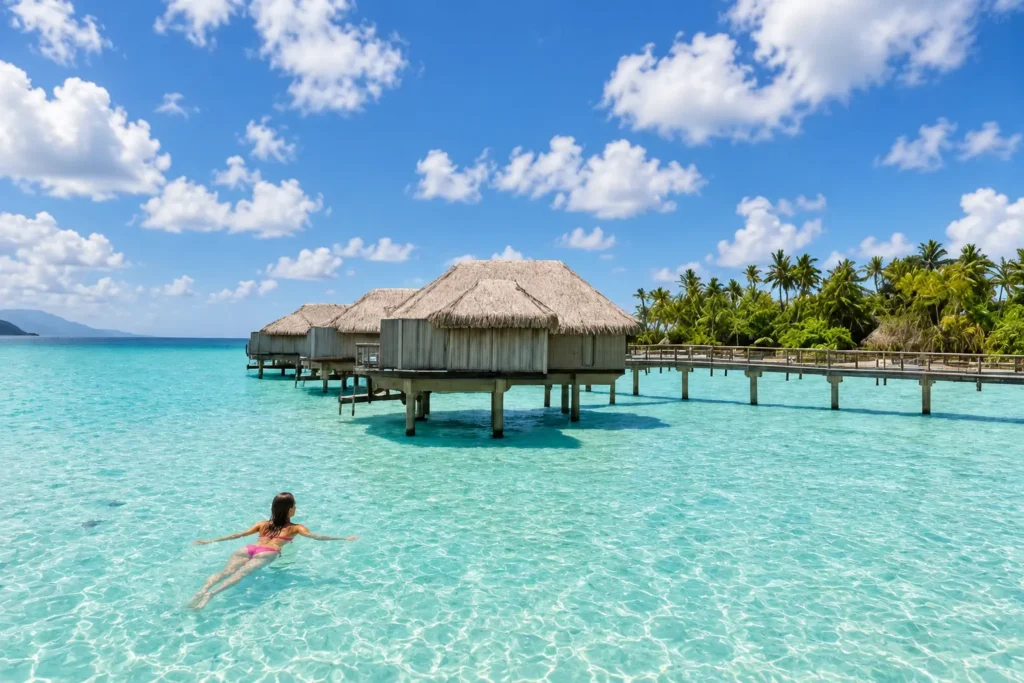
Le Taha’a, a Relais & Châteaux property, occupies Motu Tautau on Taha’a’s outer reef, with around 60 overwater suites and beach villas looking across the water to Bora Bora. That tells you how Taha’a works for luxury travellers: the comfort is on a private motu, while the vanilla farms and villages of the main island are a boat ride away. The coral garden drift snorkel lies close by, so the island’s best-known experience is almost on your doorstep. Stay here if you want calm water, privacy and a view of Bora Bora without its price tag on every meal.
- Best for: couples finishing a trip slowly, repeat visitors
- Transfer: fly to Raiatea, then about 35 minutes by resort boat
- Rates: Pool Beach Villas cost from around US$1,150 a night with breakfast between November and April and about US$1,300 from June to October, before 13% VAT and city tax; add roughly US$140 per adult for the return boat
- Don’t miss: the coral garden drift and a vanilla plantation tour
Good to know: tell the resort your flight times well in advance; the boat is timed to reach Raiatea airport about an hour before departure.
Which island should you choose?
Ask yourself one question: what do you want to be doing at 11am on day three? If the answer is floating over coral with Otemanu behind you, book Bora Bora. If it is halfway up a ridge looking down on two bays, book Moorea. If it is nothing much at all, with a vanilla tour pencilled in for tomorrow, book Taha’a.
For one island only, I’d pick Moorea for a first visit because it gives the most variety for the money, and Bora Bora when the trip is a once-in-a-lifetime celebration. I wouldn’t choose Taha’a as a sole destination on a short trip; its slower pace and transfer time work best as part of a longer stay.
How to combine them
- Moorea + Bora Bora (7–8 nights): the classic pairing. Spend four nights on Moorea first, while you have the energy to explore, then finish with three or four on Bora Bora.
- Bora Bora + Taha’a (7–8 nights): best for privacy. The short hop between Bora Bora and Raiatea makes this the easiest combination after Moorea and Tahiti.
- Moorea + Taha’a (7–8 nights): the lower-cost, more local-feeling choice, with mountains followed by vanilla and coral.
- All three (10–12 nights): Moorea, then Taha’a, then Bora Bora as the finale, or swap the last two for a calmer ending. The 10-day French Polynesia itinerary sets out the flights and nights.
Leave a buffer before your international departure from Papeete. Inter-island flights can be rescheduled, and Taha’a’s boat connection adds another link to the chain, so I’d keep the last night on Moorea or Tahiti if your flight home leaves early.
Where to stay on each island
| Hotel | Island | What it shows about the island | Booking |
|---|---|---|---|
| Four Seasons Resort Bora Bora | Bora Bora | The lagoon is the main activity | Check rates |
| The St. Regis Bora Bora | Bora Bora | The best dinners are in the resorts | Check rates |
| Hilton Moorea Lagoon Resort & Spa | Moorea | Bays and trails within easy reach | Check rates |
| Sofitel Kia Ora Moorea Beach Resort | Moorea | Close to Tahiti and the ferry | Check rates |
| Le Taha’a | Taha’a | Luxury on the reef, culture by boat | Check rates |
My verdict: Moorea is the best all-rounder, Bora Bora is the island to splurge on, and Taha’a is the quiet extension that makes a longer trip feel unhurried. If you have the nights, combining two of them gives you a far more complete picture of French Polynesia than doubling down on one.
Some links on this page are affiliate links. If you book through them, Lagoon Edit may earn a commission at no extra cost to you. It never affects which resorts we recommend.