If this is your first trip and you have five nights or fewer, book a motu resort: the lagoon, the private beach and the full-face view of Mount Otemanu are what most people fly to French Polynesia for, and a motu delivers them from the moment you leave the airport dock. If you have a week or more, eat out happily and dislike planning your evenings around a boat timetable, the main island around Matira Point is the better base. That is the short version of the Bora Bora main island vs motu question; the rest of this guide explains what each location means once you are actually there.
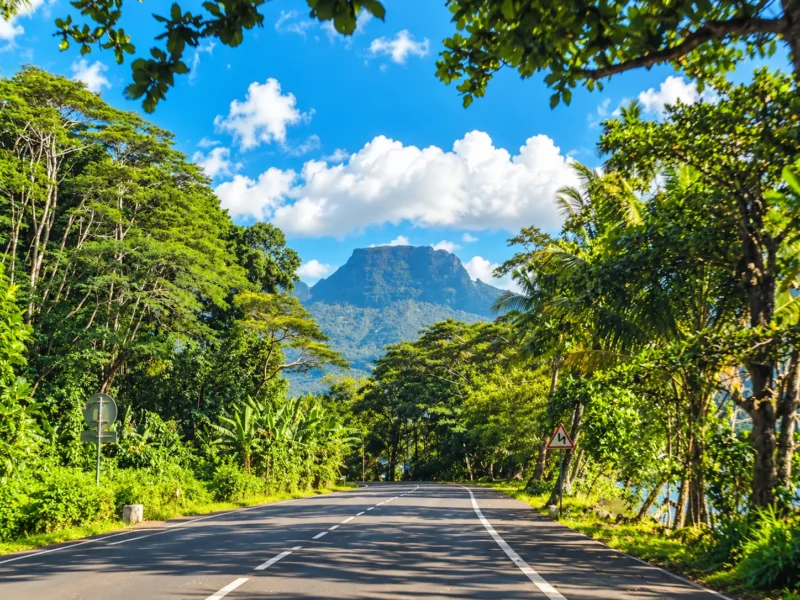
Geography drives everything here. The main island is the steep volcanic core, ringed by a single 32km coastal road, with Vaitape as its village and Matira as its beach district at the southern tip. The motu are the flat, sandy islets on the barrier reef that encircles the lagoon. Most of the famous five-star resorts sit on those islets, looking back west or south-west at the mountain. The airport itself is on a motu too, which shapes your first and last hour in Bora Bora more than most travellers expect.
Bora Bora main island vs motu at a glance
| Factor | Main island (Matira area) | Motu resort |
|---|---|---|
| Arrival from the airport | Free Air Tahiti shuttle boat to Vaitape (about 20 minutes), then road transfer south | Resort boat straight from the airport dock to your hotel jetty |
| Getting to Vaitape | Taxi, hire car, scooter or bicycle whenever you like | Scheduled resort shuttle boat; some sailings free, evening runs often charged |
| Dining | Hotel restaurants plus roulottes, beach snack bars and independent restaurants within walking distance | Mostly resort restaurants; eating out means a boat and taxi both ways |
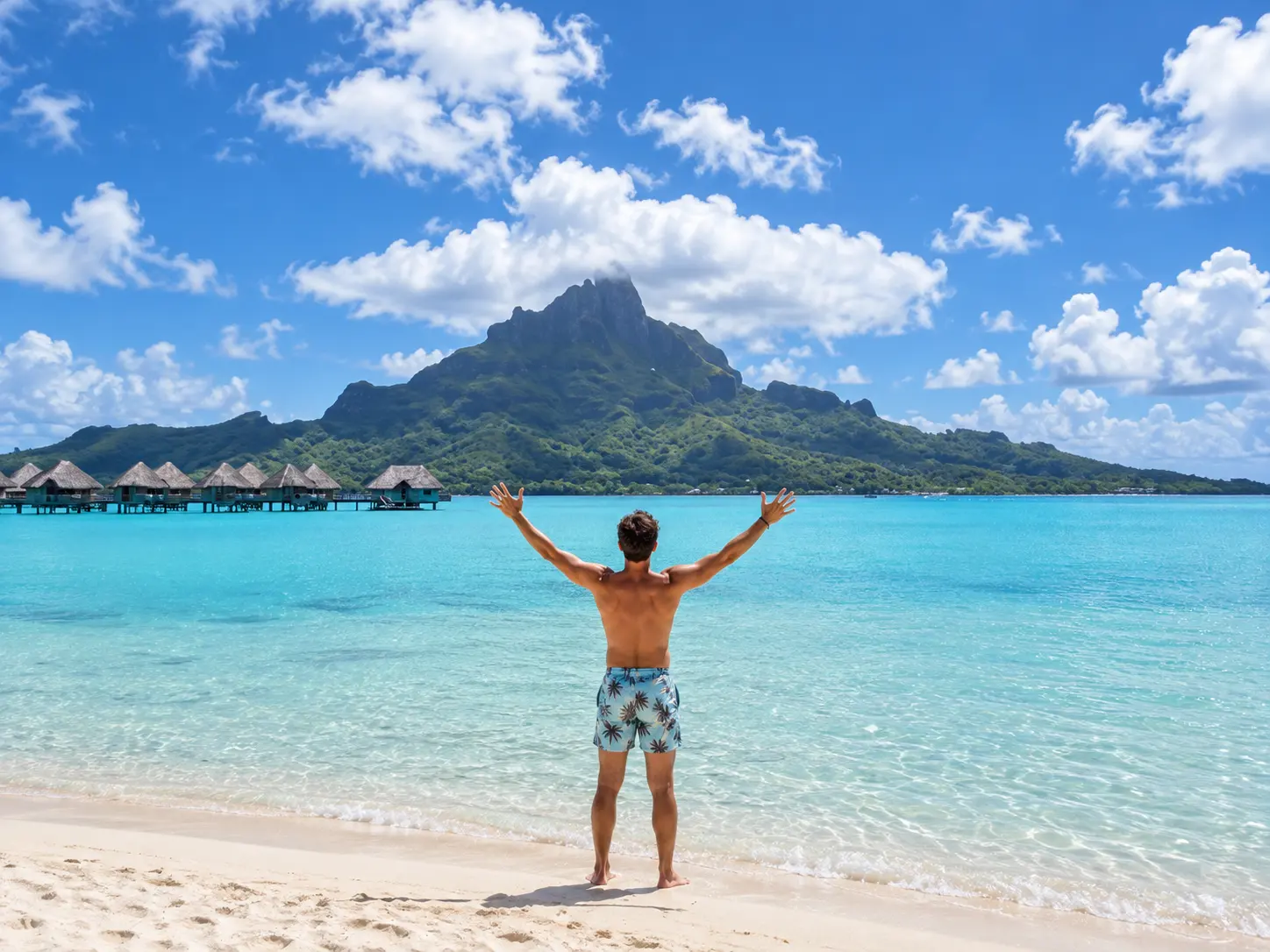
| Mount Otemanu view | The mountain rises behind or beside you; views face the lagoon and outer reef | Otemanu straight ahead across the water, the classic postcard angle |
| Beach | Matira, the island’s best public beach, shared with day visitors | Private resort beach and calm lagoon frontage |
| Exploring on land | Walk, cycle, hire a car or join a 4×4 tour from the door | Possible, but each outing starts with a boat ride |
| Typical luxury rate | Overwater bungalows from around US$850 a night in the wet season | Overwater villas commonly US$1,250 to US$3,000+ a night |
| Best for | Longer stays, food lovers, independent and active travellers | Honeymoons, short stays, travellers who want to stay put |
Prices are indicative and were last updated in October 2026. Rates change with season, exchange rates and availability, so check live prices before booking.
How arrival works: the airport is on a motu
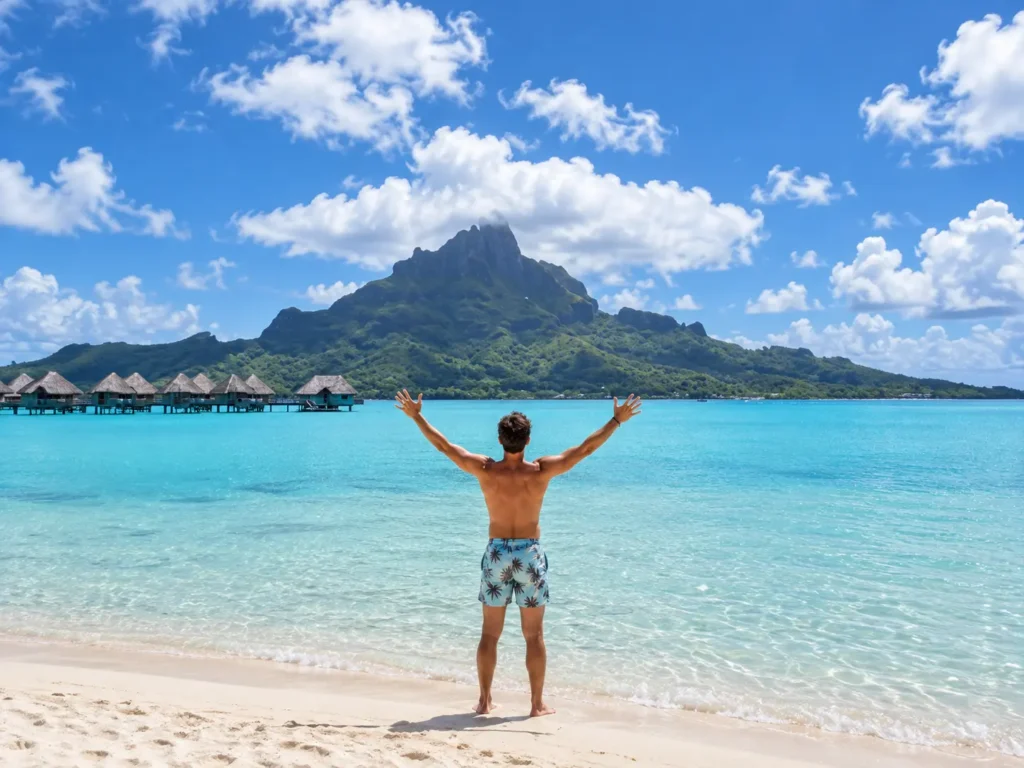
Bora Bora Airport occupies Motu Mute on the northern rim of the lagoon, so nobody drives out of the terminal. Every arrival ends with a boat, and which boat you take is the first real difference between the two locations.
If you are staying on the main island, Air Tahiti runs a free shuttle boat to the Vaitape quay for its passengers. It typically leaves around 20 minutes after a flight lands and takes about the same time to cross. Your hotel or a taxi then collects you for the drive south; Matira is roughly a 15-minute ride from Vaitape. It is cheap and straightforward, though with luggage it means three handovers in under an hour.
Motu resort guests are met at the airport dock by their hotel’s own launch, often with a welcome drink and bags handled for you. The ride is short, usually 15 to 25 minutes depending on which side of the lagoon you are heading to. The catch is cost: round-trip transfers are frequently charged separately, and where resorts publish a fare it tends to be around US$160 to US$175 per person return. Some packages, including certain Four Seasons rates, fold transfers into the stay, so ask before you compare headline prices.
Day-to-day life on a motu
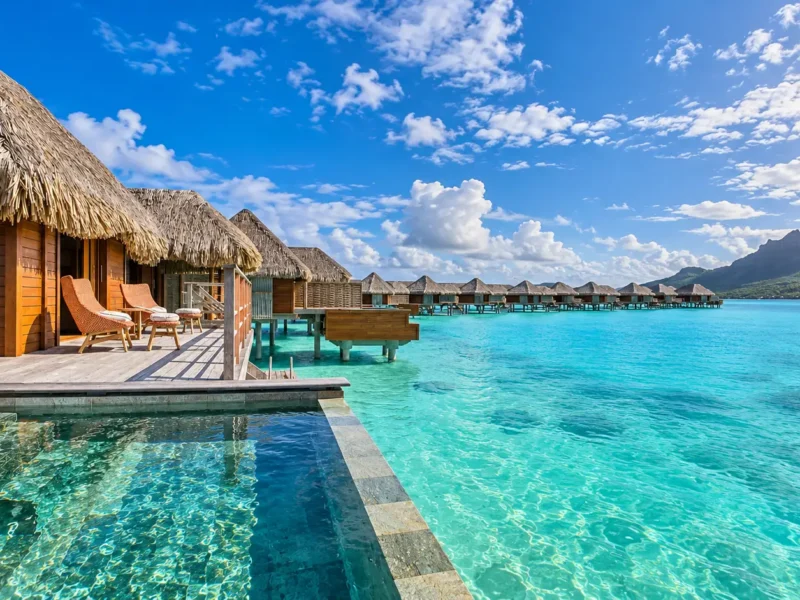
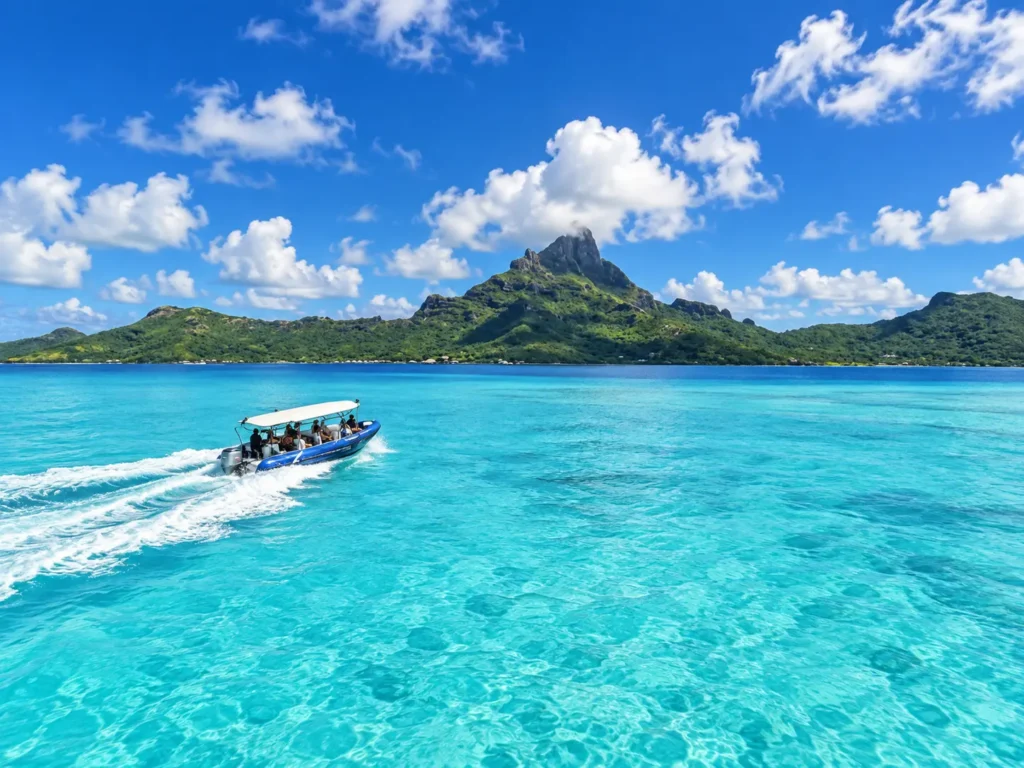
A motu resort works best when you treat it as the whole holiday. There is no road beside your villa, no traffic noise and almost no passing foot traffic. Snorkelling, paddleboarding, the spa and lunch are a short walk along the sand, and the large resorts run enough restaurants and bars to fill several nights without repetition. This is the setting behind most Bora Bora honeymoon photos, and it suits a short stay because nothing needs organising.
The limit is the shuttle boat. Resorts run scheduled crossings to Vaitape or to their own landing on the main island, and the pattern is usually generous by day and thinner after dark. Four Seasons, for instance, runs return boats to Vaitape twice daily from Monday to Saturday, with the morning run complimentary and the dinner-time sailing charged. That makes a sunset dinner in town perfectly possible, but it becomes a planned outing with a fixed return time.
Because almost every meal is taken on property, food becomes a major line in the budget. Resort breakfasts and dinners in Bora Bora are priced at a steep premium, which is why half-board and all-inclusive offers deserve a close look on a motu. Check exactly which restaurants and drinks a plan covers, since signature venues are often excluded.
Day-to-day life around Matira on the main island
On the main island, the hotel is a base, not a bubble. Around Matira Point you can walk to Matira Beach, which is long, shallow and sandy with sunset light, and reach a handful of independent places to eat without calling anyone. Roulottes (food trucks) serve crêpes, grilled fish and steak frites for a fraction of resort prices, and a few beachfront restaurants offer a proper dinner within a 10-minute walk.
Land exploration is the other big gain. The coastal road is flat enough to cycle in a day, and scooters, e-bikes and small cars are easy to hire, with car rental typically around €90 to €170 a day. Guided 4×4 tours climb to wartime cannon sites and lookout points over the lagoon, with shared tours from around €90 per person. From a motu you can do all of this too, but each outing starts and ends with the shuttle.
What you give up is the postcard view and some privacy. Otemanu rises behind or beside you rather than across open water, Matira Beach is public and busy on weekends, and you will hear the road from some rooms. Hotel grounds on the main island are also smaller than the sprawling motu properties.
The real cost difference
Headline room rates exaggerate the gap in some ways and hide it in others. A main-island overwater bungalow at a luxury brand can start from around US$850 a night between November and April (about US$1,300 in the dry season), while motu overwater villas at the top resorts more commonly run from US$1,250 in the wet season to US$3,000 or more in the dry months, all before 13% VAT and the XPF 200 per person nightly city tax. The bigger difference often comes from the extras around the room.
On a motu, add two airport transfers per person, any charged shuttle runs, and nearly every meal at resort prices. On the main island, add taxis or a hire car and some resort meals, but offset them with cheaper lunches and dinners nearby. Over five nights for two, I would expect the non-room spend on a motu to be noticeably higher, sometimes by several thousand US dollars if you eat à la carte every evening. If the whole of French Polynesia is still on the table, the Maldives vs Bora Bora comparison sets these costs against the Indian Ocean alternative.
Where to stay: four resorts by location
These four cover both sides of the choice. Each is described by what its position on the lagoon means in practice; for room-by-room advice, see the beach bungalow vs overwater bungalow guide.
Four Seasons Resort Bora Bora: best motu base for full-resort days
Four Seasons sits on Motu Tehotu on the north-eastern reef, looking south-west across the lagoon at Otemanu, so most overwater villas get the mountain head-on. It is one of the more self-contained motu resorts, with several restaurants, a large spa, a lagoon sanctuary for snorkelling and a kids’ club, which means there is little reason to leave. When you do want Vaitape, return boats run twice a day Monday to Saturday; the morning crossing is free and the evening one carries a fee. Transfer arrangements are sometimes included in package or resort-fee rates, so read the inclusions carefully.
- Best for: couples and families planning to spend most days on the resort
- Location: north-eastern motu, short boat ride from the airport, longer crossing to Vaitape
- Rates: beach- or lagoon-view overwater bungalow suites from around US$1,650 a night in the wet season and about US$2,600 from May to October, with Otemanu-view suites nearer US$3,050 in peak months, room only and before taxes and resort charges
- Don’t miss: the resort’s protected lagoon sanctuary, ideal for snorkelling without a boat trip
Good to know: If you plan one dinner in town, book it for a night the evening shuttle runs, since there is no Sunday service.
The St. Regis Bora Bora: best motu for space and seclusion
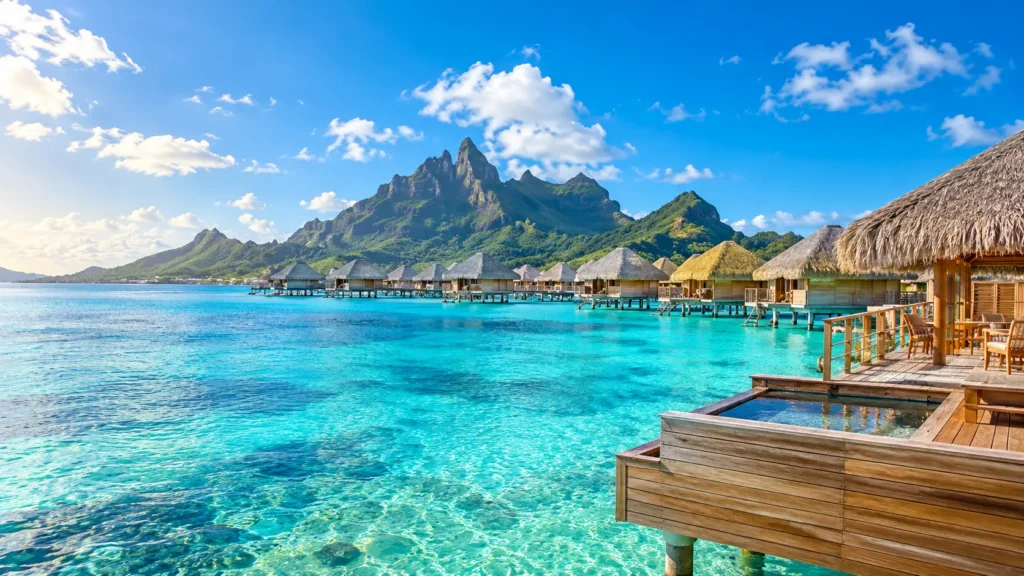
The St. Regis covers a 44-acre islet, Motu Ome’e, on the eastern side of the lagoon, with Otemanu due west, so evenings bring the sun dropping behind the mountain. Its scale is the point: villas are well spread out, and the resort has its own Lagoonarium, a fenced marine sanctuary where you can snorkel among reef fish without leaving the property. Lagoon, the overwater restaurant, is the dinner most guests save for a special night. Arrival is by the resort’s own launch from the airport dock, and scheduled boats link the motu to a main-island landing for trips to Vaitape.
- Best for: honeymooners who want privacy and room to spread out
- Location: eastern motu, Otemanu views to the west, among the farthest resorts from Vaitape by boat
- Rates: Overwater Superior Villas from around US$1,250 a night in the November to April wet season, about US$2,200 in the dry season, room only before 13% VAT and city tax
- Don’t miss: an early snorkel in the Lagoonarium before day guests and boats are about
Good to know: Ask for the current shuttle sheet at check-in, as timings to the main island can change seasonally.
InterContinental Bora Bora Resort & Thalasso Spa: closed until late 2027
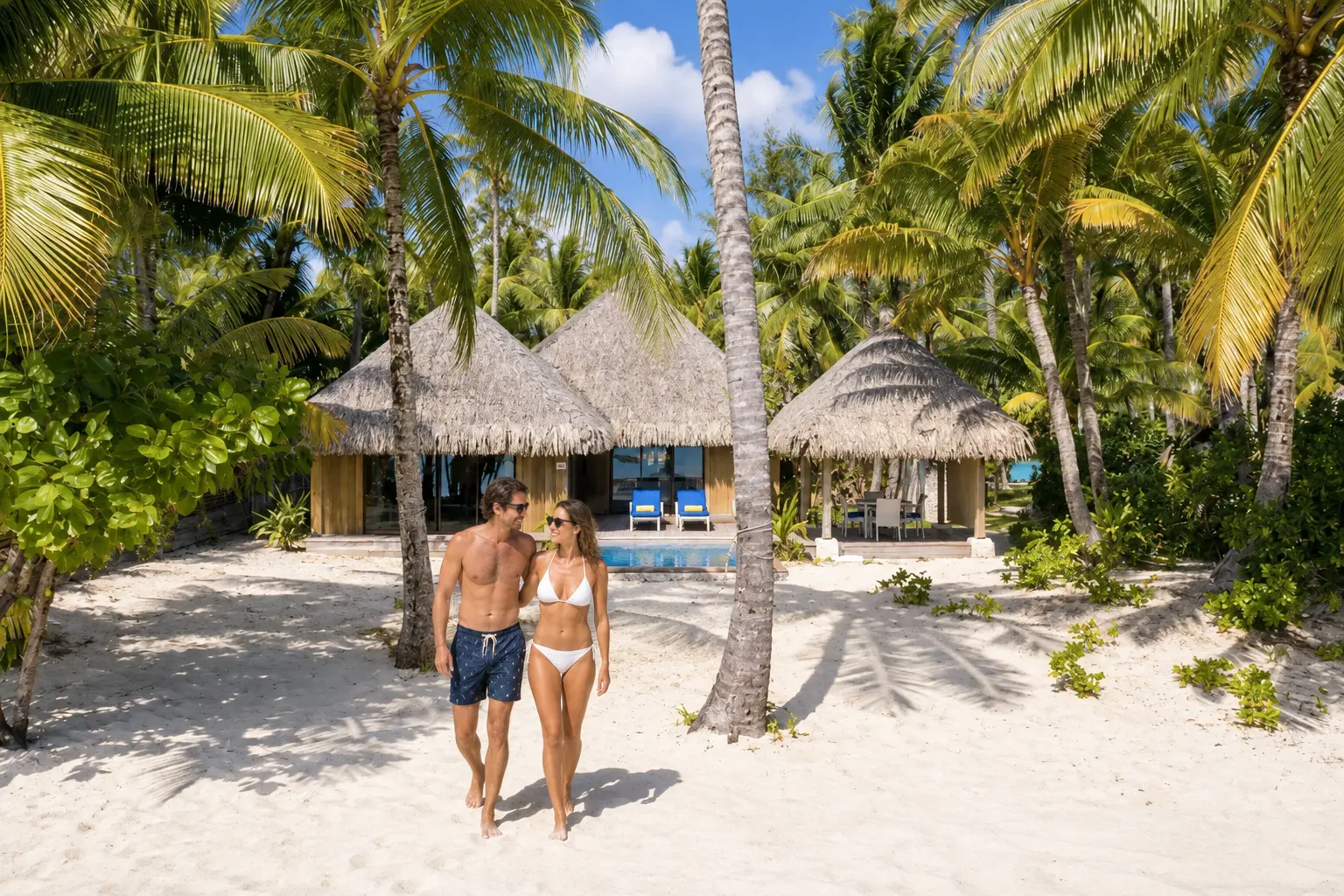
The Thalasso, on Motu Piti Aau on the eastern reef, has been closed since 1 June 2026 and is due to reopen in late 2027 as Regent Bora Bora, so you can’t book it for now. Its deep-ocean spa and the free shuttle boat to its sister hotel at Matira Point were the reasons it suited a motu stay with easy main-island days, and neither is available while it is shut. For now, I’d pick Four Seasons or the St. Regis for a motu, or stay at Le Moana itself if Matira is the draw.
- Status: closed since 1 June 2026; reopening as Regent Bora Bora in late 2027
- Location: eastern motu, facing Otemanu across the lagoon
- Rates: not bookable; Regent pricing has not been announced
- Instead: Le Moana for Matira, Four Seasons or the St. Regis for a motu
Good to know: if you are planning a trip for late 2027 or beyond, check whether the Regent has opened and which of the old InterContinental features it has kept.
InterContinental Bora Bora Le Moana Resort: best main-island base
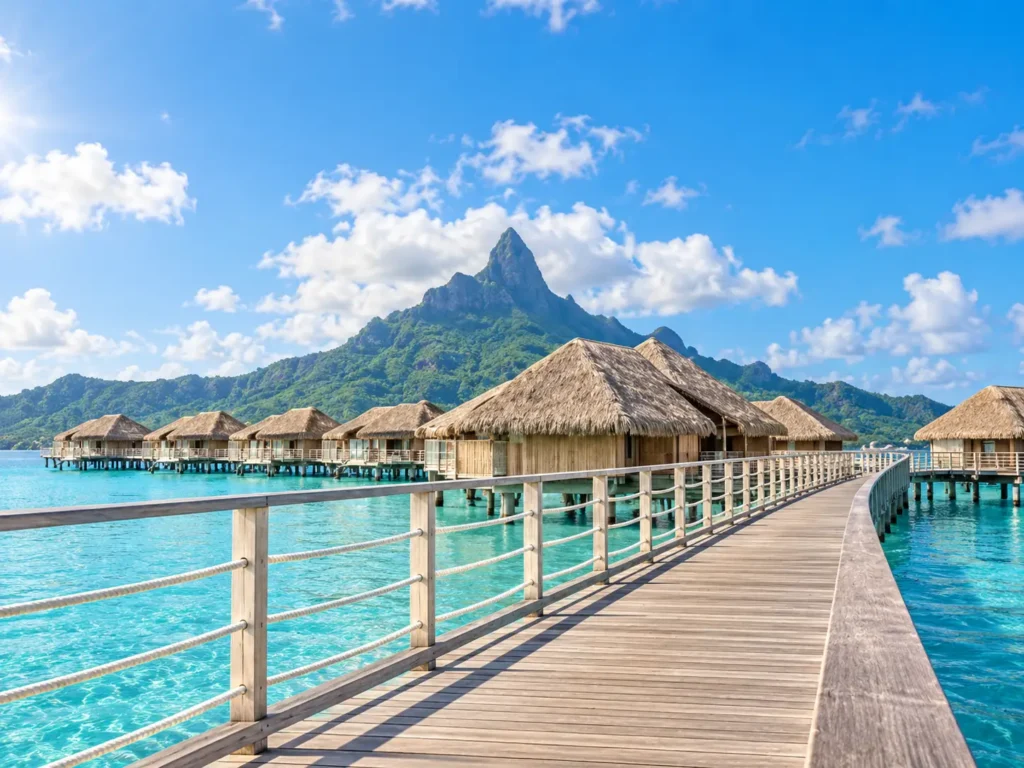
Le Moana occupies Matira Point at the southern end of the main island, along the coastal road. It gives you overwater bungalows without the boat dependence: Matira Point is about a five-minute walk, Matira Beach roughly 15 minutes, and a roulotte and a couple of beachfront restaurants are close by. Bungalows at the end of the pontoons enjoy wide lagoon views towards the motu, though Otemanu sits behind you to the north rather than across the water. Vaitape is around 15 minutes by road; the shuttle to its sister resort across the lagoon is suspended while the Thalasso is closed.
- Best for: longer stays, independent travellers and anyone who wants to eat out
- Location: Matira Point on the main island; Air Tahiti shuttle to Vaitape, then a short drive
- Rates: lagoon-view beach bungalows from around US$600 a night and overwater bungalows from around US$850 in the wet season, about US$1,300 from May to October, before 13% VAT and city tax
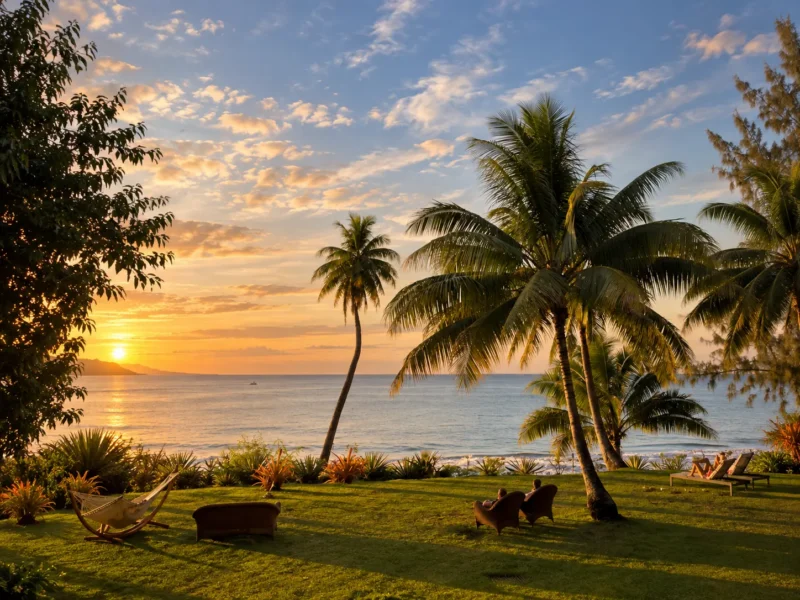
- Don’t miss: a late-afternoon walk along Matira Beach as the light turns gold
Good to know: Ask for a bungalow towards the end of a pontoon for the widest, least overlooked view.
Who each location suits
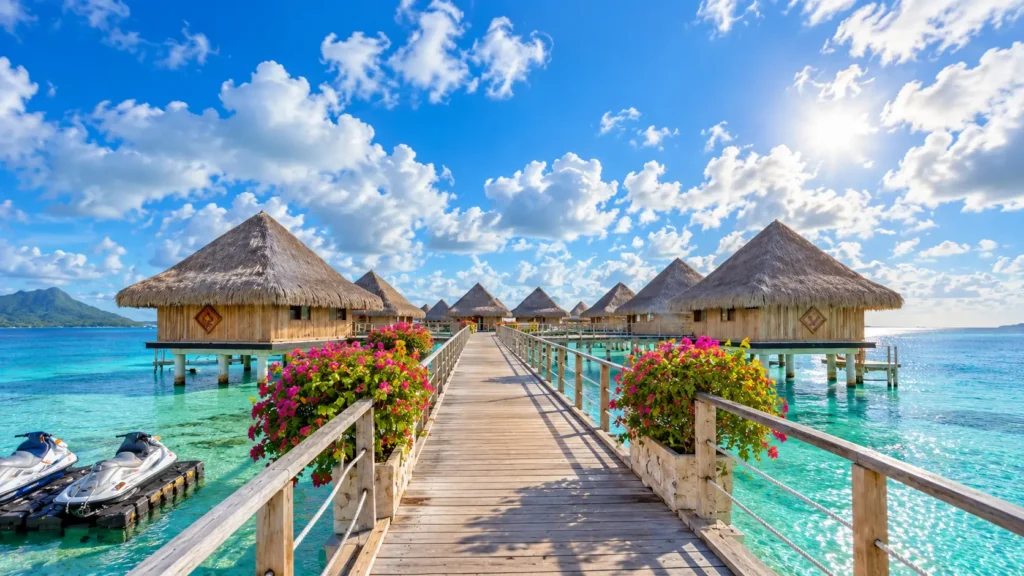
Honeymooners on a short trip: Choose a motu. Four or five nights pass quickly, and the privacy and Otemanu view are the reason to make the long journey. If you are still choosing between islands, the Moorea vs Bora Bora honeymoon comparison covers that first decision.
Food lovers and explorers: Choose Matira. Being able to walk to dinner, cycle the coast road and book a 4×4 tour without a boat makes a real difference across a week.
Families: A large motu resort is the easier option with younger children, thanks to pools, a kids’ club and calm lagoon water steps from the room. Teenagers may enjoy the freedom of the main island more.
Travellers with limited mobility or seasickness: The main island involves fewer boat transfers after arrival. On a motu, every outing means stepping between a jetty and a launch, so discuss assistance with the resort first.
Seven nights or more: Consider splitting the stay, with three nights at Matira followed by four on a motu, so the trip becomes quieter as it goes on. The same logic applies on other island groups, as the private island vs luxury beach resort guide explains.
If Bora Bora is one stop on a wider trip, the Bora Bora, Moorea or Taha’a guide and the 10-day French Polynesia itinerary help you decide how many nights to give each island. More planning help is in the Bora Bora travel guides.
Main island and motu resorts compared
| Resort | Location | Otemanu view | Getting to Vaitape | Booking |
|---|---|---|---|---|
| Four Seasons Resort Bora Bora | Motu Tehotu, north-east | Head-on across the lagoon | Boat twice daily Mon–Sat; morning run free | Check rates |
| The St. Regis Bora Bora | Motu Ome’e, east | Due west, sunset behind the peak | Scheduled resort boat | Check rates |
| InterContinental Bora Bora Resort & Thalasso Spa | Motu Piti Aau, east | Across the lagoon | Closed until late 2027 (reopening as Regent) | — |
| InterContinental Bora Bora Le Moana Resort | Matira Point, main island | Behind you; lagoon and motu ahead | Around 15 minutes by road | Check rates |
The verdict
For a first visit, a honeymoon or a milestone such as an anniversary trip, I would choose a motu. The view of Otemanu across open water and the quiet of a road-free islet are what make Bora Bora distinctive, and on a short stay they outweigh the transfer fees and resort dining bills. Four Seasons suits those who want everything on site, the St. Regis suits those who want space, and the Thalasso stays off the list until it reopens as Regent Bora Bora in late 2027.
For a week or longer, or if spontaneity on land appeals more than seclusion, Le Moana at Matira Point is the smarter base: you still get an overwater bungalow, with a public beach, local food and the coast road on your doorstep. With seven nights or more, splitting the two gives you both sides of Bora Bora without wasting days in transit.
Some links on this page are affiliate links. If you book through them, Lagoon Edit may earn a commission at no extra cost to you. It never affects which resorts we recommend.