Is Taha’a worth visiting? Yes, if your French Polynesia trip runs to ten nights or more and you can give the island three nights of its own. Taha’a has no airport, so reaching it means an extra Air Tahiti flight to Raiatea and a boat across the shared lagoon. In return you get vanilla farms, pearl farms, the best-known drift snorkel in the Society Islands and a row of small motu hotels that look straight at Bora Bora at sunset. On a seven-night first trip, I would leave it out.
This guide treats Taha’a as a detour and asks the practical question: what does the extra stop add, what does it cost in hours and money, and who gets the most from it? If you are still choosing between islands, start with the Bora Bora, Moorea or Taha’a comparison, then come back here once Taha’a is on the shortlist.
Quick answer: is the detour worth it?
| Worth it if… | Skip it if… |
|---|---|
| Your trip is 10 nights or longer | You have 7 or 8 nights and this is your first visit |
| You want a small hotel with very few other guests | You want a choice of restaurants and evening life outside the hotel |
| Snorkelling in shallow, fish-filled water is high on your list | You mainly want hiking, 4×4 tours and a full menu of daily excursions |
| Polynesian culture, vanilla growing and pearl farming interest you | Packing and unpacking every two nights already sounds tiring |
| You are happy with a half-board or full-board meal plan | You dislike being tied to one kitchen for every dinner |
| You can land at Raiatea before mid-afternoon | Your only available flights arrive late in the day |
The pattern is simple. Taha’a rewards time and a slow pace, and it punishes a tight schedule. Its appeal is the lagoon, the motu and a handful of small-scale excursions, so a stay that shrinks to one afternoon and one morning delivers very little of what makes the island distinctive.
What Taha’a adds that Moorea and Bora Bora don’t
The coral garden drift snorkel
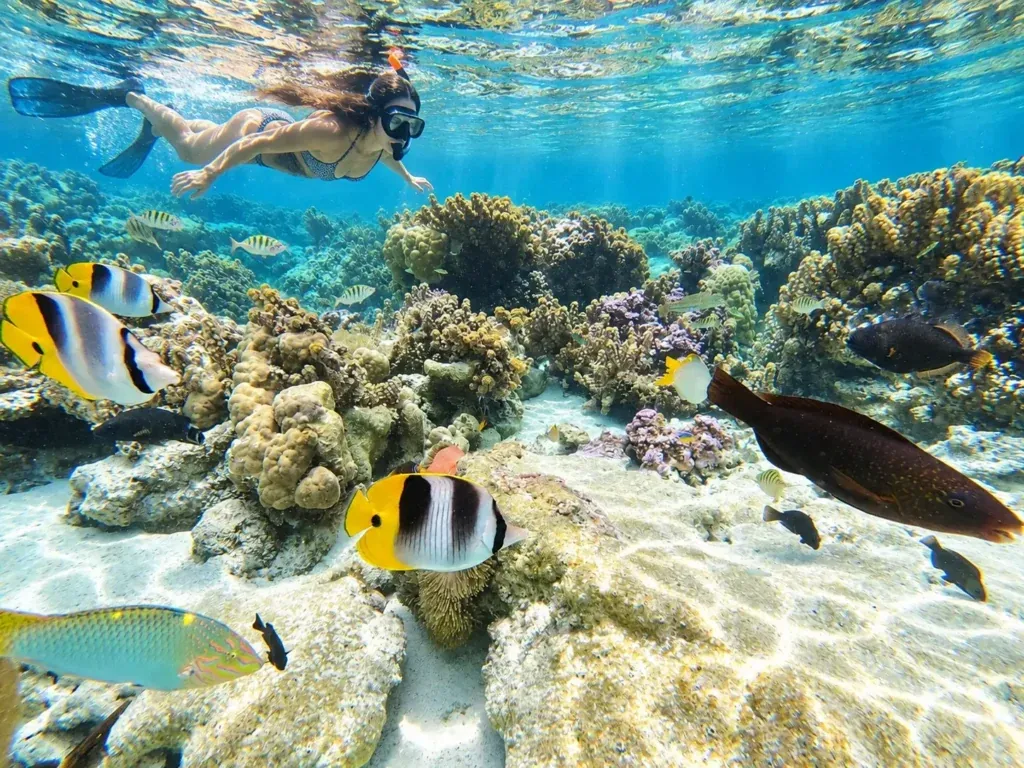
The single strongest reason to make the detour is the coral garden between Motu Tautau and its neighbouring motu. A gentle current runs through a shallow channel, so you walk to the top of the motu, float face down and let the water carry you over coral heads and clouds of reef fish back towards the lagoon. It suits confident and nervous snorkellers alike because the water is shallow and you barely need to kick. Wear reef-safe sunscreen and water shoes, and ask locally about the current on the day, since tide and wind change how strong it runs.
Vanilla, pearls and rum on a small scale
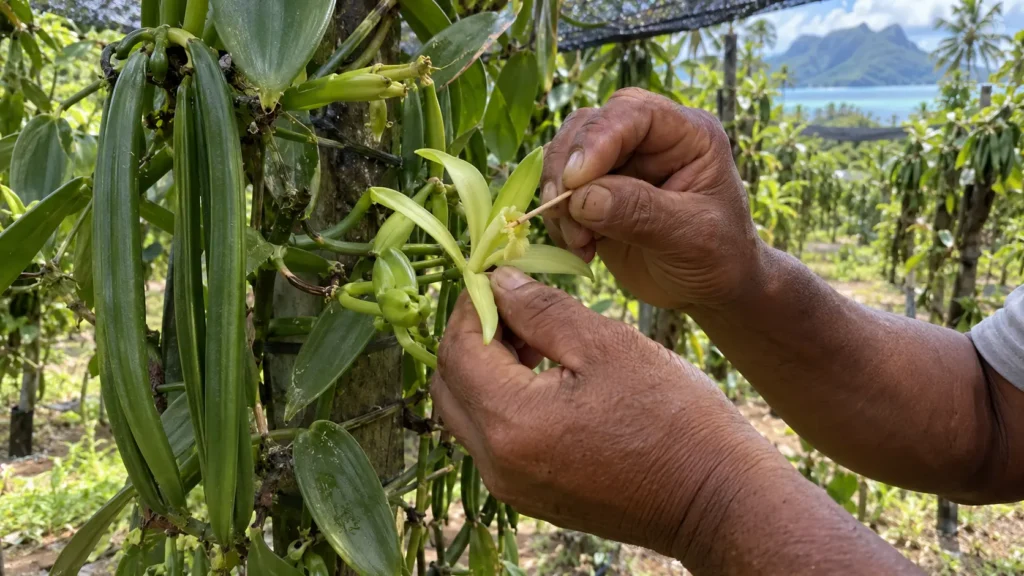
Taha’a is called the Vanilla Island, and a large share of French Polynesia’s vanilla is grown here. A typical full-day lagoon tour combines a family vanilla plantation, where you see the flowers being pollinated by hand and the pods curing in the sun, with a black pearl farm on stilts over the water and often a stop at a local rum distillery. These are working farms rather than visitor attractions, which gives them more texture than the shows and boutiques you find on busier islands.
Motu picnics and Bora Bora at sunset
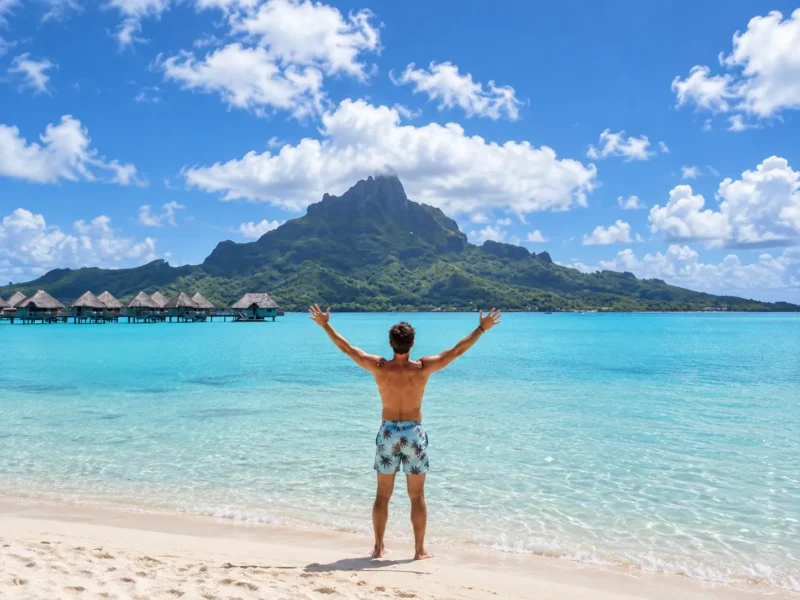
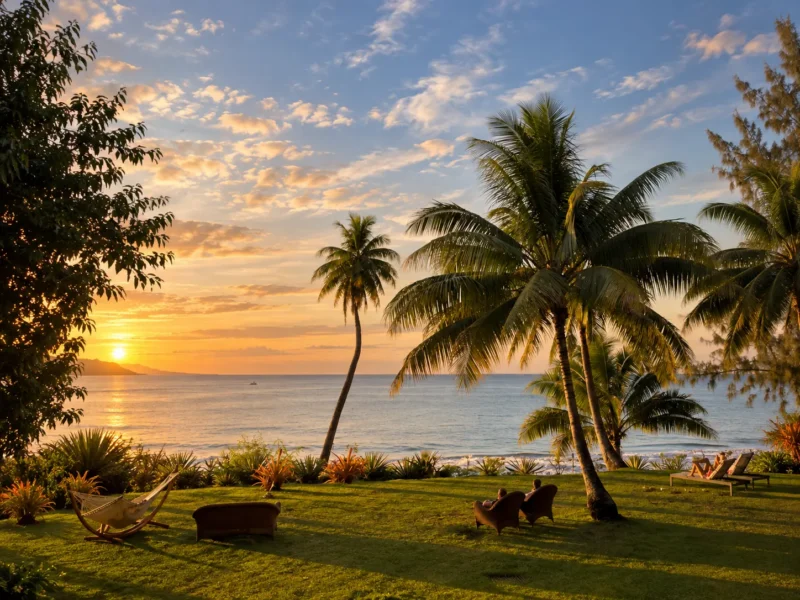
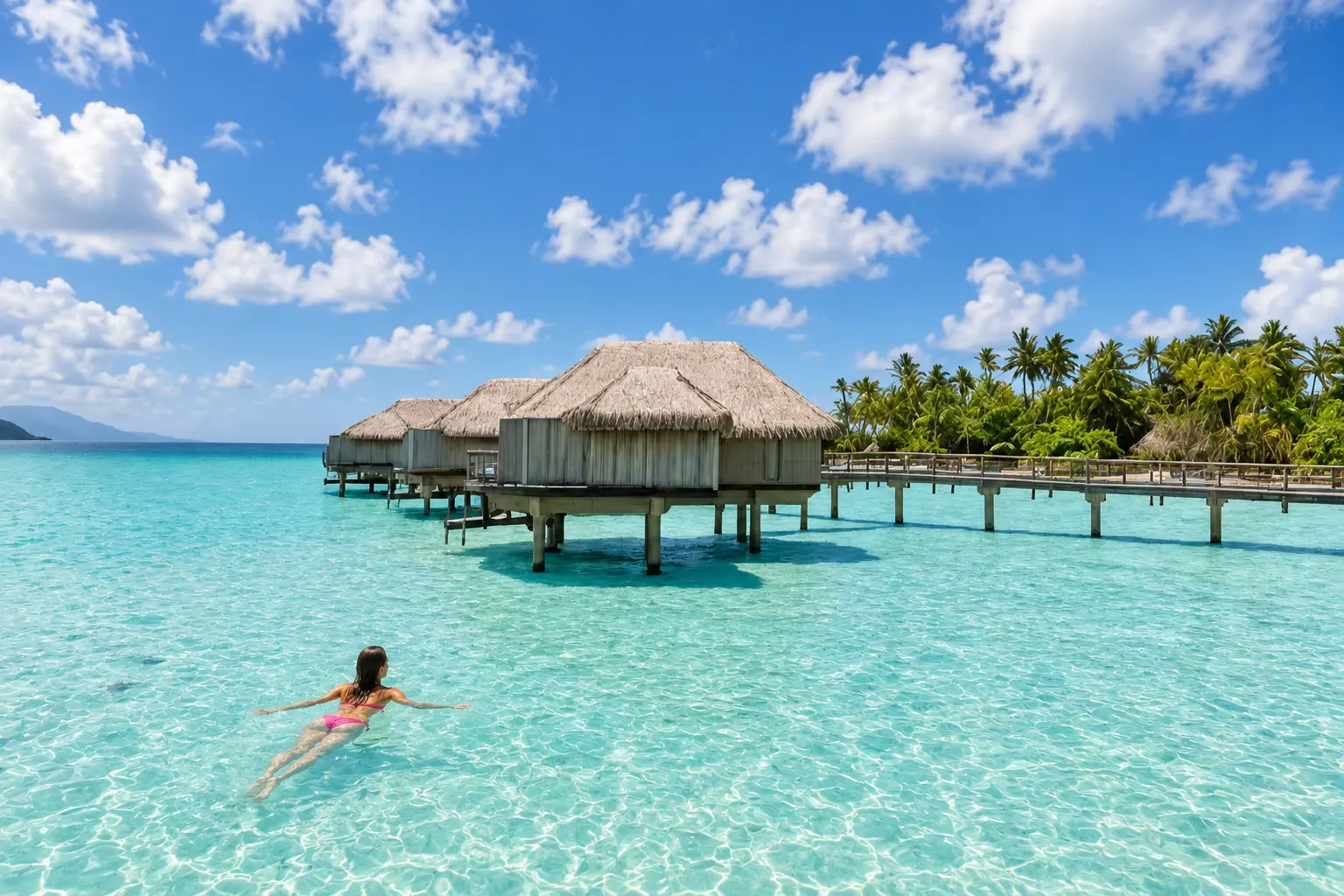
Most full-day tours include lunch on a motu, with fish cooked over a fire, poisson cru and fruit eaten at a table set in the shallows. It is the kind of slow, social afternoon that is harder to find on Bora Bora, where lagoon tours are larger and more frequent. In the evening, the western motu face Bora Bora, about 30km away, and the sun drops behind its silhouette. That view is the main reason I would pick a west-facing room when booking.
Raiatea and Taputapuatea across the lagoon
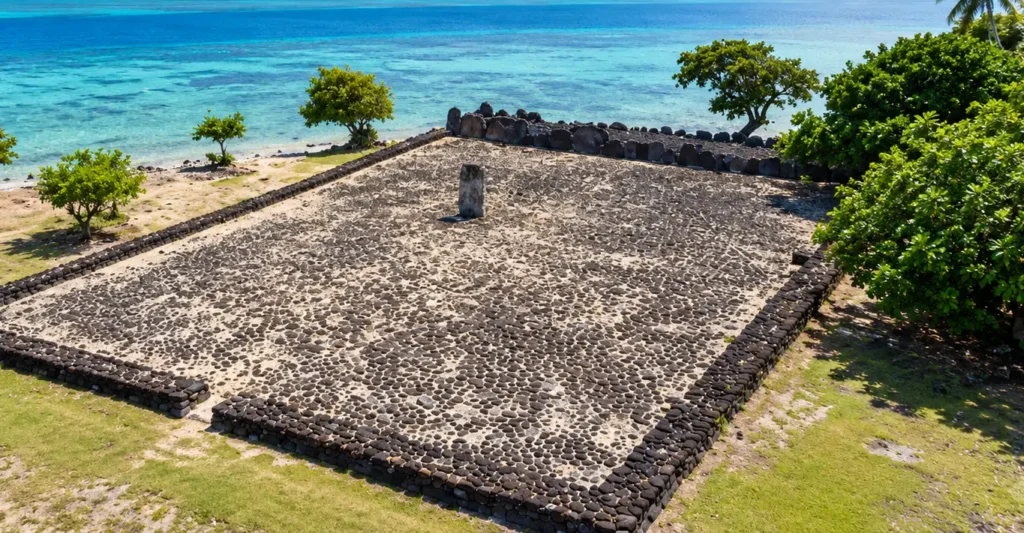
Because Taha’a and Raiatea share one lagoon, a longer stay can include Marae Taputapuatea on Raiatea’s south-east coast. It is the most sacred ceremonial site in eastern Polynesia and has been on the UNESCO World Heritage list since 2017. Navigators once set out from here across the Pacific, and stones from the site were carried to found marae on other islands. A half-day guided visit, usually by boat or by car from Uturoa, is enough to understand it. Dress modestly, stay on the paths and leave the stones untouched.
If Moorea is the island you are weighing Taha’a against, the Taha’a vs Moorea comparison covers the two side by side. Moorea is easier to reach and has more to do on land. Taha’a is quieter, more lagoon-focused and better for doing very little.
What the detour costs in time and money
Getting to Taha’a is not hard, but it involves more steps than the ferry to Moorea or a direct flight to Bora Bora. Here is how the extra stop usually adds up for two people.
| Element | Time | Typical cost |
|---|---|---|
| Air Tahiti flight, Tahiti to Raiatea | About 45 minutes | Often around US$130–US$180 per person one way |
| Air Tahiti flight, Raiatea to Bora Bora | About 20 minutes | Often around US$75–US$110 per person one way |
| Boat transfer, Raiatea airport to a motu hotel | Around 30–45 minutes on the water | Roughly US$50–US$70 per person each way, sometimes included in packages |
| Half-board meal plan | Not applicable | Around US$100–US$150 per person per night |
| Full-day lagoon tour (vanilla, pearls, coral garden, motu lunch) | 6–7 hours | Around US$150–US$180 per person |
| Door-to-door from your previous hotel | Half a day in practice | One travel day per change of island |
Prices are indicative and were last updated in October 2026. Rates change with season, exchange rates and availability, so check live prices before booking.
Add it up and the detour, before accommodation, typically costs a couple around US$1,500–US$2,100 in flights, boats, meals and one excursion over three nights. The bigger cost is time. Each island change uses most of a morning or afternoon, and the boat shuttles at some of the smaller hotels only run in daylight hours, so a late Air Tahiti arrival can mean paying for a private boat or losing an evening.
Routing helps. Taha’a fits most naturally between Moorea and Bora Bora: fly Tahiti or Moorea to Raiatea, then continue to Bora Bora on the short hop afterwards. Air Tahiti schedules vary by day of the week, so fix the domestic flights before you pay for non-refundable rooms, and send each hotel your flight numbers so the boat is waiting.
How many nights does Taha’a need?
- Two nights: the bare minimum. You get one full day, which is enough for a combined lagoon tour with the coral garden, vanilla and pearls. It works in a tight route but leaves no slack for weather.
- Three nights: my recommendation for most trips. One day for the tour, one day for the hotel, kayaks and a second snorkel, and a spare sunset or two.
- Four or five nights: for honeymooners, repeat visitors and anyone adding Taputapuatea or a sailing day on the shared lagoon. At this length the hotel becomes the holiday, so choose it carefully.
The 10-day French Polynesia itinerary gives Taha’a two nights between Moorea and Bora Bora. If your trip stretches to twelve or fourteen nights, that is where I would add the extra night first. Don’t take a night from Tahiti to fund it if you have an early international departure; the guide to how many nights to spend in Tahiti explains why.
Where to stay: three very different motu hotels
Taha’a’s luxury hotels all sit on motu out on the reef, reached only by boat, and there is almost nothing in the way of independent restaurants nearby. That makes the hotel choice and its meal plan part of the same decision. The three below range from a 57-key resort with three restaurants to a five-bungalow islet where dinner is a single set menu.
Le Taha’a: best for the coral garden on your doorstep
Le Taha’a, run by Pearl Resorts, occupies Motu Tautau on the western reef, and the coral garden channel runs along the edge of the motu, so the island’s signature snorkel is a short walk from your room rather than a boat trip. It has 57 overwater suites and beach villas with plunge pools, which makes it the only Taha’a stay with the scale of a full resort: a spa, a pool, three restaurants (Hawaiki Nui, the beachside Titiraina and the fine-dining Tipairua) and enough variety that a four-night half-board stay doesn’t feel repetitive. The sunset and Bora Bora-facing overwater suites are the categories to request if the view is part of the reason you came.
- Best for: first-timers who want the coral garden, dining choice and a proper spa on one motu
- Transfer: hotel boat from Raiatea airport, roughly half an hour or a little more across the lagoon
- Rates: Taha’a overwater suites cost from around US$1,150 a night between November and April and about US$1,450 from June to October, breakfast included and before 13% VAT and city tax; Bora Bora-view and end-of-pontoon suites reach roughly US$1,950–US$2,150 in high season
- Don’t miss: drifting the coral garden early in the morning, before the day-tour boats arrive
Good to know: breakfast is often included but dinners are not, and with no restaurants within walking distance, compare the half-board supplement with eating à la carte before you arrive.
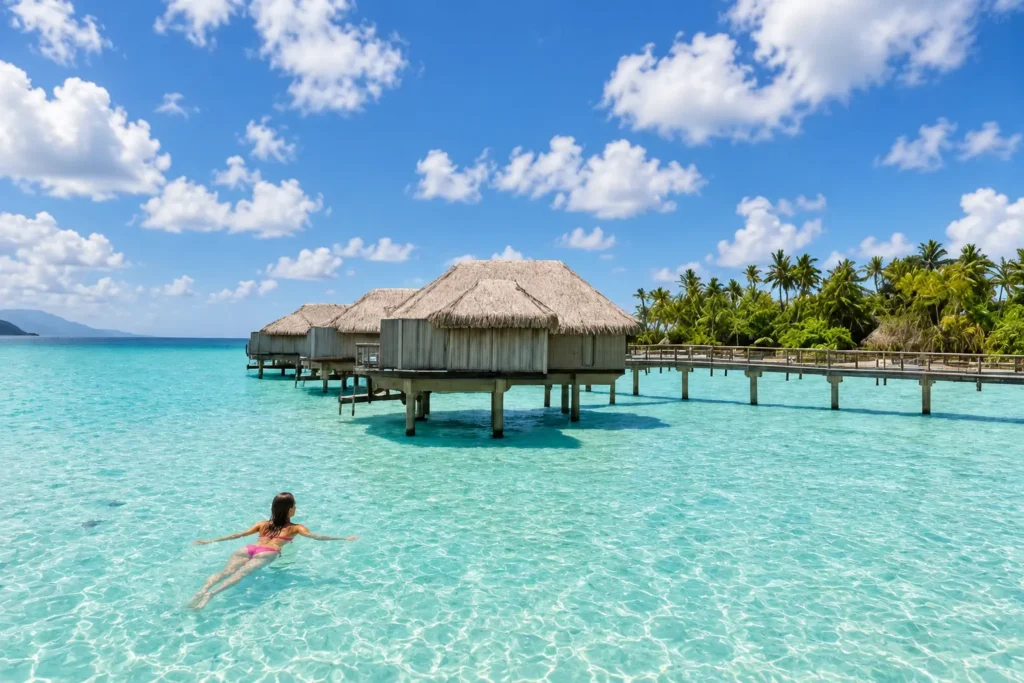
Vahine Private Island: best for a handful of guests and real seclusion
Vahine sits on its own small motu off Taha’a’s north-eastern reef, about 30 minutes by boat from Raiatea, and it has only nine bungalows: three overwater, three beach suites and three beach bungalows, plus a Royal Villa on a separate islet. Pearl Resorts took it over and upgraded it, and it closed from February to March 2026 for a further round of accommodation work before reopening. The appeal is the opposite of a resort: a single restaurant, kayaks and paddleboards on the beach, and so few guests that the lagoon in front of your bungalow is usually empty. Most packages sell it on half board, which suits an island where the only dining room is the hotel’s own.
- Best for: honeymooners who want privacy above facilities
- Transfer: hotel boat from Raiatea, around 30 minutes
- Rates: expect around US$1,300 a night for a beach bungalow in the wet season and US$1,400 in the dry season, with overwater bungalows at about US$2,050–US$2,150, before 13% VAT and city tax (ask whether half board is included)
- Don’t miss: a private motu picnic arranged by the hotel
Good to know: the coral garden is on the opposite side of Taha’a, so plan to see it on a boat excursion and allow for the cost when comparing prices with Le Taha’a.
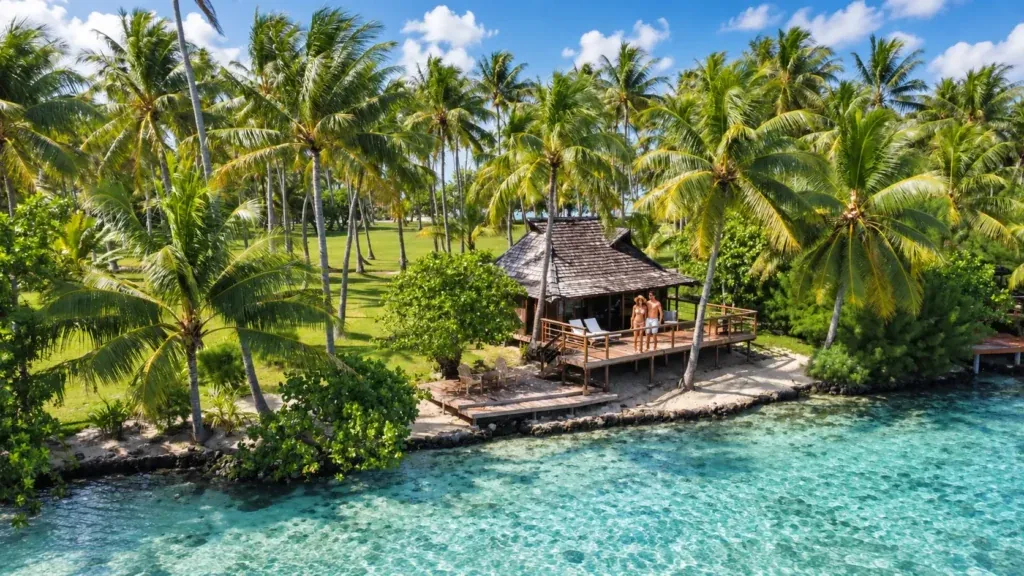
Eden Private Island Taha’a: best for an intimate, lower-key motu stay
Eden is the smallest of the three: five bungalows on a motu about ten minutes by boat from the main island, each with its own lagoon access. Four face the sunset and Bora Bora and one faces sunrise towards Huahine. There is no spa or pool to speak of; the experience is the lagoon, hammocks on the terrace and a three-course set dinner built around local produce. Recent guest reviews through 2026 consistently praise the food and the staff, which matters at a place where every meal comes from the same kitchen.
- Best for: couples who want a small, personal motu without top-tier resort prices
- Transfer: shared boat from Raiatea airport, around 45 minutes, roughly 5,000–6,000 XPF per person each way
- Rates: Sunset bungalows from around US$950 a night, though quotes vary widely by date, so check live prices; half board costs around 11,650 XPF (about US$105) per person per day on top of the room
- Don’t miss: watching Bora Bora turn dark from a sunset-side terrace
Good to know: the standard boat shuttle runs only between about 8am and 3.30pm, and later transfers cost roughly double, so book a Raiatea flight that lands by early afternoon.
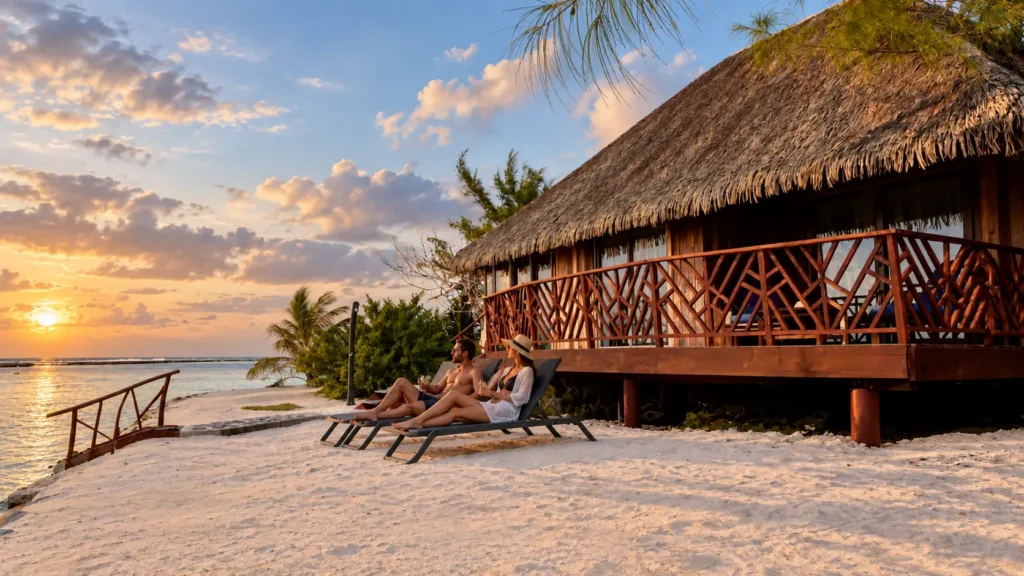
If a private motu is the main thing drawing you to Taha’a, the round-up of the best private island resorts in the world puts Vahine and Eden in a wider context. Availability at both is tight with so few rooms, so it is often the hotel that fixes your dates, not the other way round.
Who should skip Taha’a
Skip it on a first trip of nine nights or fewer. Tahiti, Moorea and Bora Bora already involve two or three transfers, and a fourth island turns the holiday into a run of check-outs. You would gain more from an extra night on Moorea or Bora Bora.
It is also a poor fit if you want to wander out to dinner, browse shops or fill each day with a different activity. Families with very young children may find the combination of flight, boat and a small hotel with limited facilities harder work than it looks on a map. Anyone who wants the classic overwater spectacle with Mount Otemanu filling the window would do better spending the nights in Bora Bora; the Moorea vs Bora Bora honeymoon guide covers that choice.
Finally, check the actual flight times before accepting Taha’a as part of a package. A nominal two nights with a late arrival and an early departure gives you one day at best, and that is rarely worth the extra flight.
Taha’a hotels compared
| Hotel | Size | Setting | Dining | Booking |
|---|---|---|---|---|
| Le Taha’a | 57 suites and villas | Motu Tautau, beside the coral garden, Bora Bora views | Three restaurants | Check rates |
| Vahine Private Island | 9 bungalows plus Royal Villa | Private motu on the north-eastern reef | One restaurant, usually half board | Check rates |
| Eden Private Island Taha’a | 5 bungalows | Small motu, four bungalows facing Bora Bora | Set three-course dinner, half board | Check rates |
The verdict on adding Taha’a
Taha’a earns its place on a trip of ten nights or more, given three nights and slotted between Moorea and Bora Bora. The extra flight and boat buy you something neither neighbour offers: the coral garden drift, working vanilla and pearl farms, motu lunches with almost no crowds and a front-row view of Bora Bora at sunset. For a shorter first trip, the detour costs more than it returns.
If you do go, let the hotel follow the purpose of the stop. I’d choose Le Taha’a when the coral garden and dining choice come first, Vahine when privacy is the priority and the budget allows, and Eden when you want a tiny motu with a personal feel at a lower price.
Some links on this page are affiliate links. If you book through them, Lagoon Edit may earn a commission at no extra cost to you. It never affects which resorts we recommend.