The best time to visit Seychelles for most trips is April, May, October or November. Those are the months when one trade wind gives way to the other, the sea goes calm and clear, and boat days, snorkelling and ferry crossings are at their easiest. June to September is drier and cooler but windier, and December to March is hot, humid and showery with a calmer sea on many coasts. The weather is warm all year, so the real choice is about wind, water and which beaches you want to use.
Below you’ll find the two wind seasons explained, a month-by-month table, which beaches suit which season (including where seaweed collects), when to see nesting turtles and the Bird Island tern colony, how prices move through the year, and six places to stay, each chosen for the time of year it suits best.
Quick answer by priority
| If you want… | Go in | Why |
|---|---|---|
| Calm sea and clear water | April, May, October, November | Light winds between the two trade-wind seasons |
| Dry, cooler days for hiking and cycling | June to September | The south-east trades bring low humidity and little rain |
| Warmest water and a quiet villa stay | December to March | Water around 28–30°C, with heavy but usually short showers |
| Turtles nesting by day | October to February | Hawksbill season, peaking November to January |
| The Bird Island tern colony | May to September | Sooty terns lay in May and June and fledge by September |
| Better value | May, early June, November | Good conditions outside school holidays |
The two trade winds, explained
North-west monsoon, December to March. Winds come from the north-west and are generally light. This is the wet season: January is usually the rainiest month, humidity is high and showers can be heavy, though they tend to pass in an hour or two. Away from north-west-facing coasts the sea is often calm, and the water is at its warmest.
South-east trades, May to October. Steady winds blow from the south-east, strongest in July and August. Rain is light and humidity drops, which makes these the comfortable months for walking and cycling. The trade-off for the dry weather is the water: crossings are choppier, exposed south- and east-facing beaches get waves and seaweed, and plankton can reduce visibility for divers around Mahé and Praslin.
The changeovers, April and late October to November. As the wind swings round, it drops away. These weeks bring the calmest sea of the year, the best underwater visibility and the most reliable boat days. April is hot; November gets wetter as the month goes on.
Seychelles lies outside the main cyclone track of the south-west Indian Ocean, so direct hits on the Inner Islands are rare, although distant storms can bring swell and rain. Use the Seychelles Meteorological Authority climate guide for planning and its marine forecast in the days before any boat trip.
Seychelles month by month
| Month | Wind and sea | Rain | Good for | Prices and crowds |
|---|---|---|---|---|
| January | Light north-west winds; swell on north-west-facing coasts | Wettest month, very humid | Villa and spa stays, hawksbill turtles | High over New Year, softer later |
| February | Light winds, warm water | Still wet, more sunny spells | Quiet resort time, turtle hatchlings | Moderate |
| March | Winds fading, sea settling | Rain easing | Swimming, early-season diving | Moderate; Easter can be busy |
| April | Calmest month; little wind | Occasional afternoon showers | Diving, snorkelling, boat days, honeymoons | Busy around Easter |
| May | Calm early; south-east trades build late | Drying out | All-round trips, terns arriving on Bird Island | Good value |
| June | Trades strengthening; choppier crossings | Dry | Hiking, cycling, green turtles on outer islands | Good value early |
| July | Windy; rough on south-east coasts | Dry, coolest weather | Walking, sailing, sheltered beaches | High in the school holidays |
| August | Windiest month; small-boat trips can be cancelled | Dry | Sailing, Bird Island tern chicks | High in the school holidays |
| September | Trades easing; sea improving late | Dry | Hiking and mixed trips | Moderate |
| October | Winds drop; clear, calm water | Mostly dry | Diving, snorkelling, first hawksbill nests | Busy at half-term |
| November | Calm, warm sea | Showers increasing | Snorkelling, turtles, honeymoons | Good value before Christmas |
| December | North-west winds return | Wet, humid | Festive trips, peak turtle nesting | Highest rates and minimum stays at Christmas |
Air temperatures sit between about 24°C and 32°C all year. The sea is warmest, around 28–30°C, from December to April, and coolest, around 25–26°C, from July to September.
Which beaches suit which season
The rule of thumb is simple: face away from the wind. From May to October, stay and swim on west- and north-facing shores; from December to March, many of those same coasts pick up swell, and south- and east-facing beaches become the calmer side.
- Mahé, May to October: Beau Vallon, Port Launay and the west-coast bays around Petite Anse are sheltered. The south and east coasts, including Anse Intendance, get waves and can be unsafe for swimming.
- Mahé, December to March: Beau Vallon and the north-west can see waves and currents, while the south and east are usually calmer.
- Praslin, May to October: seaweed washes up on south- and east-facing shores such as Grand Anse, Anse Marie-Louise and Baie Sainte Anne. The north coast, including Anse Volbert on the Côte d’Or, generally stays clear.
- Praslin, December to February: the north-west winds can bring some seaweed to Anse Volbert and the northern shores, so the south coast is the better bet.
- La Digue: Anse Source d’Argent is sheltered by its reef for most of the year, though very low tides empty the lagoon. Grand Anse, Petite Anse and Anse Cocos face the south-east and are rough with strong currents from May to October.
Seaweed is patchy and changes week to week, and resorts on affected beaches usually clear it each morning. If swimming in front of your room is the priority, ask the hotel directly how its beach behaves in your travel month. My Mahé vs Praslin vs La Digue comparison covers the beaches island by island.
Diving, snorkelling and sea conditions
April to May and October to November give the clearest water around the Inner Islands, with visibility often 20 metres or more and flat surface conditions. From June to August, wind-driven chop and plankton can cut visibility around Mahé and Praslin to around 10 metres, and some exposed sites become hard to reach. The same plankton draws whale sharks, which have typically been seen off Mahé from around August to November, though sightings are never guaranteed. On the outer islands, including Desroches, the best diving runs from about November to April.
For snorkelling from the beach, sheltered marine parks such as Port Launay and Baie Ternay on north-west Mahé work through the south-east trades, while boat trips to Coco Island, St Pierre and the Sisters are best saved for the changeover months.
Turtles and birds: the wildlife calendar
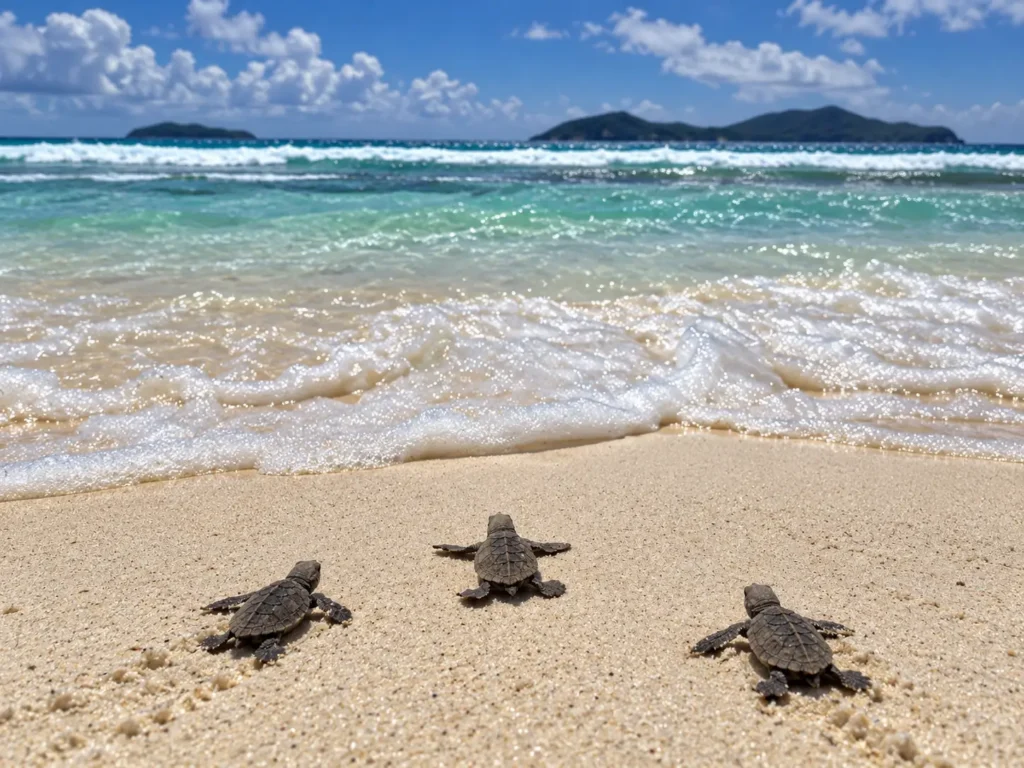
Hawksbill turtles nest from about October to February, with the peak from November to January on islands such as Cousin and Cousine. Unusually, Seychelles hawksbills often nest by day, so you may see a female on the beach in the afternoon. Hatchlings emerge roughly two months later, from December into April. Keep well back, never use a flash and follow the guidance of rangers; Nature Seychelles publishes advice for the hawksbill nesting season.
Green turtles nest mainly at night, and on coral islands such as Denis and Bird the busiest months are roughly May to September.
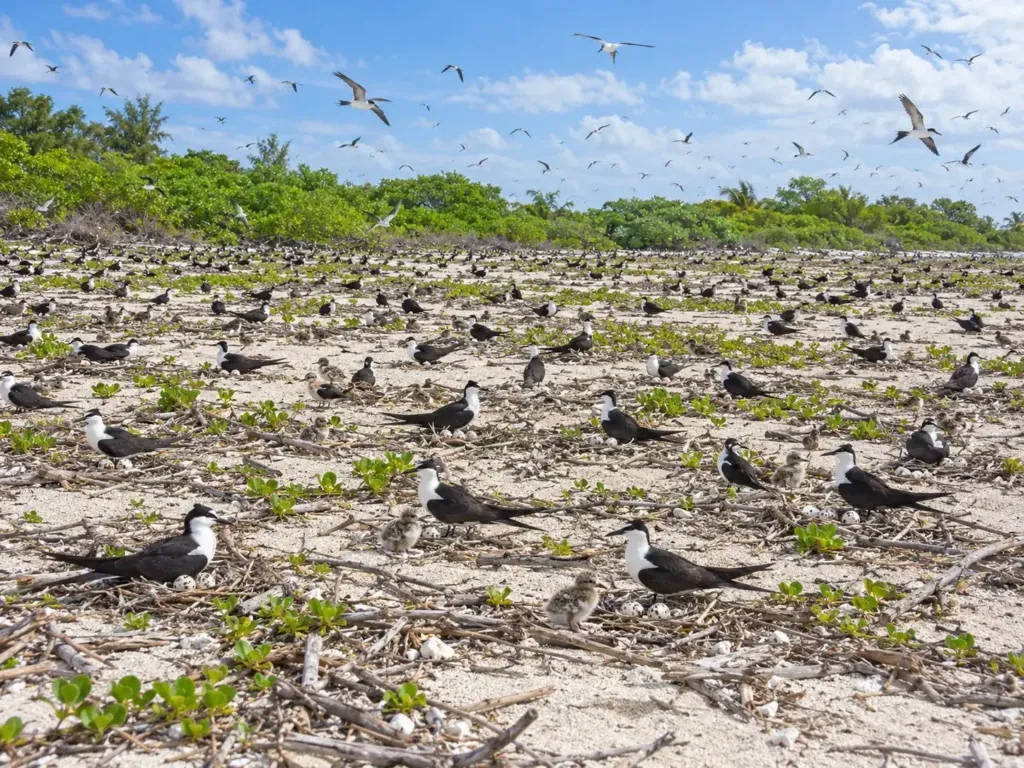
Bird Island, a coral island about 30 minutes’ flight north of Mahé, hosts one of the largest sooty tern colonies in the world, estimated at several hundred thousand pairs. The terns gather from April, lay their eggs in May and June, raise chicks through July, and fledge in August and September; by the end of October almost all have gone. For the noise and spectacle of the full colony, go between June and August.
Prices and crowds through the year
There is no single low season. Rates and minimum stays peak over Christmas and New Year, and demand rises again at Easter, in July and August and over the October half-term. The best balance of conditions and price is usually in May, early June and November. A seven-night luxury trip for two typically costs US$8,000–US$13,000 excluding international flights, and peak weeks can push the hotel element much higher; the Seychelles cost guide breaks this down.
Prices are indicative and were last updated in October 2026. Rates change with season, exchange rates and availability, so check live prices before booking.
I wouldn’t book January only because it is cheaper, since the rain does affect days out, or pay August prices expecting glassy water. Match the month to what you want to do, then the right coast, then the hotel.
Where to stay by season
Each of these six stays is chosen for the months it suits best, based on which way its beach faces, what the sea is doing and what wildlife is around.
Constance Ephelia: best for May to September on Mahé
Ephelia sits on Mahé’s north-west coast beside the Port Launay Marine National Park, which is exactly where you want to be when the south-east trades blow. The estate covers about 120 hectares between two beaches, with suites and villas, four pools, a kids’ club for ages 4 to 12, tennis and non-motorised water sports. Snorkelling in the protected bay stays good through the windy months, when boat-based sites elsewhere are hit and miss. It is also a sensible family choice for the July and August school holidays.
- Best season: May to September.
- Location: Port Launay, north-west Mahé, around 45 minutes from the airport.
- Rates: junior suites with breakfast cost about US$630 a night from May to September and around US$700 from November to April, before VAT; garden rooms start near US$500.
- Don’t miss: a morning snorkel in the marine park, straight from the beach.
Raffles Seychelles: best for the dry season on Praslin
Raffles faces north across to Curieuse from Anse Takamaka, on the part of Praslin that stays clearer of seaweed while the south-east trades push it onto the south coast. Anse Lazio and the Côte d’Or are nearby, and the 13-pavilion spa gives you something good to do on the occasional grey day. Each of its roughly 86 villas has a plunge pool. From December to February, when the north-west winds can bring weed to this coast, ask for current beach conditions or spend more time at the pool.
- Best season: May to October.
- Location: Anse Takamaka, north-east Praslin, around 20 minutes from Praslin airport.
- Rates: hillside pool villas with breakfast start at roughly US$850 a night plus VAT and levy; peak months vary widely, so check live prices.
- Don’t miss: a boat to Curieuse and its giant tortoises on a calm morning.
Six Senses Zil Pasyon: best for April and October
On Félicité, almost everything worth doing involves the sea: the boat transfer from Praslin or La Digue, kayaking to Coco Island and snorkelling among the granite. That makes the calm changeover months the time to book. Kayaks, paddleboards and snorkelling gear are included, the pool villas sit among boulders with sea views, and the spa is built into the rocks. In the windy months the island is still beautiful, but boat days are less certain.
- Best season: April, May, October and November.
- Transfer: a short boat crossing from La Digue or Praslin; helicopters from Mahé take about 20 minutes.
- Rates: Hideaway pool villas with breakfast run from about US$1,050 in the quieter months to around US$1,300 at busier times, before VAT.
- Don’t miss: Coco Island by kayak when the sea is flat.
Four Seasons Resort Desroches Island: best for November to April diving
Desroches sits on the edge of the Amirantes Bank, where a channel known as the Desroches Drop falls away to great depth, and diving here is at its best from roughly November to April. The resort has its own dive centre, every villa has a pool, and 14 kilometres of beach mean you can always find a sheltered side. Hawksbill nesting overlaps with the diving season, and the island’s tortoise sanctuary is a bike ride away.
- Best season: November to April.
- Transfer: about 35–40 minutes by light aircraft from Mahé.
- Rates: ocean-view pool villas start near US$1,500 a night in the off-peak months and about US$1,900 in peak months, typically half board and before VAT; the resort flight is extra.
- Don’t miss: a dive on the drop-off with the resort’s dive team.
Denis Private Island: best for June to September wildlife
Denis is a flat coral island about 30 minutes by plane north of Mahé, with around 25 beach cottages and a working farm that supplies much of the food. In the dry months green turtles come ashore at night to nest, and the island’s conservation programme has brought back rare land birds such as the Seychelles warbler and magpie-robin. Stays are full board, which suits a remote island with no other restaurants. Hawksbills also nest here from October to February, so it works at the other end of the year too.
- Best season: June to September, with a second turtle season from October.
- Transfer: about 30 minutes by light aircraft from Mahé.
- Rates: a beach cottage for two on full board costs about US$1,250 a night from May to October and around US$1,700 in high season, before VAT.
- Don’t miss: a guided walk with the island’s conservation team.
Cousine Island: best for November to January turtle season
Cousine is a tiny granite island west of Praslin with just a handful of villas, run as a nature reserve since the early 1990s. It is one of the most important hawksbill nesting sites in the Inner Islands, and because these turtles often nest by day, guests can join the island’s ecologists on their beach patrols in peak season. There is no jetty, to keep out rats, so arrival is by helicopter or a wet landing from a boat. This is a stay for wildlife lovers who want very few other people around.
- Best season: November to January for nesting, through to April for hatchlings.
- Transfer: helicopter from Mahé, or a short boat ride from Praslin.
- Rates: villas cost from around US$2,150 a night for two, full board and including taxes; the new rate card isn’t out yet, so check live prices.
- Don’t miss: a turtle patrol with the resident ecologists.
Compare the seasonal picks
| Hotel | Island | Best months | Why | Booking |
|---|---|---|---|---|
| Constance Ephelia | Mahé | May–September | Sheltered marine park in the trade winds | Check rates |
| Raffles Seychelles | Praslin | May–October | North-facing coast, clear of south-coast seaweed | Check rates |
| Six Senses Zil Pasyon | Félicité | April, October–November | Calm sea for boats and snorkelling | Check rates |
| Four Seasons Desroches Island | Desroches | November–April | Outer-island diving season | Check rates |
| Denis Private Island | Denis | June–September | Green turtles and dry weather | Check rates |
| Cousine Island | Cousine | November–January | Daytime hawksbill nesting | Check rates |
My verdict: choose April or October if the sea is the point of the trip, May or November for good conditions at better prices, and June to September for dry, breezy days on west- and north-facing beaches. Whatever the month, keep one spare day on each island for a boat trip the weather might move. For a route that uses these patterns, see the Seychelles island-hopping itinerary, and for couples, the Seychelles honeymoon guide.
Some links on this page are affiliate links. If you book through them, Lagoon Edit may earn a commission at no extra cost to you. It never affects which resorts we recommend.