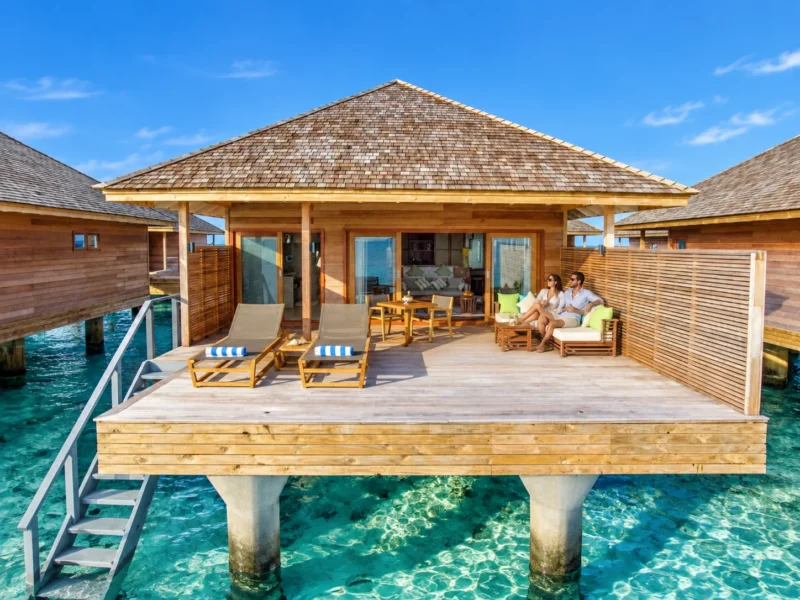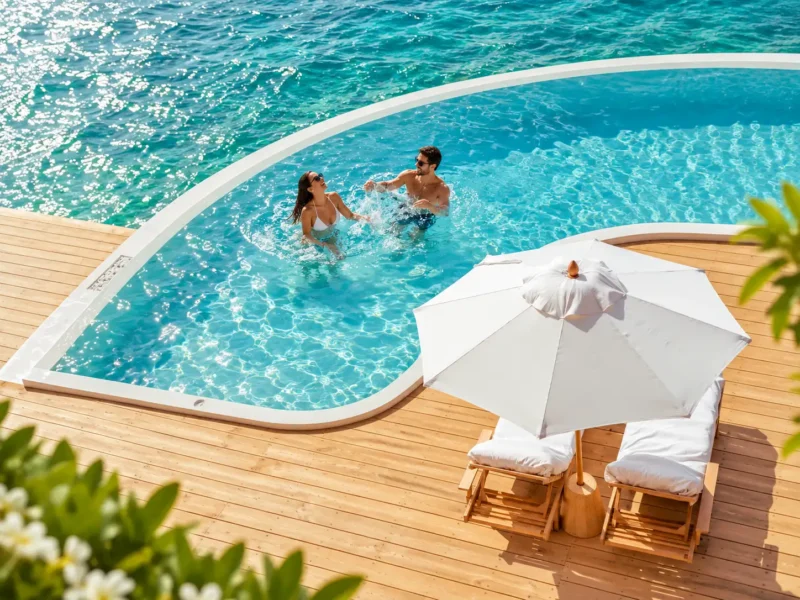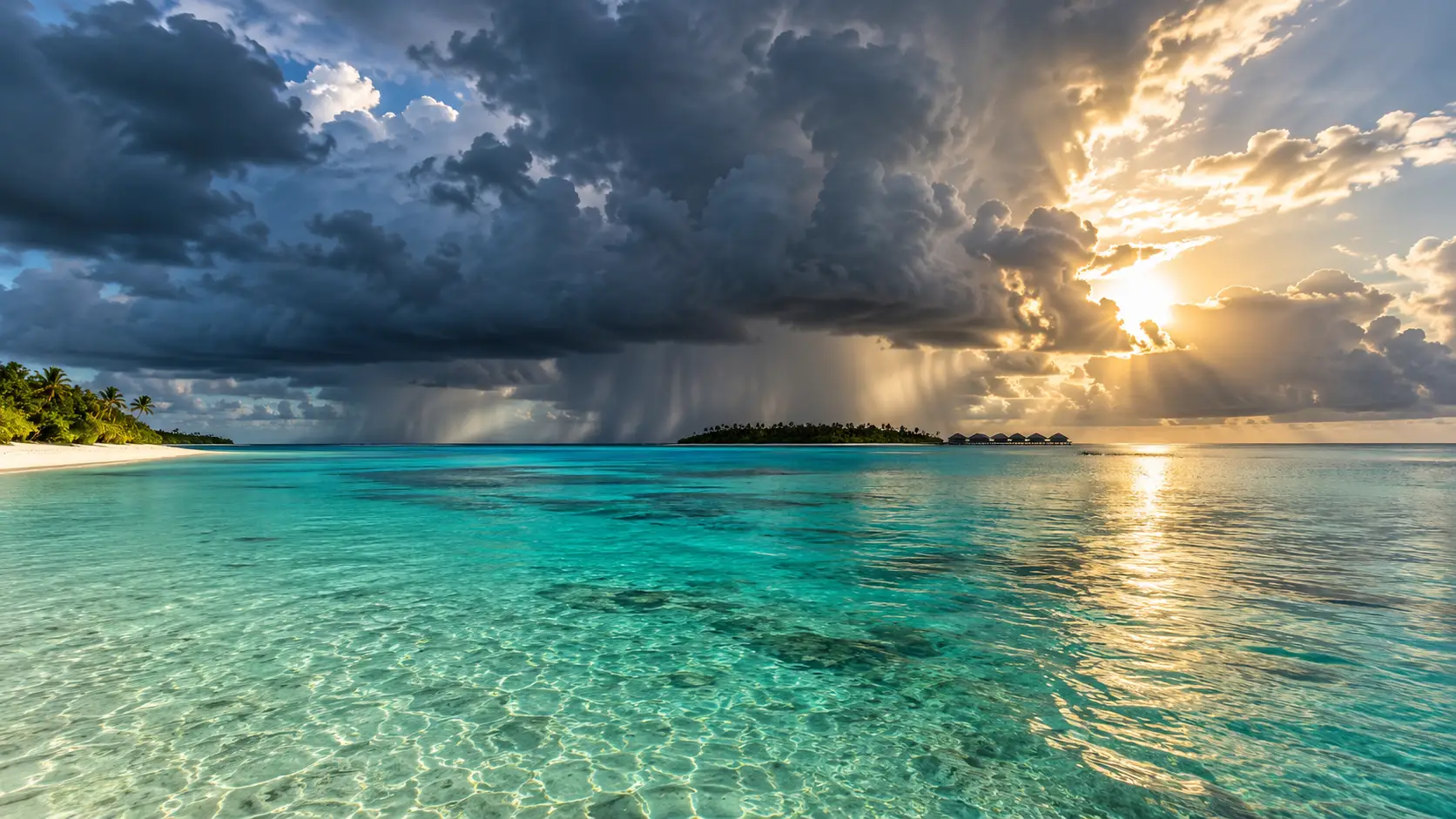
The best time to visit the Maldives for sunshine is February and March, when Malé averages around nine hours of sun a day and only three to five rainy days a month. If you care more about manta rays, whale sharks, surf or lower rates, the answer moves to May to November, the wetter south-west monsoon, when the plankton arrives in Baa Atoll and resort prices fall. This guide takes the year month by month, then matches five resorts to the season each one suits best.
Weather note: the figures below are long-term averages from the Maldives Meteorological Service and standard climate records, checked in October 2026. They describe tendencies, not a forecast, and a northern atoll and a southern one can have quite different weeks.
Quick answer: the best months at a glance
- Best weather: February and March, then late January and early April.
- Best value: May, June and September to mid-November, when many resorts publish their lowest rates and add free nights.
- Manta rays: May to November in Baa Atoll, with the busiest feeding usually June to October.
- Whale sharks: all year in South Ari Atoll, with many operators reporting their strongest run from August to November.
- Surf: roughly March to October, with the biggest swells from June to September.
- Most expensive: 20 December to early January, followed by February half-term, Chinese New Year and Easter.
How the two monsoons shape the year
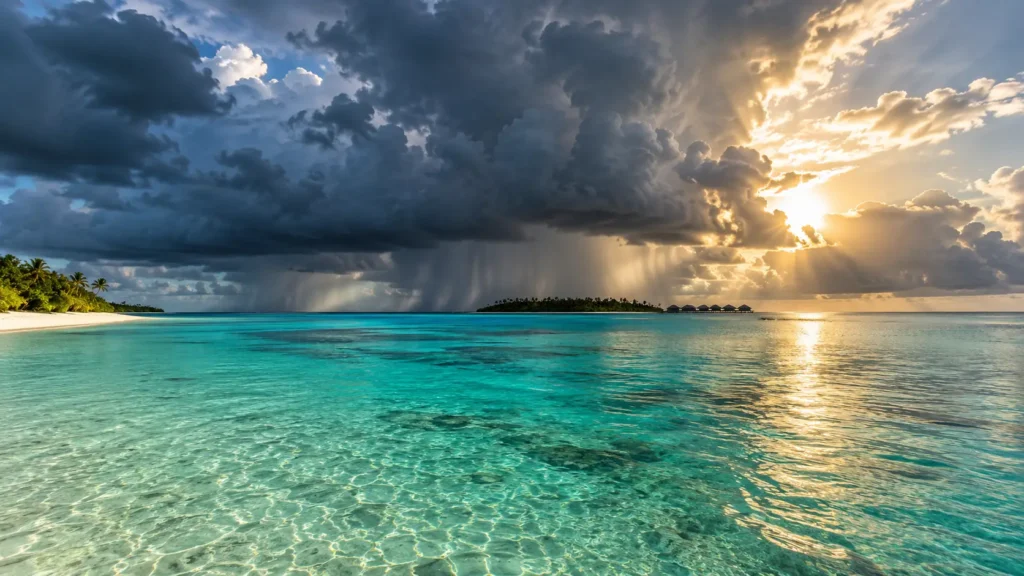
The Maldives has no winter. Daytime highs sit between 30°C and 32°C in every month and the sea stays between about 28°C and 30°C, so the variable that changes your holiday is wind direction. From roughly December to April the north-east monsoon, known locally as iruvai, brings drier air, lighter breezes and flatter water. From mid-May to November the south-west monsoon, or hulhangu, carries moisture off the Indian Ocean, so you get more cloud, squalls and choppier crossings.
Rain in the wet season usually comes as heavy bursts that clear within an hour or two, often overnight or in the late afternoon. Malé still averages about seven hours of sunshine a day from June to September, against nine in February. What you lose is predictability: a run of two or three grey days is far more likely in September than in March, and a short trip has less room to absorb it.
Geography adds another layer. The country stretches some 800 kilometres from north to south, and the southern atolls near the equator get more rain overall (Gan averages around 2,300mm a year, against roughly 1,900mm in Malé) but a less defined dry season. The far north has the sharpest contrast, with very dry months early in the year and a wetter summer. Diving conditions flip as well: in the north-east monsoon the east-facing channels usually have the clearest water and reef sharks, while mantas gather on the western side, and the pattern reverses from June.
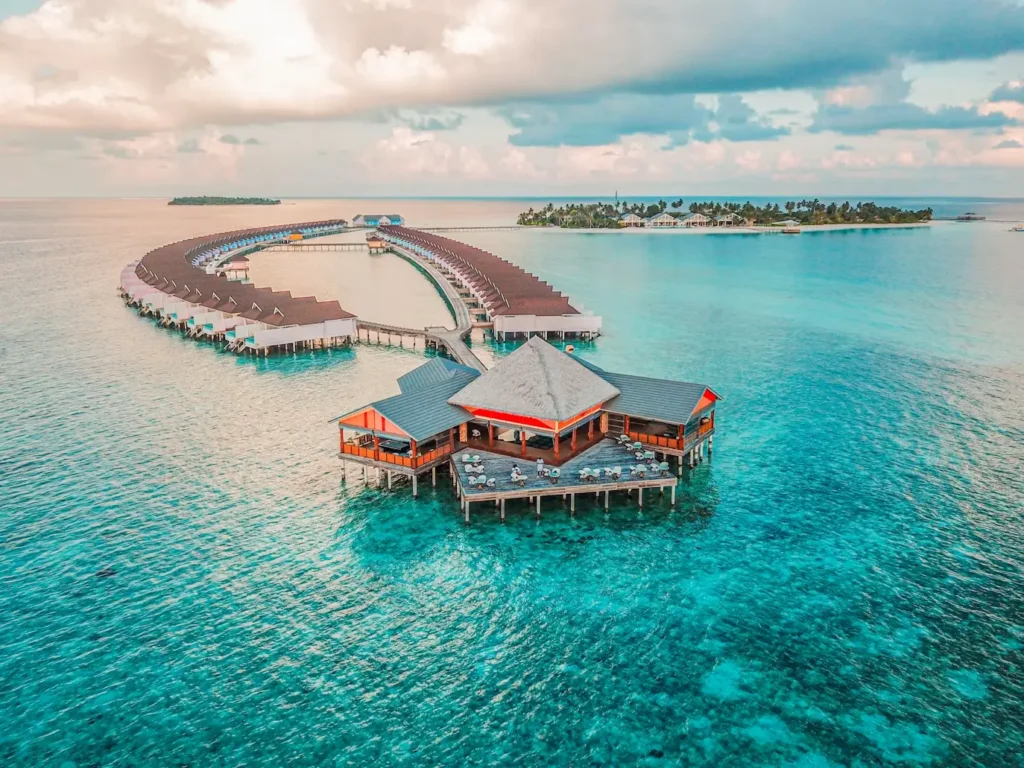
Maldives weather and value month by month
Rainfall and sunshine figures are Malé averages. Price levels are relative to each resort’s own calendar, and the cost of the stay itself is covered in the guide to how much a luxury Maldives holiday costs.
| Month | Sea | Prices and crowds | Wildlife and activities |
|---|---|---|---|
| January | 28°C | Festive peak to about 6 January, then high | Calm lagoons, east-side channel dives |
| February | 28°C | High; half-term and Chinese New Year peaks | Best visibility, easy snorkelling |
| March | 29°C | High, softer after mid-month | Diving, early surf in the south |
| April | 30°C | Easter peak, then shoulder rates | Hottest water, surf season building |
| May | 30°C | Low; some of the year’s best offers | Mantas return to Baa, turtles nesting |
| June | 29.5°C | Low | Mantas, big surf, turtle hatchlings soon after |
| July | 29°C | Low to shoulder; European holidays begin | Hanifaru feeding, surf, hatchlings |
| August | 29°C | Shoulder; busy with families | Mantas, whale shark run begins |
| September | 29°C | Low; strong offers | Mantas, whale sharks, quieter surf breaks |
| October | 29°C | Low, rising late month | Mantas, whale sharks |
| November | 29°C | Shoulder, rising | Last mantas in Baa, monsoon turning |
| December | 28.5°C | Shoulder, then festive peak from about 20 December | Drier weather arriving, calmer seas late month |
January to April: the dry season
January opens with the festive peak and settles into steady high season after the first week. February is the statistical sweet spot: only around 40mm of rain in an average year, the most sunshine, glassy mornings and the best odds of a seaplane leaving on time. March is almost as dry and slightly warmer. April is the hottest month in and out of the water, with showers and thunderstorms creeping back in the second half, and Easter pushes rates up for a week or two.
I’d choose February or March for a honeymoon, a first visit or any short stay where a wasted day would sting. Book early: the best water villas at the popular resorts sell out months ahead, and cancellation terms tend to be stricter. The Maldives honeymoon guide covers villa choice for that kind of trip.
May to November: the wet season and the wildlife season
May is often the wettest month on paper as the monsoon breaks, and it is also when Maldives arrivals hit their low point. Official 2025 figures showed resort occupancy dipping to around 43% in May, which is why it so often brings the deepest discounts, free nights and upgraded meal plans. June to August is mixed sun, wind and passing squalls, busier from mid-July with European school holidays. September and October can deliver long unsettled spells but also the strongest marine-life overlap, with mantas in Baa and whale sharks in South Ari both active. November is a gamble that often pays: the monsoon starts turning, prices are still below peak, and some years the drier weather arrives early.
Wet-season travel works best on a longer stay. Over seven or ten nights you can move a boat trip by a day or two and still fit it in. If you only have four nights, the drier months are the safer bet, and the guide to how many days you need in the Maldives explains how trip length changes the plan.
Weather also touches the journey in. Seaplanes fly only in daylight and only when the pilots can see the lagoon, so squalls can mean a wait in the lounge in Malé. Speedboats run through most conditions but can be bumpy. The comparison of speedboat and seaplane transfers covers the timings in detail.
December: festive minimum stays and supplements
The weather improves through December, but the price story takes over. From about 20 December to 6 or 10 January, most luxury resorts set minimum stays of five to seven nights, add festive supplements and charge for compulsory Christmas Eve and New Year’s Eve gala dinners. Those dinners commonly cost US$300 to US$800 or more per adult at the top resorts, on top of the nightly rate, and they apply even if you are on half board. If you want the Maldives at Christmas, book by early summer, read the festive terms line by line, and expect the same villa to cost far more than it does in late January.
Prices are indicative and were last updated in October 2026. Rates change with season, exchange rates and availability, so check live prices before booking.
Wildlife and surf seasons
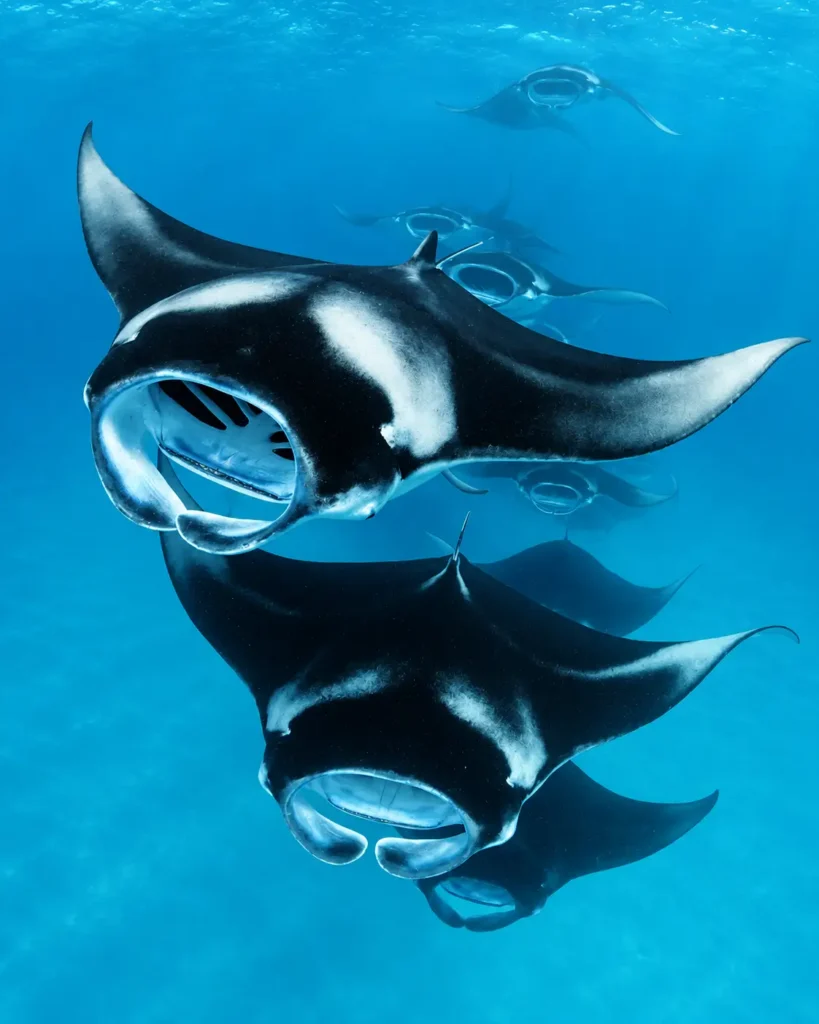
Manta rays. Reef mantas are found somewhere in the Maldives all year, because they follow the plankton to whichever side of the atolls the current is pushing it. The spectacle is Hanifaru Bay in Baa Atoll, a protected UNESCO biosphere site where dozens and sometimes more than a hundred mantas feed in a small bay from May to November. Encounters there are snorkel-only, numbers in the water are capped, and the best days cluster around the new and full moon.
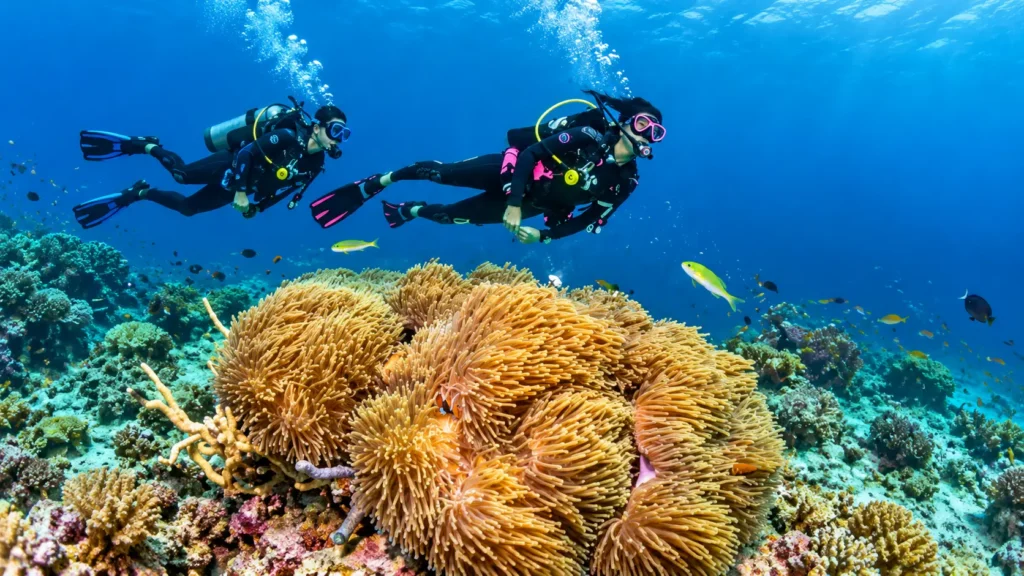
Whale sharks. The South Ari Marine Protected Area holds one of the few known year-round whale shark populations anywhere, mostly juveniles patrolling the outer reef near Dhigurah. Sightings happen in every month, with many operators reporting their best run from August to November. The Maldives Whale Shark Research Programme has photo-identified hundreds of individuals here, and its code of conduct asks swimmers to keep at least three metres away and never touch.
Turtles. Green and hawksbill turtles live on many house reefs all year, so you can snorkel with them in any month. Nesting peaks broadly from May to October, with hatchlings appearing about two months after eggs are laid, and a few resorts run alerts so guests can watch a release.
Surf. The surf calendar runs almost opposite to the honeymoon one. The central atolls around North Malé work from about March to October, with the biggest and most consistent south-west swells from June to September, and the southern atolls such as Laamu and Thaa can start earlier in the year. Beginners usually do better at the edges of the season, from March to May or in October.
Where to stay by season
The month you travel should narrow the atoll before it narrows the resort. These five islands each have a clear seasonal reason to pick them; for a broader shortlist see the best luxury resorts in the Maldives.
Four Seasons Landaa Giraavaru: best for manta season (May to November)
Landaa Giraavaru sits in Baa Atoll, around 15 minutes by boat from Hanifaru Bay, and it is the resort most closely tied to the manta season. The Manta Trust runs its Maldives research base from the island’s marine discovery centre, and during the season the resort’s Manta On Call service hands you a phone that rings when researchers spot a feeding aggregation, so you can be in the water before the crowd. The resort publishes predicted “hot dates” around the lunar cycle each year, which is the most useful single planning tool for a manta trip. With 103 beach and water villas on a large, leafy island, a family-friendly kids’ programme and a strong Ayurvedic spa, it also gives you plenty to do on the blustery days between sightings.
- Best for: mantas, marine biology and families travelling in the European summer.
- Transfer: about 35 minutes by seaplane from Malé.
- Rates: beach bungalows with pool from roughly US$1,800 a night in the wet season (May to October) and about US$2,550 in the dry season (November to April), usually room only and excluding taxes and service, with wet-season offers common.
- Don’t miss: Manta On Call, around US$190 plus taxes per person, booked on arrival.
Good to know: match your dates to the published manta hot dates (in 2026 these fell every two weeks or so between mid-May and early November) and stay at least five nights, since a single windy day can scrub the boat.
Conrad Maldives Rangali Island: best for whale sharks (all year, peak August to November)
Conrad Rangali sits on the edge of the South Ari Marine Protected Area, so the whale shark grounds are a short boat ride away, not a full-day excursion. The PADI dive centre runs whale shark trips for both snorkellers and divers, and South Ari also has manta cleaning stations that work in the north-east monsoon, which gives the resort a marine reason to visit in either season. The resort spans two islands linked by a 500-metre footbridge: Rangali Finolhu for beach villas and families, and the adults-oriented Rangali Island for water villas, Ithaa undersea restaurant and the two-level Muraka residence. Twelve restaurants and bars across the two islands mean a rainy afternoon has more options than at a small boutique island.
- Best for: whale sharks, divers and mixed groups who want variety on one property.
- Transfer: about 30 minutes by seaplane, one of the shorter flights in the country.
- Rates: beach villas from roughly US$600 a night in the wet season (May to October) and about US$1,050 in the dry season (November to April), excluding taxes and service.
- Don’t miss: lunch at Ithaa, which runs in any weather because it sits five metres down.
Good to know: book the whale shark trip for early in your stay so there is time to repeat it, and choose an operator that follows the research programme’s distance rules.
Six Senses Laamu: best for surf season and turtles (April to October)
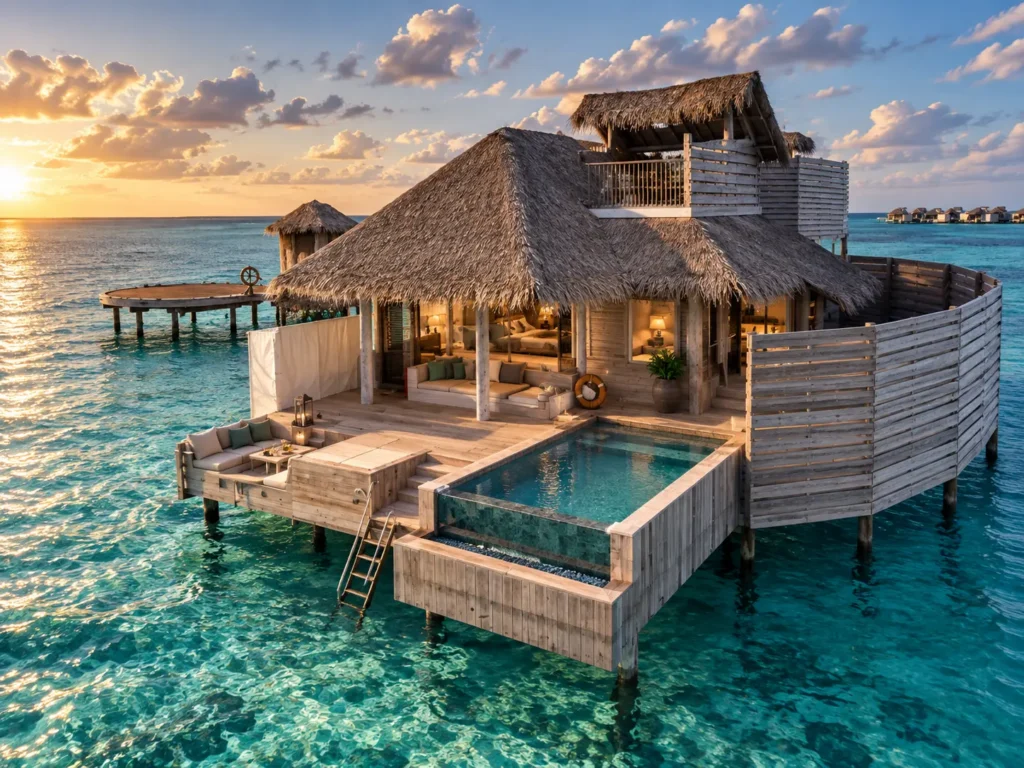
Six Senses Laamu has Laamu Atoll largely to itself, far from the crowded central breaks, and it sits a few minutes from Yin Yang, a well-regarded right-hander off the neighbouring island of Hithadhoo. The resort’s surf team runs morning and afternoon boats to the break through a season that runs broadly from April to October, with the largest waves from June to September, plus lessons for beginners on smaller days. The same months are turtle season: green and hawksbill turtles nest on the island and nearby, and the resident marine team runs the Maldives Underwater Initiative, which tracks turtles and mantas in the atoll. Mantas are seen in Laamu year-round, so divers have something to chase whatever the wind is doing.
- Best for: surfers with non-surfing partners, nature lovers and wet-season travellers.
- Transfer: about 35 to 45 minutes by domestic flight to Kadhdhoo, then around 15 to 20 minutes by speedboat.
- Rates: Lagoon Water Villas from roughly US$1,100 a night in the wet season (May to October) and about US$1,550 in the dry season (mid-January to mid-April), breakfast included and excluding taxes and service.
- Don’t miss: a dawn session at Yin Yang before the wind picks up.
Good to know: domestic flights are not tied to daylight the way seaplanes are, so a late international arrival is less of a problem than at a seaplane resort, though bags are limited on smaller aircraft.
One&Only Reethi Rah: best for Christmas, New Year and wet-season stays
Reethi Rah is one of the largest resort islands in the country, with about 6 kilometres of shoreline divided into a dozen beaches facing different directions. That layout is useful in any season: when the monsoon wind blows onto one side, another beach is usually sheltered and calm. It also handles the festive peak well, with 118 villas, eight restaurants and five bars, a large kids’ club and a spa programme busy enough to absorb a full house without feeling crowded. The 45 to 55-minute speedboat runs around the clock, so a late flight on 23 December or an evening squall does not leave you stuck in Malé as a seaplane delay might.
- Best for: festive holidays, multigenerational groups and wet-season families.
- Transfer: about 45 to 50 minutes by shared yacht or speedboat, day or night.
- Rates: beach villas from roughly US$1,950 a night from mid-July to mid-December and about US$2,700 from mid-January to mid-April, breakfast included and excluding taxes and service, with festive minimum stays and supplements on top.
- Don’t miss: the overwater Tapasake for Japanese dining on a windy evening.
Good to know: festive programmes and gala dinner prices are usually released in early summer, and the best-located beach villas go first.
COMO Cocoa Island: best for dry-season diving and clear water (January to April)
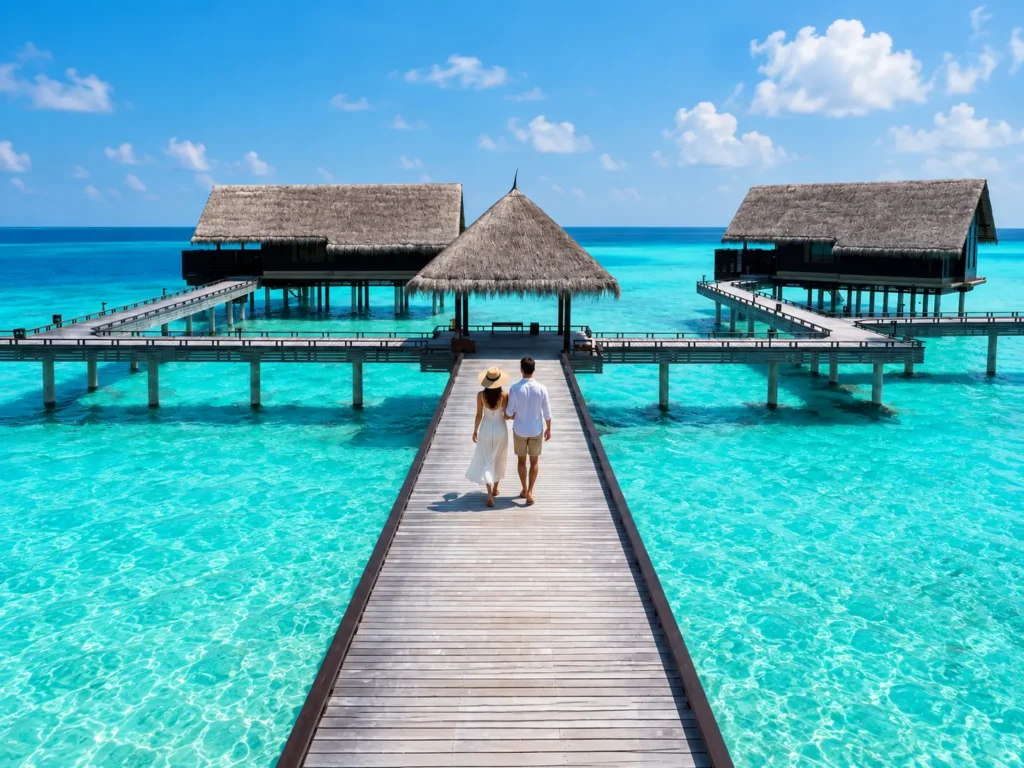
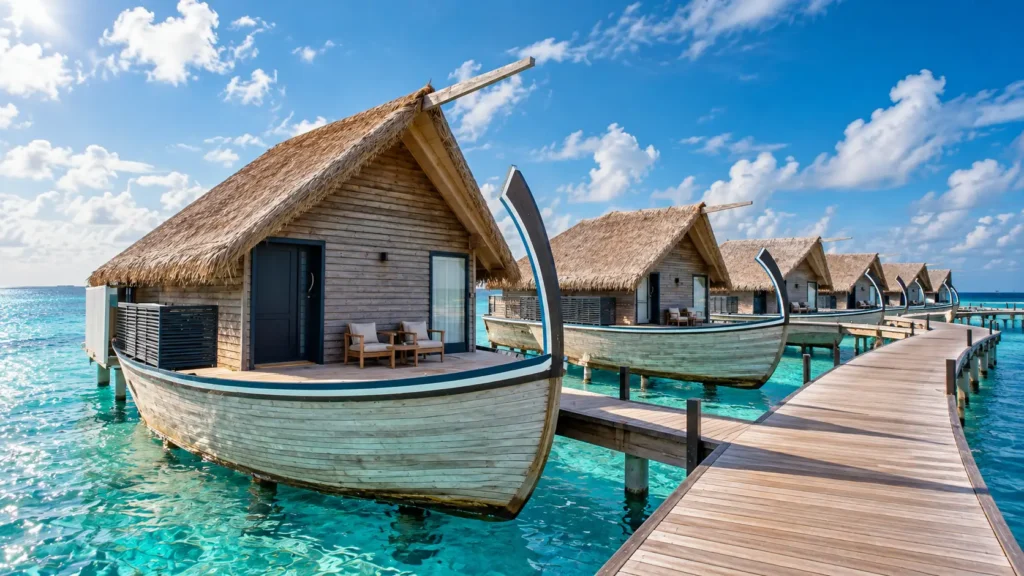
COMO Cocoa Island is a small island on the eastern rim of South Malé Atoll with 33 rooms, most of them over the water and many shaped like the traditional dhoni boat, and a long sandbank tail that changes shape with the tides. It earns its dry-season place through location: the Kandooma channel and the other South Malé channel dives are close by, and in the north-east monsoon the incoming current through these eastern channels tends to bring the clearest water of the year, along with grey reef sharks and eagle rays. With a COMO Shambhala spa and a calm, adult feel, it suits a quieter couple who want to dive in the mornings and do very little in the afternoons.
- Best for: couples, divers and dry-season visitors who prefer a small island.
- Transfer: about 40 minutes by speedboat from Malé.
- Rates: Dhoni Loft Water Villas from roughly US$1,000 a night in the wet season (May to October), half board included and excluding taxes and service; rates vary widely by date, so check live prices.
- Don’t miss: an early dive in the Kandooma channel when the current is running.
Good to know: channel dives here can be strong-current dives, so newer divers should ask the dive centre for the gentler sites first.
How to book around the season
For dry-season dates, book six to nine months ahead and treat flexible cancellation as worth paying for. For wet-season dates, look for offers that bundle half board or extra nights, check whether the resort’s best excursions run in that month, and keep a buffer day in Malé or the resort before an important connection. Whatever the month, look at what each resort does on a rainy afternoon: a spa, a cinema, an undersea restaurant or a strong kids’ club will carry a grey day far better than a beautiful but very small island.
Once you have chosen the month, the 7-day Maldives itinerary shows how to space boat trips and dive days through a week so the weather has room to move them.
Season-by-season comparison and verdict
| Resort | Best months | Seasonal reason | Booking |
|---|---|---|---|
| Four Seasons Landaa Giraavaru | May to November | Hanifaru Bay mantas and Manta On Call | Check rates |
| Conrad Maldives Rangali Island | All year, peak August to November | South Ari whale sharks on the doorstep | Book direct with the resort |
| Six Senses Laamu | April to October | Yin Yang surf break, turtles, year-round mantas | Check rates |
| One&Only Reethi Rah | December to January, and the wet season | Sheltered beaches and a 24-hour speedboat | Check rates |
| COMO Cocoa Island | January to April | Clear east-side channel diving in calm seas | Check rates |
For most first visits, February and March remain the safest months, and I’d accept the high-season prices to get them on a short trip. If you have a week or longer and a reason to be in the water, May to November is the better-value and more interesting half of the year: go to Baa for mantas, South Ari for whale sharks and Laamu for surf. December is beautiful but expensive, so treat it as a celebration trip and budget for the festive terms.
These are long-term seasonal patterns, not a forecast for a particular island or week. Wildlife sightings are never guaranteed. Check the Maldives Meteorological Service close to departure and keep weather-dependent activities flexible.
Some links on this page are affiliate links. If you book through them, Lagoon Edit may earn a commission at no extra cost to you. It never affects which resorts we recommend.