For most people, the answer to how many nights in Zanzibar after a safari is four or five. Four nights gives you a recovery day, two days with something in them and a calm last morning; five adds a spare day for weather or a lazy afternoon you didn’t plan. Three nights is fine when the safari is the main event, and seven lets you add Stone Town without rushing the beach.
The figure on your booking is less useful than the number of days you can actually use. The light-aircraft hop from the Serengeti or Arusha, the road transfer from Zanzibar’s airport to the coast and an early check-in for the flight home can each eat half a day. This guide works through those logistics first, then sets out what each length of stay gets you and which hotels suit a post-safari finish.
Quick answer: nights vs what you get
| Nights | Usable days | What fits | Best for |
|---|---|---|---|
| 3 | About 2 | One beach hotel, a spa treatment, one half-day outing at most | Safari-first trips with a tight return date |
| 4 | About 3 | A pure rest day, then Mnemba snorkelling or a spice tour, then a final beach day | The shortest stay I’d book after early game drives |
| 5 | About 4 | Two slow days, one outing, one spare day you can move around the weather | Most couples and first-time visitors |
| 7 | About 6 | A night in Stone Town, then six at the beach with Jozani, a spice farm and Mnemba spread out | Honeymoons and anyone who wants Zanzibar to be a holiday of its own |
If I had to choose one length without knowing anything else about your trip, it would be five nights. That’s the same reasoning behind my five-night island picks: enough time for the body to catch up, short enough that the safari stays the headline.
Getting from the safari to Zanzibar
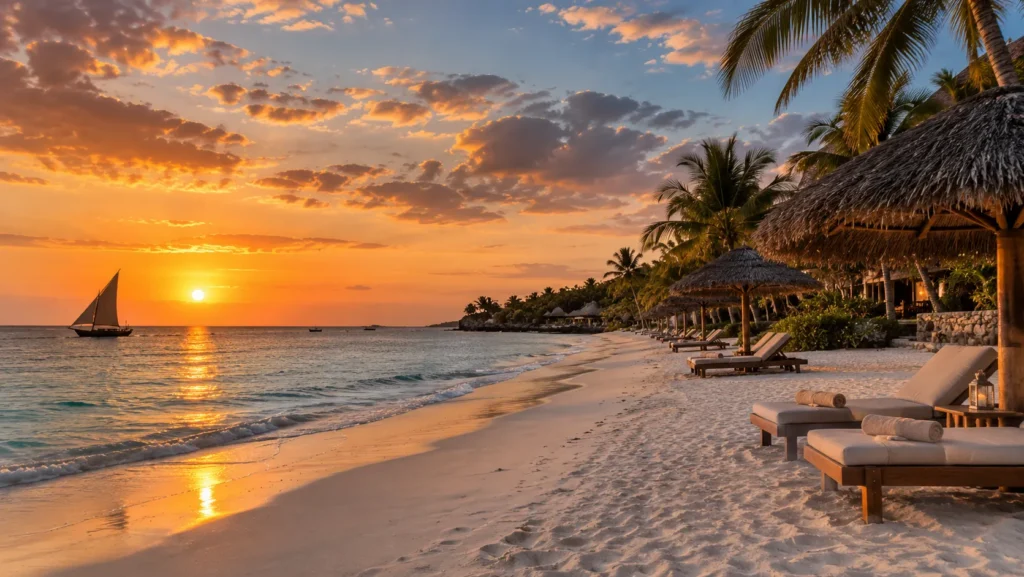
Most northern Tanzania safaris end with a flight to Zanzibar on the same day, so there’s no need to overnight in Arusha. Which flight you take depends on where your last camp is.
From a Serengeti airstrip
Coastal Aviation runs a scheduled Serengeti–Zanzibar service from Seronera and from whichever northern or southern strip the migration is near at the time (Kogatende or Ndutu, depending on season). It generally leaves late morning and reaches Zanzibar around midday to early afternoon, with exact times varying by airstrip. These are small Cessna Caravans that often call at more than one strip, so a flight sold as direct can still touch down on the way. Auric Air and other light-aircraft operators cover similar routes, sometimes through Arusha or Manyara.
Luggage is the catch. Coastal’s allowance is 15kg per person in total, carry-on included, and bags must be soft and without wheels or a rigid frame. If you’re carrying smart clothes or snorkel gear for the beach, ask your safari operator to store a second bag in Arusha or forward it to Zanzibar, or pay for an extra seat for luggage.

From Arusha or Kilimanjaro
If the safari finishes by road in Tarangire, Ngorongoro or Lake Manyara, you’ll usually fly from Arusha’s small domestic airport or from Kilimanjaro International. Arusha–Zanzibar takes around 1 hour 15 minutes, and Precision Air, Auric Air and others fly it several times a day. Kilimanjaro–Zanzibar is about 1 hour 20 minutes on Air Tanzania, Precision Air and some international carriers that stop at both airports, Turkish Airlines and Ethiopian among them. These bigger planes usually allow normal hard suitcases, but check the fare rules.
From Kenya
From the Masai Mara you’d usually fly back to Nairobi first, then on to Zanzibar. Safarilink flies from Wilson Airport with a 20kg soft-bag allowance (hand luggage included). Kenya Airways flies from Jomo Kenyatta International and allows a standard 23kg checked bag. Allow a proper gap if you’re changing airports in Nairobi, because the road between Wilson and JKIA is often slow. Coming from Kenya, I’d add a night to the Zanzibar figures in the table above.
Arriving in Zanzibar
Every foreign visitor has to buy Zanzibar’s compulsory inbound travel insurance, which costs US$44 per adult and covers up to 92 days. Buy it online through the official visitzanzibar.go.tz portal before you fly to avoid delays at the desk. From the airport, Stone Town is about 20 minutes away, Paje and Bwejuu roughly an hour and Kendwa around 1 hour 15 minutes. A midday landing usually means a mid-afternoon check-in on the coast, so the arrival day is good for a swim and dinner and not much else.
Prices are indicative and were last updated in October 2026. Rates change with season, exchange rates and availability, so check live prices before booking.
Why recovery time comes first
Safari days start early. Wake-up calls at 5.30am, long hours in a vehicle on rough tracks and late dinners by the fire add up, even at the most comfortable camps. Most people arrive in Zanzibar more tired than they expected, and it often hits on the second day, once the adrenaline wears off.
That’s why I’d leave the first full day completely empty. No boat pickup at 8am, no tour guide waiting in the lobby. Sleep in, have breakfast late, book a massage for the afternoon and let the beach do the rest. If you fill Zanzibar with tours from the first morning, you’re just repeating safari hours with a sea view. A four-night stay protects that empty day; a three-night stay struggles to.
What three, four to five and seven nights look like
Three nights: one hotel, minimal plans
Land around midday, transfer straight to the coast and stay put. Your one full day is for rest; the next morning could fit one short activity if the departure is in the evening. Don’t add Stone Town as a separate hotel on a stay this short, because the extra check-out and transfer would take most of a day. Choose a hotel where everything is on site, ideally all-inclusive, so you’re not organising meals.
Four to five nights: rest plus one or two outings
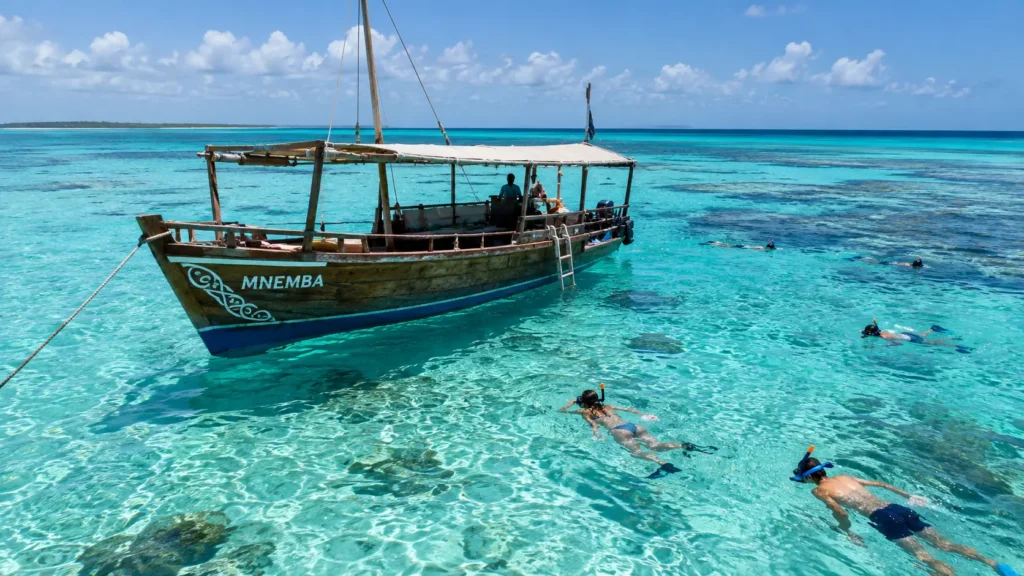
This is the sweet spot. A typical five-night plan: arrival afternoon, a completely empty first day, a morning boat trip to Mnemba Atoll for snorkelling, a beach and spa day, then a half-day spice farm visit or Jozani Forest before the final evening. Mnemba trips from the north coast usually leave around 8am and take four to five hours, with a marine conservation fee of roughly US$15–25 per person collected separately. Jozani, home of the endemic red colobus monkey, is an easy half-day from the east coast; its entry fee is typically around US$12, or included in the price of a guided tour.
Seven nights: Stone Town plus a proper beach week
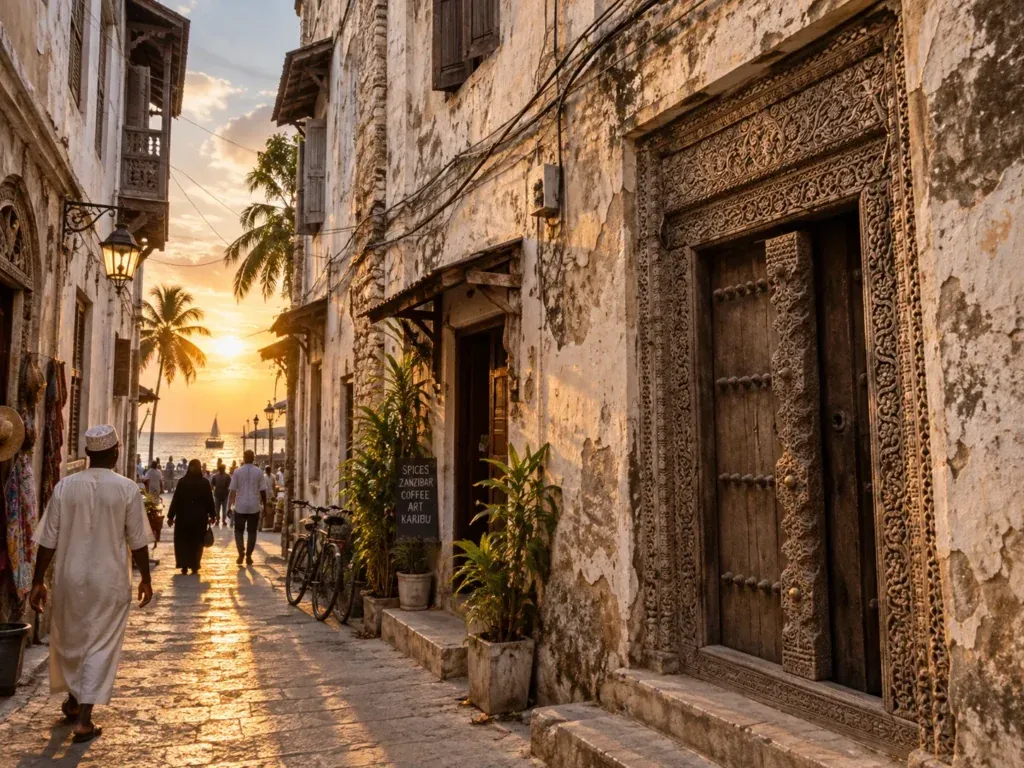
With a week, start with one night in Stone Town. It’s only about 20 minutes from the airport, so even a late-afternoon landing leaves time for a walk through the old town lanes, sunset over the harbour and dinner on a rooftop. The next morning, take a spice farm tour on the way to the coast (most farms are a short drive from town) and then spend six nights at the beach. That gives you space for Mnemba, Jozani and two or three days of doing nothing at all. You could also split the beach part between the north and east coasts, and my north vs east coast Zanzibar guide covers how to pick.
Should you start in Stone Town?
Start in Stone Town if you have six nights or more and your flight from the safari arrives after about 2pm. A late arrival followed by a one-hour-plus drive to the coast means checking in after dark, while a 20-minute ride into town gets you a sunset drink instead. Skip it on stays of four nights or fewer, because every change of hotel costs you roughly half a day.
Ending in Stone Town works too, especially before an early international departure. What doesn’t work well is visiting Stone Town as a day trip from Kendwa: it’s more than two hours there and back, which is a lot of time in a car right after a safari.
Timing your departure flight
Zanzibar now has direct international connections with Turkish Airlines, Qatar Airways, Emirates, flydubai, Ethiopian and Kenya Airways, plus seasonal European charters. Many long-haul departures leave in the afternoon or evening, which suits a beach stay: you can keep the room until noon (ask for late check-out in advance), have lunch, then set off.
Work backwards from the departure time. Aim to be at the airport about three hours before an international flight, and add the transfer time: around 1 hour 15 minutes from Kendwa, an hour from Paje or Bwejuu. For a 6pm flight from Kendwa, that means leaving the hotel at about 1.30pm. For anything before 10am, I’d spend the last night in Stone Town, or accept a pre-dawn start from the coast. Before booking the beach hotel, check whether the safari operator’s return flights land in time to connect, since some safari packages end with an Arusha–Zanzibar flight that doesn’t leave until afternoon.
Where to stay after a safari
Five hotels below: four beach resorts and one Stone Town option for a first or last night. I’ve judged them on how easy they make recovery: meal plan, spa, how far from the airport they are and how many nights each one suits.
Zuri Zanzibar: best for an active recovery
Zuri suits travellers who want rest with some structure: there’s a full spa, three restaurants and complimentary wellbeing classes and non-motorised watersports included in the rate. Its 56 bungalows, suites and villas are spread over a planted hillside in Kendwa, so it has a resort buzz without being crowded. Stays are sold half board, with breakfast and dinner included, which means lunch and drinks are extra. Because Kendwa is the furthest of these coastal hotels from the airport, Zuri works best for five nights or more.
- Best for: five to seven nights, couples who want yoga, a gym and a spa on site
- Transfer: about 1 hour 15 minutes by road from the airport
- Rates: a bungalow costs from around US$790 a night half board in April, May and early December, and about US$1,150 for most of the rest of the year, with VAT and service included but the US$5 per person nightly levy paid in cash at checkout
- Don’t miss: a spa treatment on your first full day, before any excursions
Kilindi Zanzibar: best for doing nothing at all
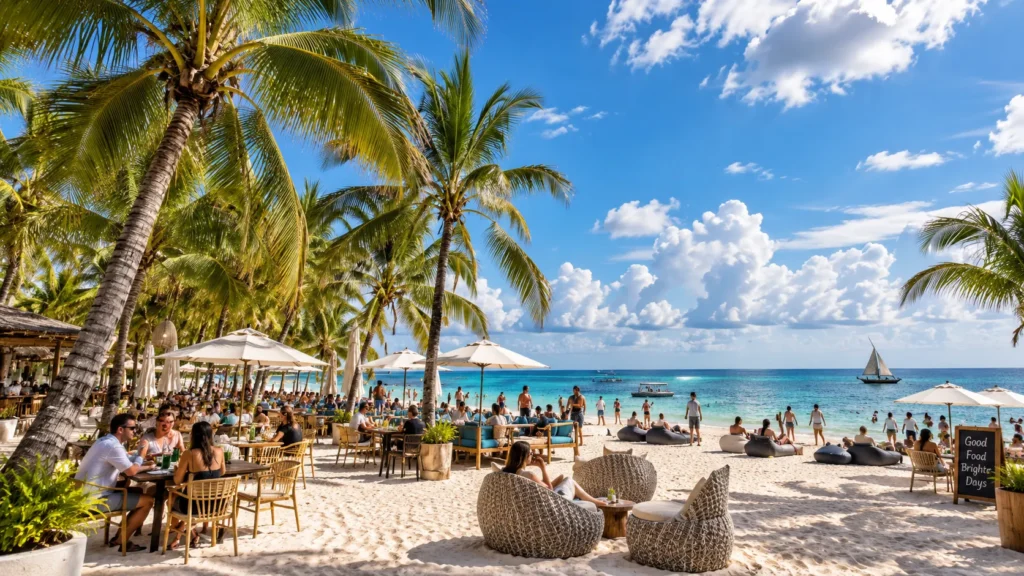
Kilindi, part of the Elewana Collection that also runs safari camps in Tanzania and Kenya, has only 15 domed pavilions on about 50 acres, each with its own plunge pool and garden. That low density is the point: after shared game vehicles and communal dinners, you barely see other guests. It’s all-inclusive, with meals, most drinks, sundowners, kayaking, paddleboarding and laundry included. Laundry is handy after a week of dusty safari clothes. Three nights here is enough for a short reset, though four gives you time to settle in.
- Best for: honeymooners and couples on a three- or four-night stay
- Transfer: roughly 1 hour 15 minutes to 1 hour 30 minutes by road from the airport
- Rates: a pavilion for two runs from around US$1,350 a night all-inclusive in the quieter months to about US$1,650 in January, February, July and August, with taxes and the infrastructure levy already included
- Don’t miss: handing over the whole safari bag on day one for laundry
Good to know: if your safari was with an Elewana camp, ask whether a combined booking gets a better rate or smoother transfers.
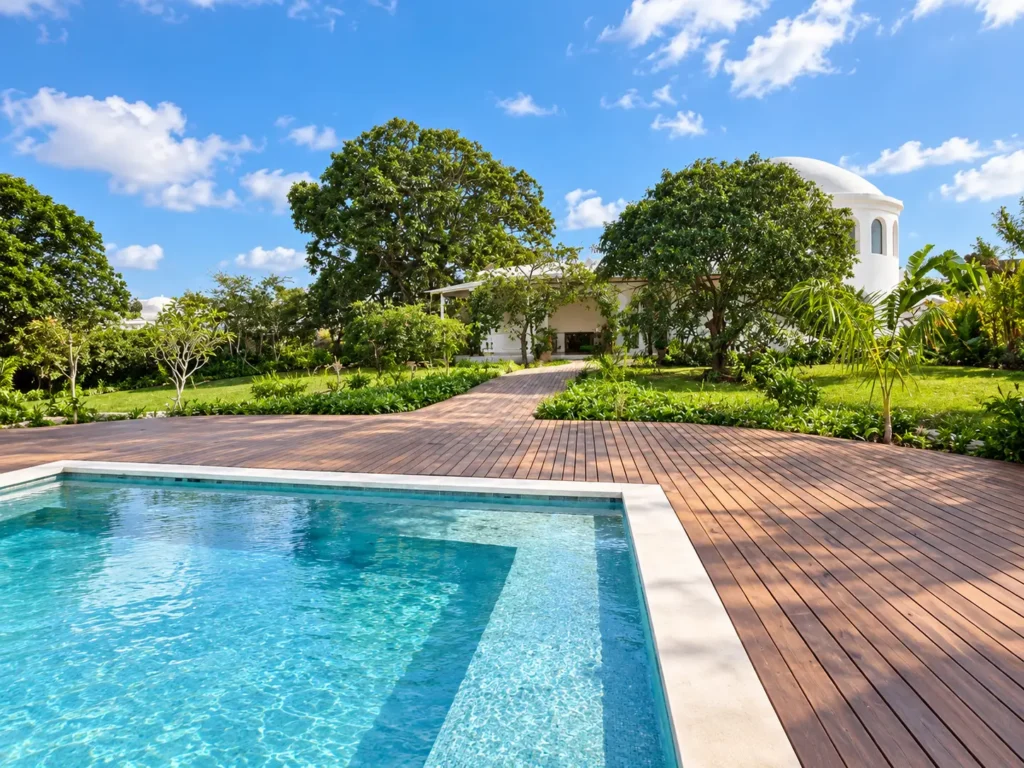
Zanzibar White Sand Luxury Villas & Spa: best for being looked after
White Sand is a small, villa-led property near Paje with 19 villas and three rooms. Every booking comes with a dedicated butler, so after a week of pre-arranged safari timings, someone else handles dinner reservations, spa slots and the airport run. The half-board rate includes breakfast and dinner, a non-alcoholic minibar, watersports equipment, spa facilities and a daily programme of activities. Villas range from garden villas with a hot tub or pool to beachfront and three-bedroom villas, which makes it a good fit for families coming off a safari.
- Best for: four to six nights, families or two couples sharing a larger villa
- Transfer: about an hour by road from the airport
- Rates: Cinnamon rooms start from around US$800 a night half board early in the year and about US$1,000 in July and August, garden villas with a hot tub from around US$1,300 to US$1,700; VAT and service are included, but a US$5 per person nightly city tax is paid at check-out
- Don’t miss: Jozani Forest, which is a short drive from Paje
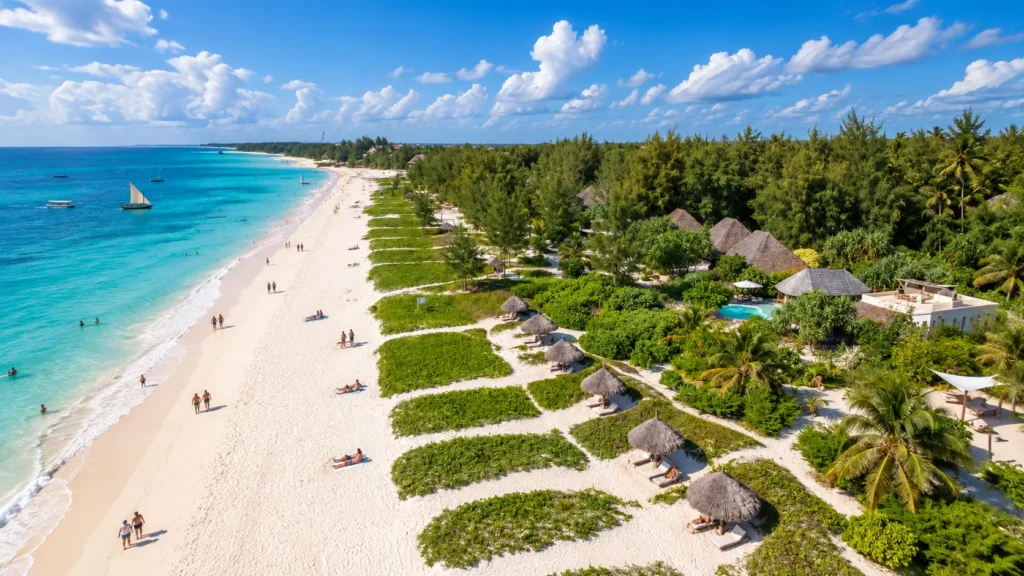
Baraza Resort & Spa: best all-inclusive for longer stays
Baraza on Bwejuu beach has 30 villas, each with a private plunge pool, and an all-inclusive plan covering breakfast, lunch and dinner. The Frangipani Spa uses local spices such as clove, cinnamon and black pepper in its treatments, a theme that ties in well with a spice farm visit. There’s also a kids’ club, gym and watersports centre, so it works for families who want a full week with no meal planning. Its all-inclusive structure makes seven nights easy to budget.
- Best for: five to seven nights, families and anyone who wants fixed costs
- Transfer: about an hour by private car from the airport
- Rates: an ocean-front villa for two is from around US$1,150 a night all-inclusive in the quieter months (mid-March to mid-June, November to 22 December), about US$1,800 in July and August and around US$2,200 over Christmas and New Year, plus a US$5 per person nightly levy
- Don’t miss: a spice-based treatment at the Frangipani Spa the day after a spice farm tour
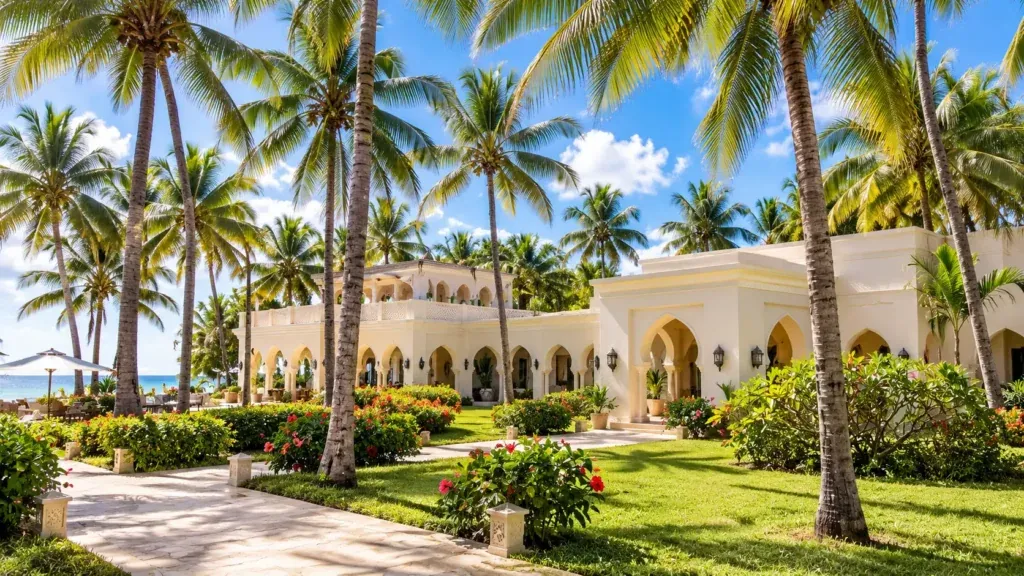
Emerson Spice: best for a first or last night in Stone Town
Emerson Spice is made up of three restored landmark buildings on a pedestrian street in Stone Town’s old quarter. Its 11 rooms are each decorated differently, with antiques, carved Zanzibari beds and latticed balconies. The rooftop Tea House has one sitting each evening: a sundowner at six, then a five-course tasting menu over the rooftops. It’s around 20 minutes from the airport, which makes it a practical stop before an early flight out.
- Best for: one night at the start or end of a stay of six nights or more
- Location: the old town of Stone Town, about 20 minutes from the airport
- Rates: from around US$200 to US$250 a night for two with breakfast, though rates vary widely by date, so check live prices
- Don’t miss: dinner at the rooftop Tea House, which needs booking ahead
Good to know: cars can’t reach the door on the pedestrian lanes, so pack an overnight bag and leave the main luggage with your driver if you’re heading to the coast next.
Budget and the bigger picture
Zanzibar is cheaper per night than most safari camps, which is another reason not to cut it to two nights. An extra beach night usually costs much less than a night in the Serengeti, and it adds more to a tired traveller’s trip than one more game drive. If you’re still deciding whether Zanzibar is the right beach to pair with your safari, my Mauritius vs Zanzibar comparison covers the flights, prices and type of holiday each island suits. For honeymooners comparing destinations more broadly, see the best luxury honeymoon islands for first-time visitors.
Hotels compared
| Hotel | Meal plan | Airport transfer | Ideal nights | Booking |
|---|---|---|---|---|
| Zuri Zanzibar | Half board | About 1h 15m | 5–7 | Check rates |
| Kilindi Zanzibar | All-inclusive | About 1h 15m–1h 30m | 3–4 | Check rates |
| Zanzibar White Sand Luxury Villas & Spa | Half board with butler | About 1h | 4–6 | Check rates |
| Baraza Resort & Spa | All-inclusive | About 1h | 5–7 | Check rates |
| Emerson Spice | Varies; rooftop dinner booked separately | About 20m | 1 | — |
Verdict: how many nights to book
Book five nights if you can, four if you must, and seven if you want Stone Town as well. Three nights works for a simple one-hotel finish, preferably all-inclusive and with a short first day. Whatever you pick, leave the first full day empty, schedule Mnemba or a spice tour for the middle of the stay, and plan the final transfer around your flight time.
For a short, quiet stay, I’d choose Kilindi; for a longer, all-inclusive week, Baraza; for the most hands-off service, White Sand; and for an active stay with a spa, Zuri. Add a night at Emerson Spice if your flights make Stone Town easy. You’ll find more planning help in the Zanzibar destination guides.
Some links on this page are affiliate links. If you book through them, Lagoon Edit may earn a commission at no extra cost to you. It never affects which resorts we recommend.