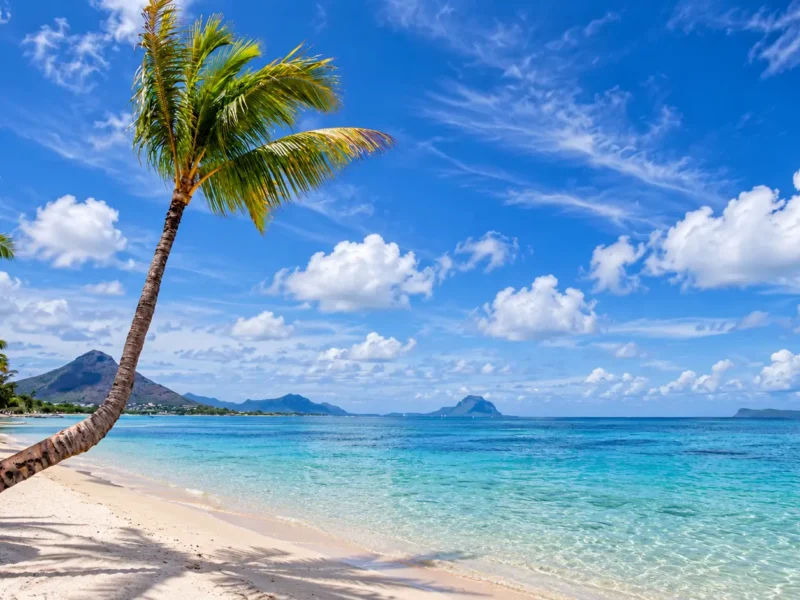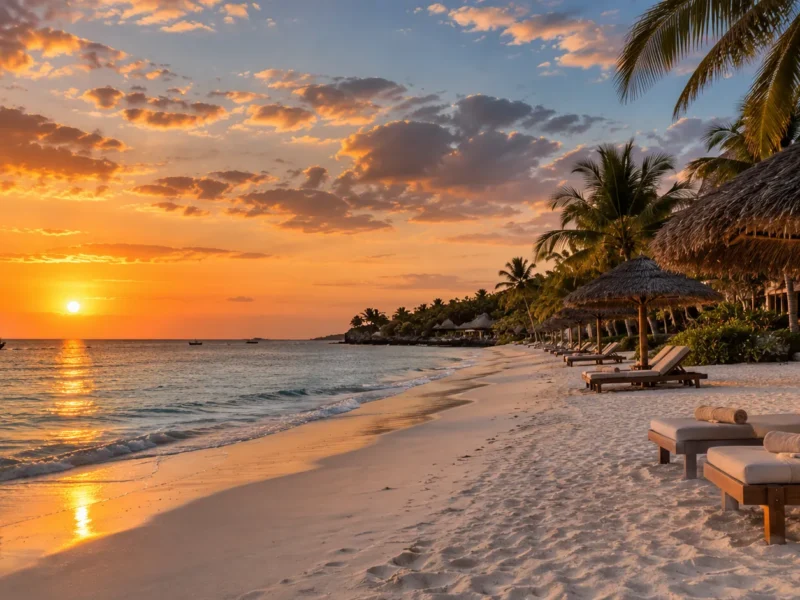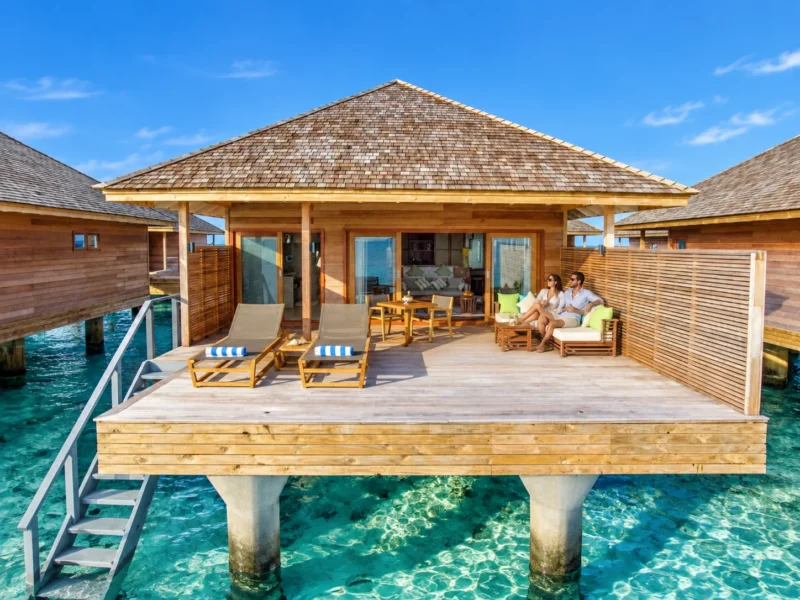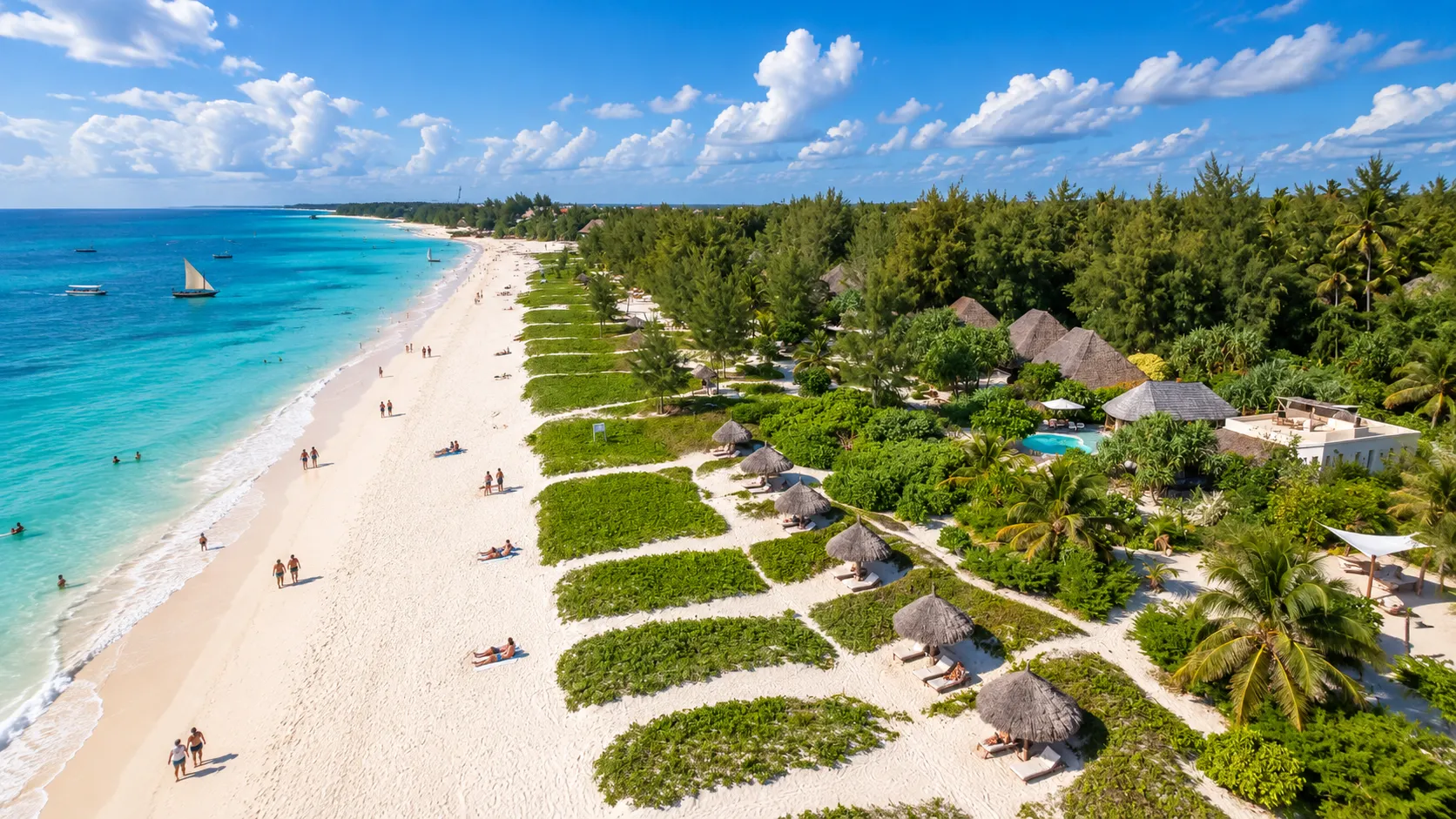
If you are deciding between the north or east coast Zanzibar has to offer, start with the sea itself: the north (Kendwa and Nungwi) keeps enough water in front of the beach to swim at most hours and faces the sunset, while the east (Matemwe down to Paje, Bwejuu and Jambiani) faces the sunrise and empties out at low tide into a vast, walkable lagoon. I’d send most first-timers north for a short stay, and anyone with a week, an interest in kitesurfing or a liking for village life east, or to both.
North or east coast Zanzibar: the quick answer
- Choose the north if you want to swim when you like, watch the sun drop into the sea, and have restaurants, dive centres and dhow cruises within a short walk or tuk-tuk ride.
- Choose the east if you like long beach walks, early light, kitesurfing, and a coastline where fishing and seaweed farming still set the daily rhythm.
- Split the stay if you have six beach nights or more: east first for the quiet and the sunrises, north last for easy swimming before the flight home.
North coast vs east coast at a glance
| Factor | North coast (Kendwa, Nungwi) | East coast (Matemwe to Jambiani) |
|---|---|---|
| Swimming | Possible through most of the tidal cycle, especially at Kendwa | Best around high tide; at low tide the water can sit hundreds of metres out |
| Light | West-facing: sunsets over the water | East-facing: sunrises over the reef |
| Beach character | Steeper, deeper sand with a defined shoreline | Flat, pale lagoon that changes shape through the day |
| Village life | Nungwi’s dhow yards and fishing harbour, busier tourist strip | Seaweed farms, fishing outriggers, smaller villages between resorts |
| Activities | Diving, snorkel trips, sunset dhows, turtle sanctuary | Kitesurfing, reef walks, Jozani Forest, Mnemba trips from Matemwe |
| Eating out | Widest choice on the island outside Stone Town | Cluster of cafés in Paje, scattered spots elsewhere, The Rock at Michamvi |
| Airport transfer | About 70 to 80 minutes | About 60 to 65 minutes to Paje or Bwejuu; around 75 minutes to Matemwe |
| Who it suits | Short stays, families who swim, sunset lovers, divers | Kitesurfers, walkers, photographers, repeat visitors, longer stays |
Tides: why the time of day decides your swim
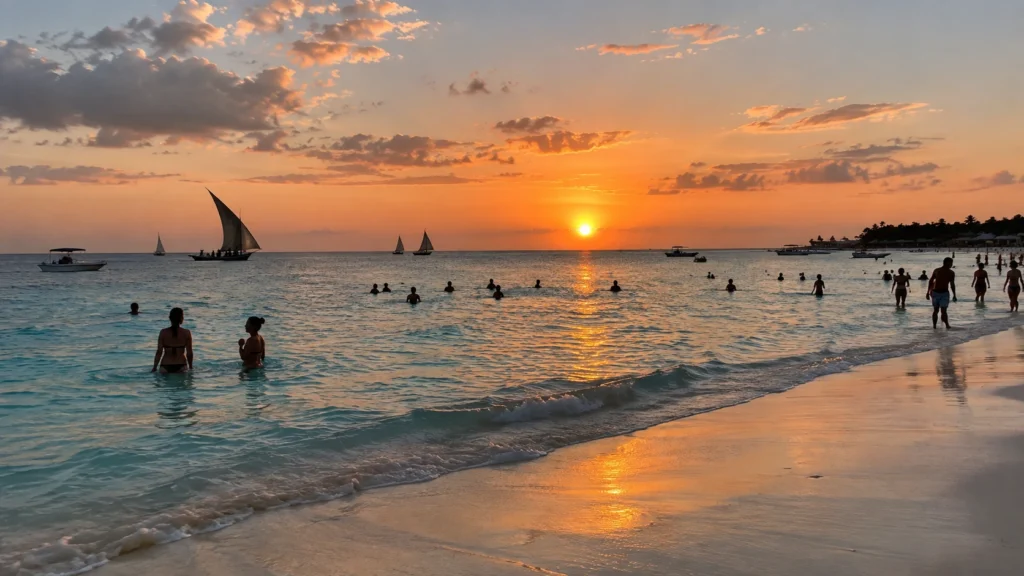
Zanzibar has two high tides and two low tides roughly every 24 hours, and each one arrives about 50 minutes later than the day before. On the east coast this is the single biggest influence on your beach day. A wide, shallow reef platform sits between the sand and the barrier reef, so when the tide drops the Indian Ocean simply retreats across it, leaving sandbars, rock pools and channels you can wade through.
On a morning high tide in Paje or Bwejuu you can swim straight off the beach in warm, clear water. Six hours later, the same spot is a walk across rippled sand dotted with sea urchins, starfish and seaweed plots. What it means in practice is that you plan your swim around a tide table, and a good resort pool becomes part of the experience, not a backup.
The north behaves differently. Kendwa in particular has a deeper bay where the tide moves the waterline up and down the beach without pulling it far out, so you can generally swim at breakfast, lunch and sundown. If you are travelling with children who want to be in the sea all day, or you only have three or four nights, this predictability is the north’s strongest argument.
Good to know: ask a hotel what its own beach does at low tide, not what the coast does in general. Shoreline shape varies within a few hundred metres, and some east-coast properties sit opposite deeper channels.
Sunsets in the north, sunrises in the east
Geography settles this one. Kendwa and the western side of Nungwi look out over the channel towards the Tanzanian mainland, so the sun sets over open water almost every evening. Sundowners and sunset dhow cruises are the rituals of the north.
The east coast faces the open Indian Ocean. The sun comes up over the reef, and the first hour of light on a high tide is the most beautiful time of day there: still water, fishermen poling outrigger canoes out to the reef and the lagoon in shades of mint and turquoise. Evenings are calmer and darker, with the sunset behind the palms. If you are an early riser or a photographer, I’d lean east; if the evening drink is the highlight of your day, the north wins.
Seaweed farms, kitesurfing and the wind on the east
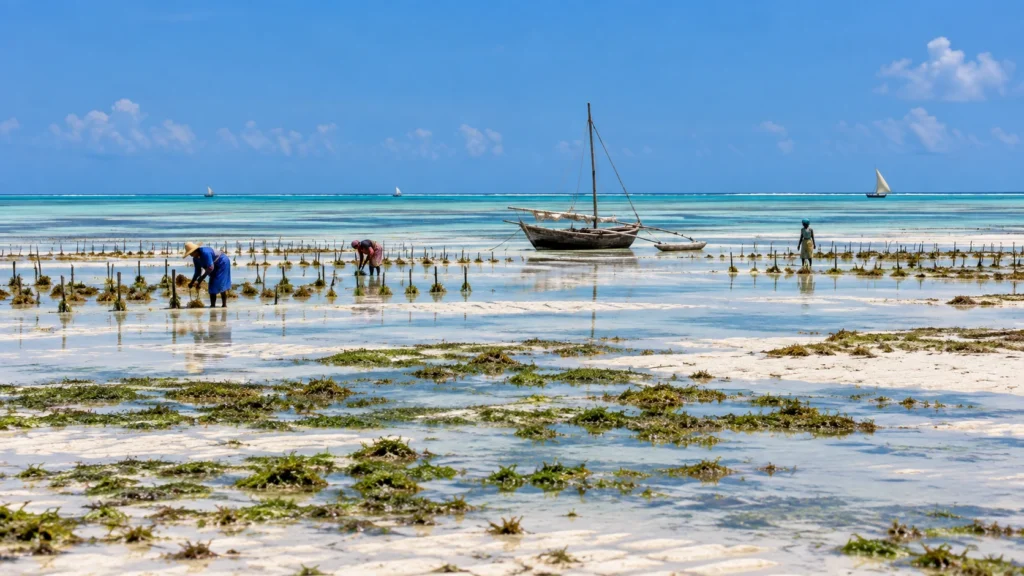
Walk along the southeast coast at low tide and you will see rows of wooden stakes with lines of red seaweed tied between them. This is one of Zanzibar’s most important coastal livelihoods, and the farmers are overwhelmingly women. The seaweed grows for six to eight weeks before it is harvested, dried on the sand and sold. In Paje, the Seaweed Centre is a social enterprise that turns the crop into soaps and skincare and runs farm visits, which is a thoughtful way to understand the lagoon you are looking at. Ask before photographing people at work.
The same shallow lagoon and steady trade winds have made Paje one of Africa’s best-known kitesurfing spots. There are two wind seasons. The Kusi blows from the south and southeast from roughly June to October, usually at 15 to 25 knots, and is the stronger of the two; July is typically the windiest month. The lighter Kaskazi comes from the north-east between about mid-December and March, often at 12 to 18 knots, which suits learners. Jambiani, a little farther south, has the same conditions with fewer kites in the sky.
There are two catches. Wind that is perfect for kitesurfers makes the lagoon choppy and lounging less still, particularly in July and August. And the Kaskazi months tend to push drifting seaweed onto east-facing beaches, so the sand may be cleared each morning by hotel staff. The north is sheltered from much of this, which is another reason it suits a conventional beach week.
Village life vs resort strips
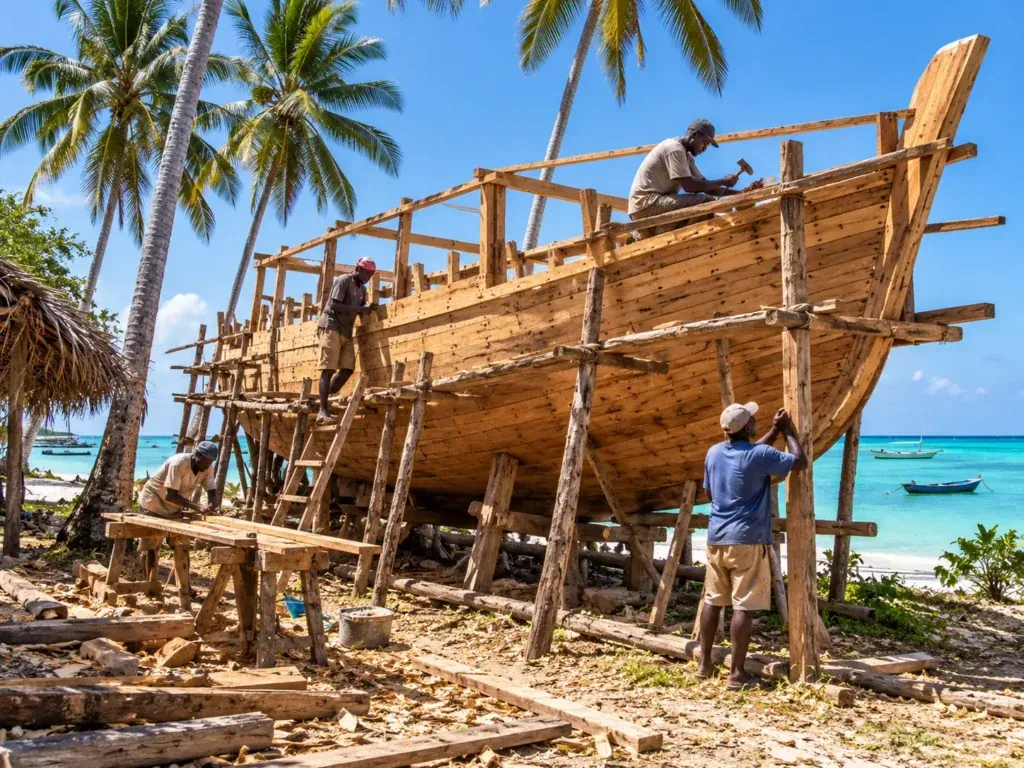
Nungwi grew up around boatbuilding, and shipwrights still shape ocean-going dhows by hand in yards on the beach. Near the lighthouse, the Mnarani turtle pond rehabilitates turtles caught in fishing nets. Beyond that, Nungwi is now the most developed beach area on the island: guesthouses, dive shops, bars and restaurants run along a fairly compact shoreline, and the beach is lively from morning to night. Kendwa, a short drive or beach walk south, is more resort-led, with larger properties spaced along a wide bay. Its monthly full moon party draws people from across the island, so check the lunar calendar if you are after quiet nights.
The east is more spread out and more mixed. Matemwe, in the northeast, is a long fishing village facing Mnemba Atoll, with a handful of low-key lodges and boat access to some of the island’s best snorkelling and diving. In the southeast, Paje is the social centre, with kite schools, backpacker-friendly cafés and beach bars; Bwejuu is quieter, its villages and resorts set back under coconut palms along a very long beach; and Jambiani is a working village stretched over several kilometres, where coral-stone houses, mosques and seaweed drying racks sit right behind the sand. If you want to see everyday Zanzibari coastal life from your sunbed, the southeast offers more of it.
Eating out near each coast
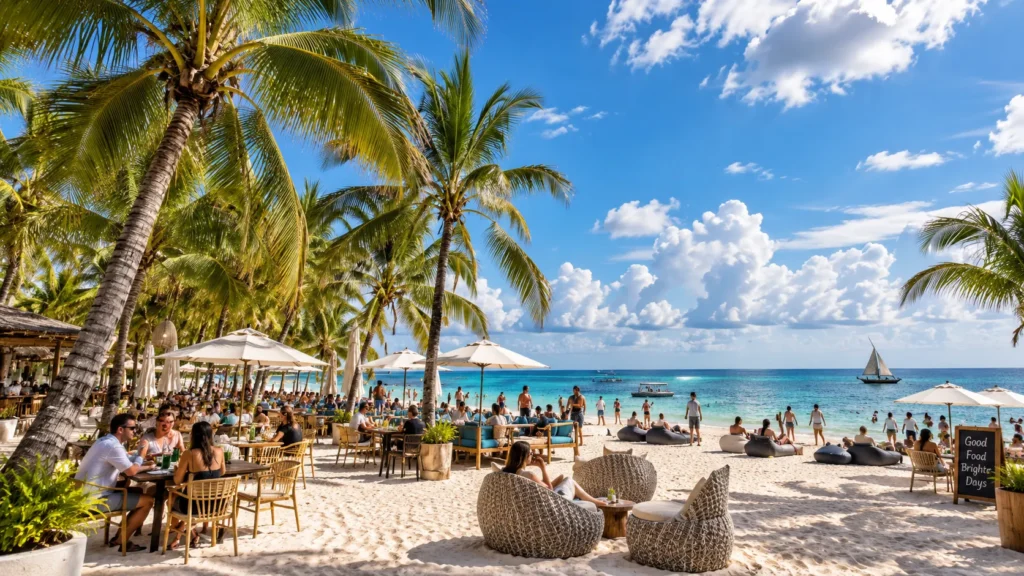
The north has the deepest bench of independent restaurants outside Stone Town. Nungwi’s beachfront has seafood grills, Italian places and rooftop bars within walking distance of each other, and Kendwa’s beach bars are easy to reach on foot along the sand.
On the east, Paje has a strip of cafés, smoothie bars and casual restaurants geared to the kitesurfing crowd. Beyond that, options are more spread out, so you will usually need a taxi. The best-known meal on this coast is at The Rock, a restaurant on a coral outcrop off Michamvi Pingwe, between Bwejuu and Michamvi: at low tide you walk out across the sand, and at high tide a boat takes you. Book well ahead and time your table for the tide you want. Because dinner choices thin out at night, all-inclusive or full-board plans make more sense on the east than in the north.
Transfer times from Zanzibar airport
The airport sits just south of Stone Town on the west side of the island, so neither coast is close, but the southeast is a little quicker. Typical private transfer times are around 60 minutes to Paje, 65 minutes to Bwejuu, 70 minutes to Kendwa and 75 to 80 minutes to Nungwi or Matemwe. Most luxury resorts arrange a driver for you; I’d always book that in advance for a late arrival.
Moving between the coasts takes roughly 75 to 90 minutes by road from Paje to Kendwa. That is manageable once, which is why a split stay works, but daily trips from one coast to the other eat into beach time. Stone Town is easiest as a first or last night of its own, since the airport is a 15 to 20 minute drive from the old town.
Which coast for which kind of traveller
- Short stay of three or four nights: the north, ideally Kendwa, so you are not working around a tide table on every one of your few beach days.
- Families with younger children: the north for reliable sea swimming, or an east-coast resort with a big pool if the children enjoy rock pools and sand flats.
- Honeymooners: either; Kendwa for sunsets and a private plunge pool, Bwejuu for space, sunrise and an all-inclusive villa.
- Kitesurfers and active couples: Paje or Jambiani, timed for the Kusi or Kaskazi winds.
- Divers and snorkellers: Nungwi or Kendwa for the most dive centres, or Matemwe for the shortest boat ride to Mnemba Atoll.
- Walkers, photographers and anyone curious about local life: the southeast, where the low-tide lagoon and the villages behind it are the main event.
If Zanzibar follows a safari on the mainland, the number of nights you have will shape the decision as much as the coastline; our guide to how many nights to spend in Zanzibar after a safari covers that pacing in detail.
Four resorts, two coasts
These four cover the main choices: two on Kendwa’s west-facing bay and two on the tidal southeast. For two people, the half-board entry rooms at Zuri and White Sand start at around US$790 to US$800 a night in their quieter months, and the two all-inclusive options begin at around US$1,150 to US$1,350 per villa or pavilion, before the US$5 per person nightly levy where it applies.
Prices are indicative and were last updated in October 2026. Rates change with season, exchange rates and availability, so check live prices before booking.
Zuri Zanzibar, Kendwa: best for all-day swimming and choice of dining
Zuri spreads 56 bungalows, suites and villas across around 12 hectares of gardens on Kendwa’s north-west shore, and it sits on the stretch of beach where the tide has least effect, so the sea is there for a swim whether you come down at 8am or 5pm. Facing west, the beach bar and ocean-front suites get the full sunset every clear evening. Three restaurants, Upendo, Maisha and Bahari, plus four bars give you a sense of variety without leaving the property, and Kendwa’s beach bars are a stroll along the sand. Three-bedroom ocean-front villas of around 500 square metres suit multi-generational groups.
- Best for: families and couples who want reliable sea swimming and sunsets on a short stay
- Location: Kendwa, about 50 km and around 70 minutes by road from the airport
- Rates: half-board bungalows cost from around US$790 per room a night in April, May and early December and about US$1,150 from June to November (around US$1,350 at New Year), with VAT included and a US$5 per person nightly levy paid at checkout
- Don’t miss: a sunset dhow trip from the beach and a walk north to see Nungwi’s dhow yards
Good to know: Kendwa’s full moon party carries along the beach, so if you want silent nights, check the lunar calendar against your dates before booking.
Kilindi Zanzibar, Kendwa: best for sunsets from a private pavilion
Kilindi has just 15 white-domed pavilions set on a gentle slope above the same west-facing bay, each with its own plunge pool and an open rainfall shower, so the sunset is something you watch from your own terrace. The architecture turns the north coast’s main asset, evening light over the channel, into the centrepiece of the stay. Rates are fully inclusive of meals, house wine, beer and selected spirits, with kayaks and paddleboards included, which suits Kendwa’s calm water well.
- Best for: honeymooners and couples who want privacy with the north coast’s easy swimming
- Location: Kendwa, around 70 minutes by road from the airport
- Rates: all-inclusive pavilions for two are from around US$1,350 a night in March, April, June and September to mid-December, and about US$1,650 in January, February, July and August, with service, VAT and the levy included; the lodge closes in May
- Don’t miss: a late-afternoon paddleboard on the bay before the light turns gold
Zanzibar White Sand Luxury Villas & Spa, Paje: best for kitesurfing and sunrise
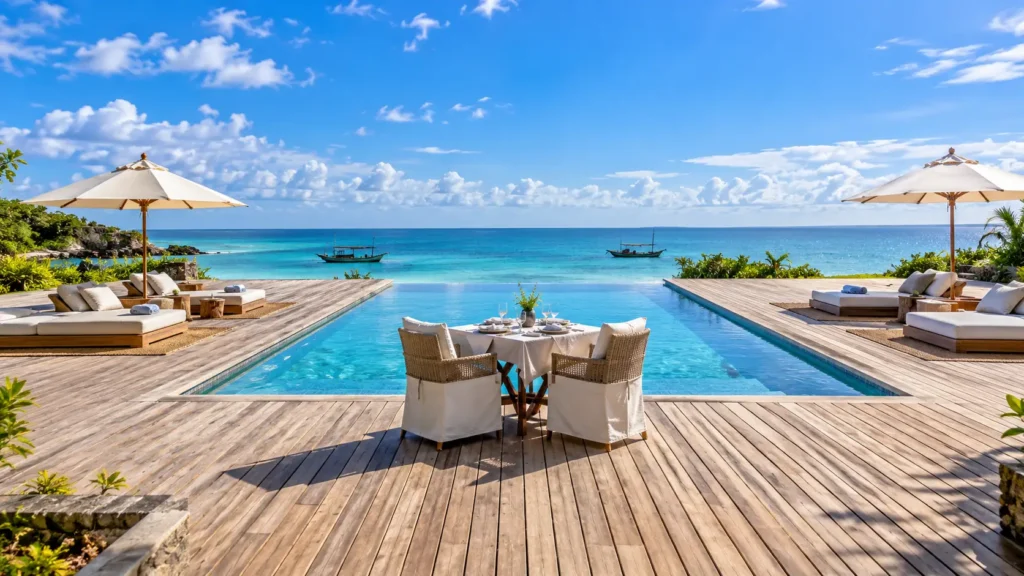
White Sand is a Relais & Châteaux property of privately owned villas about a kilometre from Paje village, which puts you on the east coast’s most active stretch of lagoon. Each villa is split into two pavilions, one for sleeping and one for living, joined by a terrace and plunge pool that look east over the beach, so mornings start with sunrise over the reef. That private pool is what makes Paje’s big tidal range easy to live with: swim in the sea on the high tide and at the villa when the water is far out. The resort runs its own high-end kite and watersports centre, and its Doors to Zanzibar restaurant, a rooftop bar and twice-weekly poolside barbecues mean you do not need to rely on Paje’s casual cafés for dinner.
- Best for: kitesurfers, active couples and anyone who wants Paje’s energy with villa privacy
- Location: Paje, about 40 km and roughly an hour by road from the airport
- Rates: a Cinnamon double on half board is from around US$800 a night for two between mid-January and May and about US$1,000 in July and August, with garden villas from roughly US$1,300; add the US$5 per person nightly levy
- Don’t miss: a low-tide walk to the seaweed farms and a visit to Paje’s Seaweed Centre
Good to know: if you want lessons, book in the Kaskazi season from mid-December to March, when the wind is usually lighter and better suited to beginners.
Baraza Resort & Spa, Bwejuu: best for an all-inclusive east-coast villa
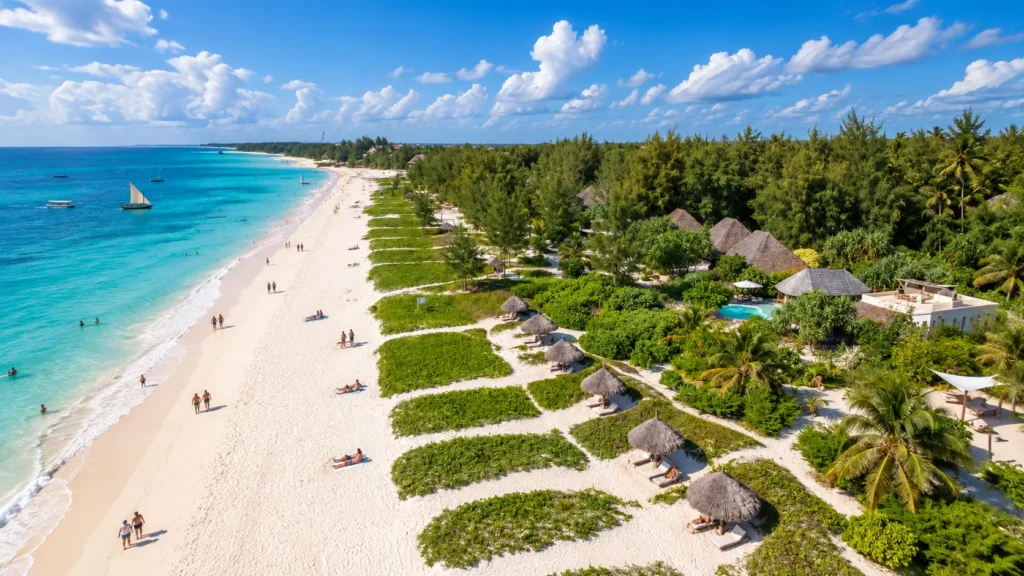
Baraza sits directly on Bwejuu’s long, quiet beach, north of Paje on the road towards Michamvi, with 30 villas styled on Swahili and Arabic coastal architecture, each with its own pool. Bwejuu’s lagoon empties dramatically at low tide, and the all-inclusive plan, covering three meals, afternoon tea, house drinks, snorkelling gear and kayaks, is a good match for a coast where independent restaurants are thin on the ground at night. The beachfront villas look east for sunrise, and The Rock at Michamvi Pingwe is a short drive up the coast for a tide-timed lunch. Choose Baraza for space, calm and a self-contained stay with a village atmosphere just outside the gate.
- Best for: couples and families who want everything included on the quieter southeast coast
- Location: Bwejuu, around 65 minutes by road from the airport
- Rates: an all-inclusive Ocean Front villa for two runs from around US$1,150 a night from mid-March to mid-June and in November to about US$1,800 in July and August, plus the US$5 per person nightly levy
- Don’t miss: a sunrise walk along Bwejuu’s sandbanks at low tide
Good to know: check the tide table before booking The Rock, since lunch on a falling tide lets you walk out and take the boat back.
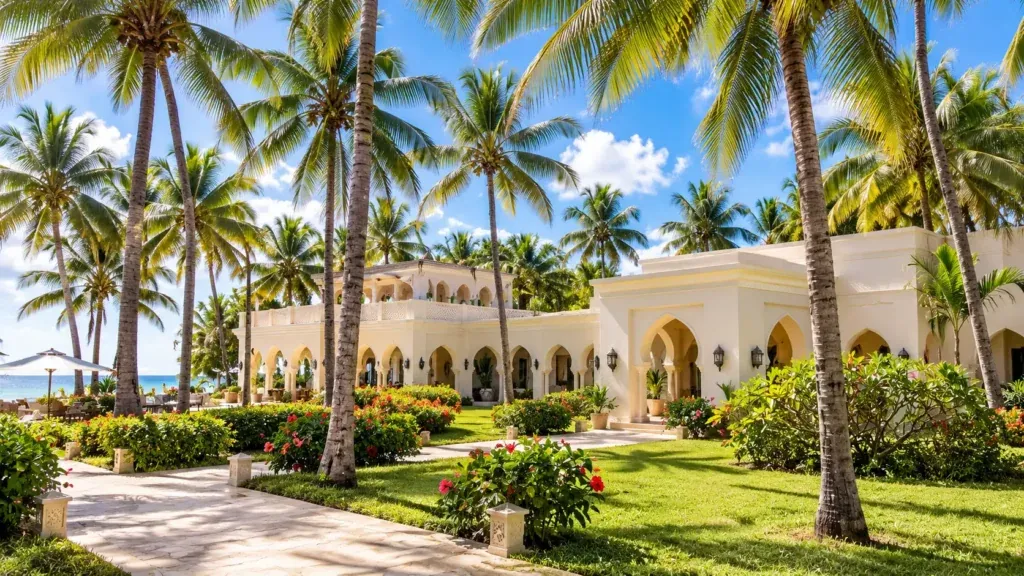
Three of these four have private plunge pools in every villa or pavilion, which helps a great deal on the tidal east. For more options worldwide, see our guide to the best island resorts with private pools.
Should you split your stay between both coasts?
With six or more beach nights, I’d split. Spend the first three nights on the east, where the tides, sunrises and village mornings reward a slower pace, then move to Kendwa for three or four nights of easy swimming and sunsets. The cross-island drive takes around 75 to 90 minutes, so schedule it for the late morning and you will be on the new beach for lunch.
With five nights or fewer, I’d pick one coast. Every move costs half a day of packing, checkout and driving, and on a short trip that is a large share of your time. Our comparison of one resort vs a split stay sets out the general pros and cons, and they apply neatly to Zanzibar.
Comparison table: resorts on each coast
| Resort | Coast | Beach at low tide | Meal plan | Booking |
|---|---|---|---|---|
| Zuri Zanzibar | North (Kendwa) | Still swimmable | Half board | Check rates |
| Kilindi Zanzibar | North (Kendwa) | Still swimmable | All-inclusive | Check rates |
| Zanzibar White Sand Luxury Villas & Spa | East (Paje) | Sea retreats far out | Half board | Check rates |
| Baraza Resort & Spa | East (Bwejuu) | Sea retreats far out | All-inclusive | Check rates |
My verdict
For a first visit or a short stay, the north is the easier coast: Kendwa gives you swimmable water at most hours, sunsets over the sea and the island’s best spread of restaurants nearby. The east is the more distinctive landscape, and with a week or more it is where I’d spend at least part of the trip, for the sunrises, the kite schools at Paje, the seaweed farms and a beach that looks different every few hours. If you can, do both, east first and north last. And if you are still weighing Zanzibar against other Indian Ocean islands, our Mauritius vs Zanzibar comparison is the next place to look.
Some links on this page are affiliate links. If you book through them, Lagoon Edit may earn a commission at no extra cost to you. It never affects which resorts we recommend.