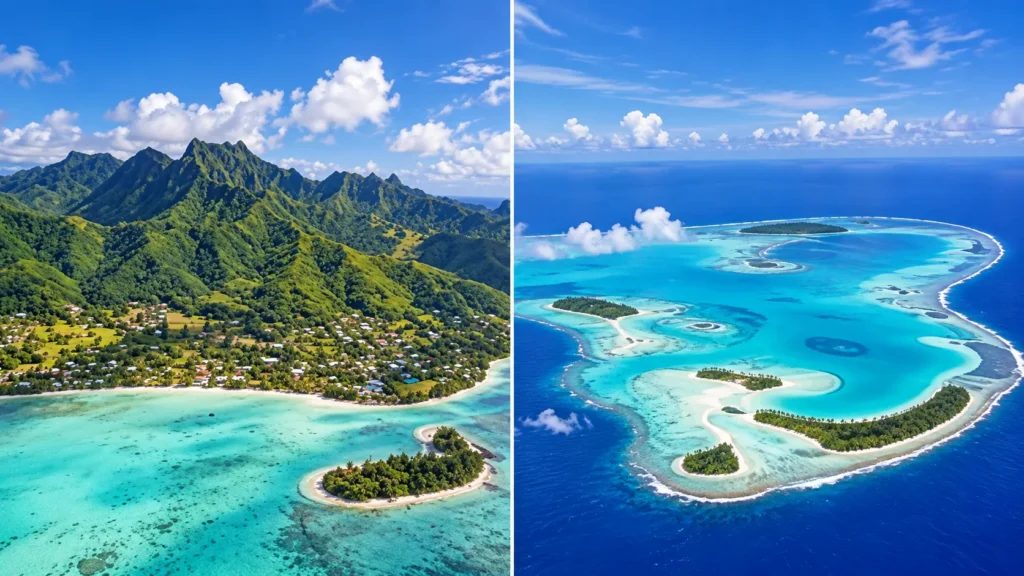
In the Rarotonga vs Aitutaki question, give Rarotonga the larger share of your nights and Aitutaki the most memorable days. Rarotonga is a green volcanic island with a ring road, a walking track over its spine, a Saturday market, food trucks and enough restaurants to eat somewhere new every night. Aitutaki is a low, quiet island attached to one of the largest and clearest lagoons in the South Pacific, and almost everything worth doing there happens on the water. On a ten-night trip, I’d split it six and four in Rarotonga’s favour.
Rarotonga vs Aitutaki: the quick answer
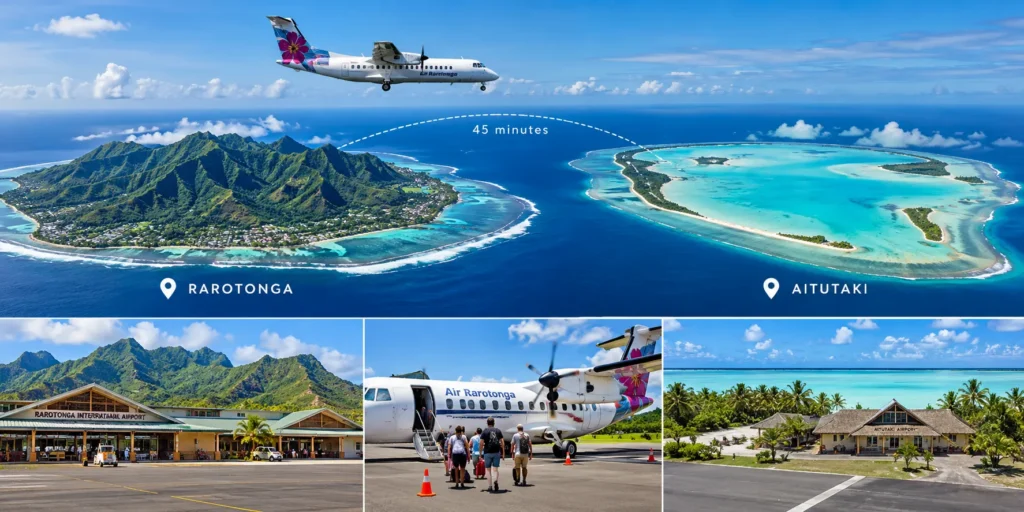
These are two very different islands sharing one country. Rarotonga is home to most of the Cook Islands’ population, the international airport, the capital Avarua and almost all of the nightlife. Aitutaki, about 50 minutes north on an Air Rarotonga turboprop, has a population of under 2,000 and a pace to match. Neither is the “better” island; they do different jobs, and a good itinerary uses both.
| Rarotonga | Aitutaki | |
|---|---|---|
| Landscape | Jagged, forested volcanic peaks ringed by a narrow lagoon | Gentle hills and a vast triangular lagoon dotted with motu |
| Signature day | Cross-island trek past Te Rua Manga, then a swim at Muri | Full-day lagoon cruise with a stop at One Foot Island |
| Getting around | 32km ring road, scooters, hire cars and the round-island bus | Scooter or bicycle on the main island; boats for the lagoon |
| Food and evenings | Restaurants, food trucks, night markets, bars open late on Fridays | Mostly resort dining and a handful of local spots; early nights |
| Families | Wide choice of family villas and activities | Limited, as several top resorts are adults-only |
| Best share of a trip | The larger half | Three to five nights, never a rushed day |
Rarotonga: mountains, markets and a lagoon with neighbours
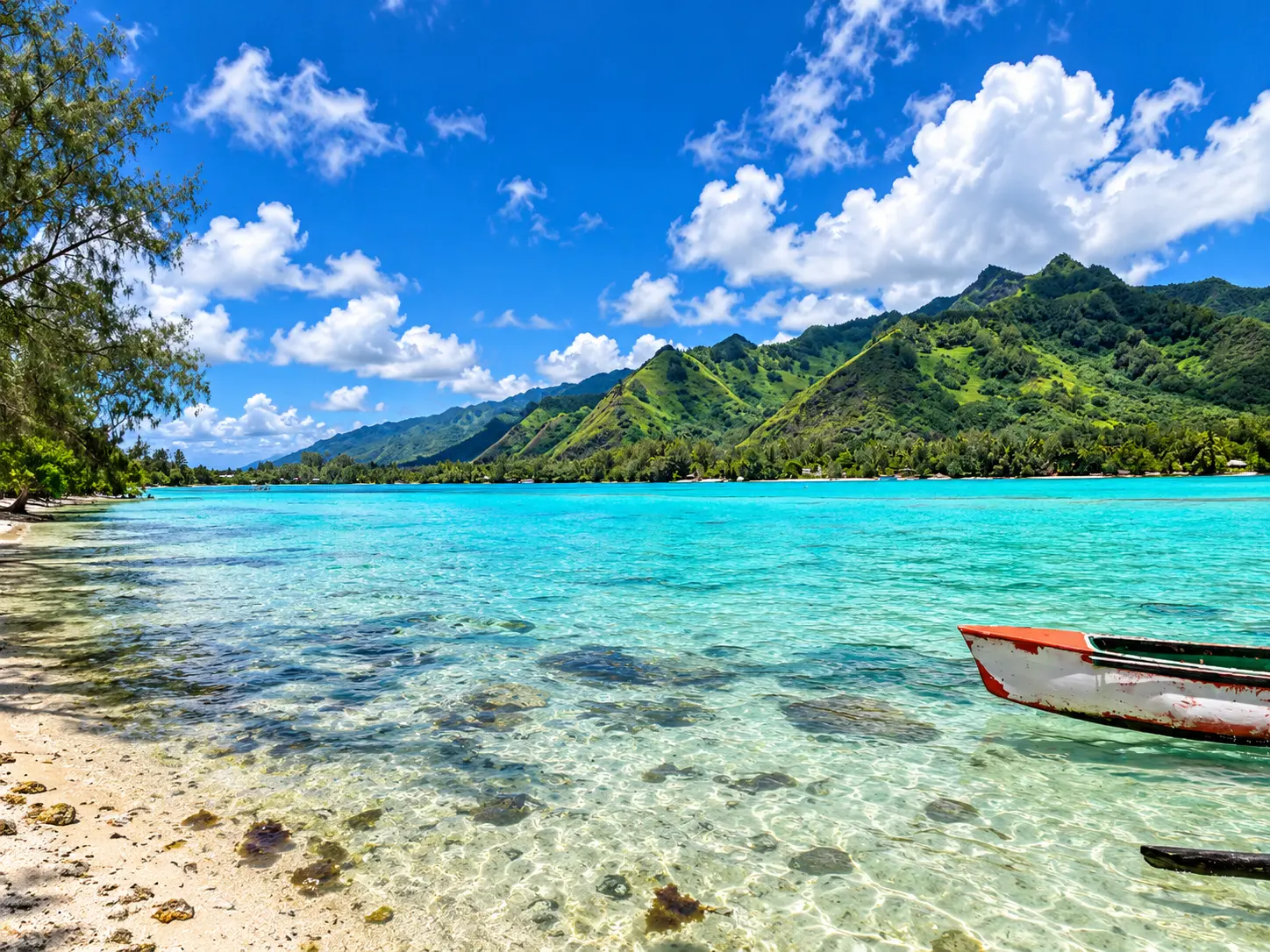
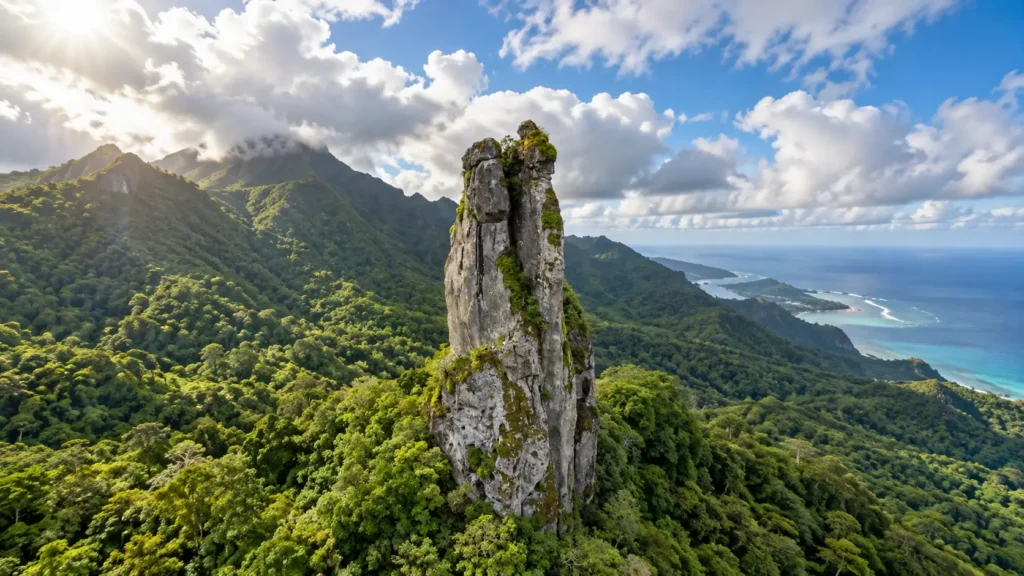
The first thing Rarotonga gives you that Aitutaki can’t is height. The interior rises to steep, cloud-catching peaks, and the cross-island track climbs from the north coast past Te Rua Manga, a rock spire known as The Needle at roughly 413 metres, before dropping to Papua (Wigmore’s) Waterfall in the south. The full 6km walk takes around three and a half hours, and guides generally advise doing it north to south after a couple of dry days because the clay sections turn slippery in rain. If the full crossing sounds like too much, the out-and-back to The Needle takes about two hours.
Back at sea level, Muri on the south-east coast is Rarotonga’s busiest stretch of lagoon. Four small motu sit just offshore, the water is shallow enough for kayaks and paddleboards, and glass-bottom boat trips run from the beach. It is beautiful, but it is a shared lagoon with cafés, rental shacks and other swimmers. The south coast around Titikaveka is quieter and better for snorkelling straight off the sand, which is why many visitors end up dividing their beach days between the two.
Rarotonga also has a social life that Aitutaki simply doesn’t. Punanga Nui Market on the Avarua waterfront runs on Saturday mornings from about 7am to noon, with food stalls, black pearls, tivaevae quilts and a free cultural show on the stage. In the evenings, the Muri Night Market gathers food trucks on several nights a week (typically Tuesday, Wednesday, Thursday and Sunday from 5pm), larger resorts host island nights with drumming, dance and an umukai feast, and Te Vara Nui Village stages a cultural show over water. Friday is the big night out, when bars in Avarua such as Trader Jack’s are usually allowed to stay open later than the rest of the week.
That breadth is the main reason Rarotonga earns more nights. If a southerly wind ruffles the lagoon, you can hike, drive the coast, browse Avarua or book a cultural tour. Getting around is easy: the clockwise and anticlockwise buses complete the circuit in about 50 minutes, so you don’t even need to hire a car to eat out in a different village each evening.
Aitutaki: the lagoon is the itinerary
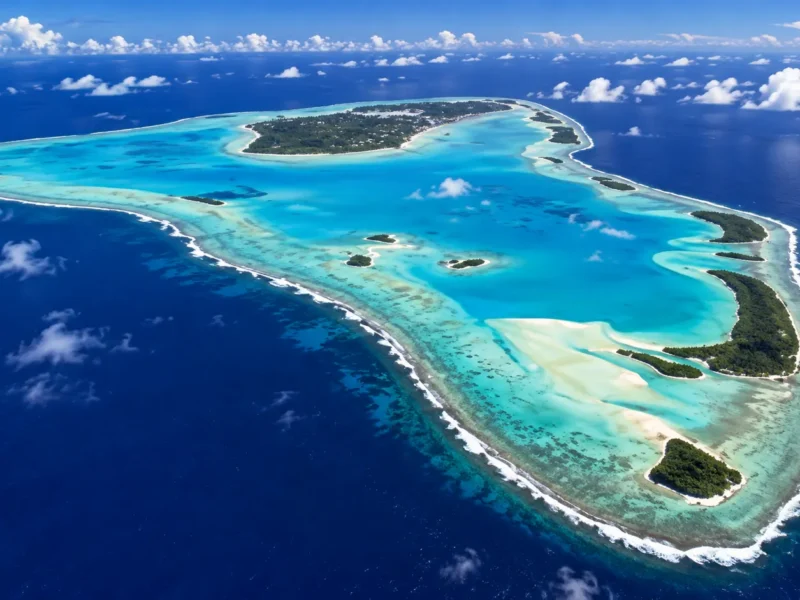
Aitutaki works the other way round. The main island is pleasant but modest, with villages, a few viewpoints and a handful of cafés you can see on a scooter in half a day. The point is the lagoon that wraps around it: a huge, shallow triangle of every blue imaginable, edged by sandbars and palm-fringed motu. A day on a boat is the experience everyone comes for, and nothing on Rarotonga quite replicates it.
The best-known way to see it is The Vaka Cruise aboard the Vaka Teariki Moana, a six-hour trip with snorkelling stops, a barbecue lunch of fresh fish on a motu and a visit to Tapuaetai, better known as One Foot Island. Its tiny post office will stamp your passport with a foot-shaped mark, though be aware that border officials don’t always find it charming. The full-day cruise has been priced from around NZ$299 per adult, with a half-day option from around NZ$199. Private charters cost more but let you chase the calmest water and the emptiest sandbars, which suits honeymooners and keen snorkellers.
Prices are indicative and were last updated in October 2026. Rates change with season, exchange rates and availability, so check live prices before booking.
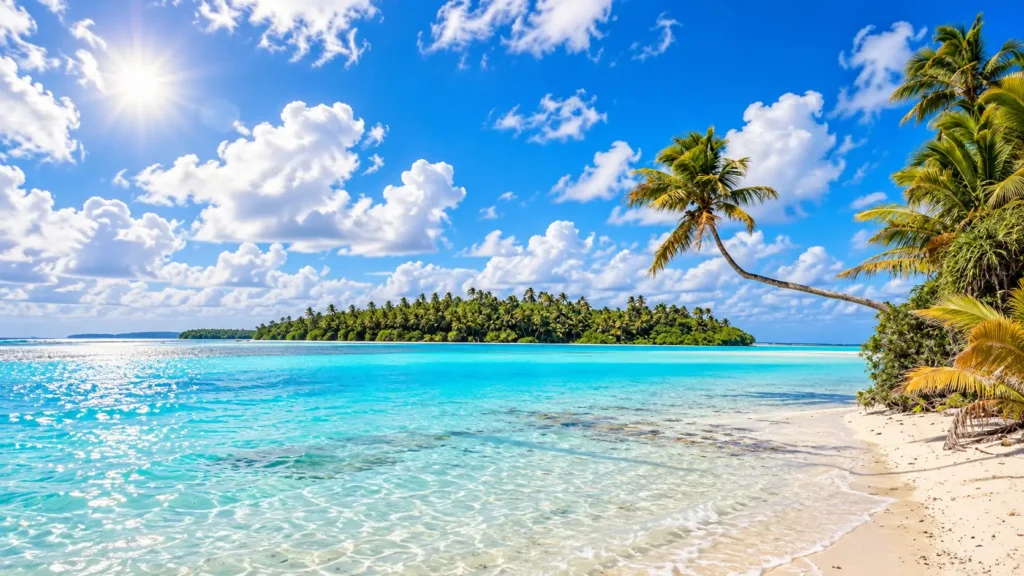
Beyond the cruise, Aitutaki rewards slow time: kayaking to the nearest motu, kitesurfing when the trade winds fill in, bonefishing on the flats, or doing nothing on a deck that faces the water. Evenings are short. Dinner is mostly at your resort or one of a few local restaurants, an island night might be the liveliest event of the week, and most people are asleep by ten. That is exactly why it works as a contrast to Rarotonga.
You can visit on a day tour from Rarotonga; the Aitutaki Lagoon Explorer packages flights and a lagoon cruise from around NZ$699 per person. I’d only do that if your trip is very short. A day tour shows you the lagoon at midday, when the light is flattest, and sends you back before sunset, which is when Aitutaki is at its most beautiful.
Which island suits couples, families and active travellers?
Couples will find the romance on Aitutaki and the variety on Rarotonga. A honeymoon that builds from Rarotonga’s hikes and dinners towards Aitutaki’s sunsets has a natural arc. If you’re weighing the Cook Islands against better-known South Pacific honeymoon spots, the Fiji vs Bora Bora honeymoon comparison gives a sense of the alternatives, and the Cook Islands are typically more low-key and less expensive than Bora Bora.
Families should lean heavily towards Rarotonga. Aitutaki’s best-known upmarket resorts don’t take young children (one is adults-only, the other accepts guests from 12), so families with small children are limited to smaller, simpler properties. Rarotonga has multi-bedroom villas with kitchens, safe swimming at Muri, the market, the waterfall and short walks that keep children busy. A family can still add Aitutaki for a few nights, but plan the accommodation first.
Active travellers get more from Rarotonga on land and more from Aitutaki on the water. The cross-island trek, reef-pass diving, cycling the back road and paddling Muri can fill a week on the main island. Aitutaki is the place for kitesurfing, bonefishing and long lagoon snorkels, but if you’re not a water person, its activity list runs out quickly.
Rest-seekers can reverse the usual split. If your idea of a good holiday is a hammock, a book and one boat trip, four nights on Rarotonga and six on Aitutaki is a perfectly sensible plan.
How to divide 7, 10 or 14 nights
Air Rarotonga runs several flights a day between the islands, but each transfer still eats into a morning or afternoon, so very short stays on either island are poor value. Use this as a starting point and adjust for flight times.
| Total nights | Rarotonga | Aitutaki | Best for |
|---|---|---|---|
| 7 | 4 nights | 3 nights | First-timers with limited leave; one lagoon day plus one free day |
| 10 | 6 nights | 4 nights | The most balanced split; room for the trek, the market and a weather buffer on Aitutaki |
| 10 (rest-focused) | 4 nights | 6 nights | Couples who mainly want water, quiet and resort time |
| 14 | 8 nights | 6 nights | Slow travellers and families; or 7 + 4 + 3 nights on Atiu for caves and birdlife |
With seven nights, don’t be tempted to trim Aitutaki to two nights: you’d spend most of one day flying and gain only a single Rarotonga evening in return. With ten, the six-and-four split lets you hit the Saturday market, hike on a dry day and keep a spare day on Aitutaki in case the wind spoils your cruise. With fourteen, consider adding a third island instead of simply padding both. For a closer look at the Aitutaki side of the calculation, see how many nights you need in Aitutaki.
Four hotels that show each island’s character
Where you sleep sharpens the contrast between the islands. The two Rarotonga picks below sit on different coasts and suit different ways of using the island; the two on Aitutaki show what its quiet, water-first style looks like at the top end.
Little Polynesian Resort: Rarotonga’s calm south coast
Little Polynesian sums up the side of Rarotonga that most visitors miss: the south coast at Titikaveka, where the lagoon is wide, clear and quiet enough to snorkel straight from your bungalow. It is adults-only, with just 14 beachfront bungalows and garden studios, a restaurant that blends Pacific produce with European technique, and a pool facing the lagoon. What makes it a good Rarotonga base, as opposed to a hideaway, is the ring road outside the gate: Muri’s food trucks are a short drive away and the cross-island trek ends not far along the coast. It shows that even Rarotonga’s quiet corners stay connected.
- Best for: Couples who want a peaceful base with the island’s restaurants and markets in easy reach
- Location: Titikaveka Beach on the south coast, on the opposite side of the island from the airport, roughly a 20 to 25-minute drive
- Rates: Garden Studios from around NZ$850 (about US$490) a night on the resort’s 2026–27 best rate, with 15% VAT already included; beachfront bungalows run about US$630 to US$780
- Don’t miss: Snorkelling the coral gardens directly in front of the resort at high tide
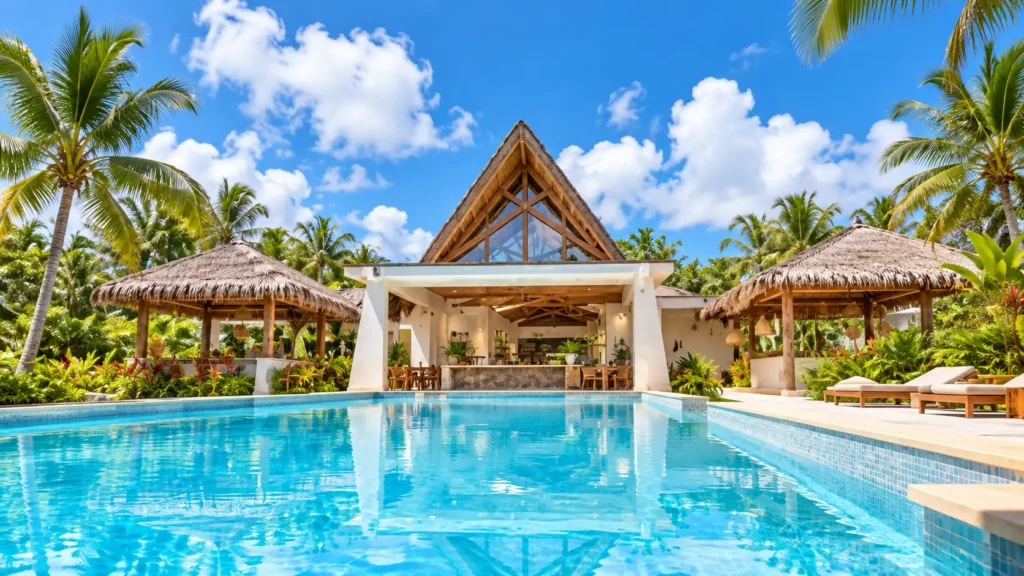
Te Manava Luxury Villas: Muri’s social lagoon, on your own terms
Te Manava represents the busier, more independent Rarotonga. Its 13 one-, two- and three-bedroom villas sit on Muri Beach, each with a private pool, a full kitchen and a four-poster bed, and it sits within the Pacific Resort family of properties. The appeal is freedom: you can shop at the market on Saturday, cook your catch, walk to Muri’s night market and paddle out to the motu without a schedule. That self-sufficient style suits Rarotonga, an island built for getting out and about, and the larger villas make it one of the better upmarket options for families or friends travelling together.
- Best for: Families, groups and couples who like to cook, explore and come and go freely
- Location: Muri Beach on the south-east coast, within walking distance of cafés and lagoon tours
- Rates: Priced per villa, from around NZ$800 (about US$460) a night for a Pool Villa Suite including VAT, with one rate all year; the multi-bedroom options become good value when shared
- Don’t miss: Kayaking across to the Muri motu early, before the rental boats get going
Good to know: Muri Night Market doesn’t run every evening, so check the days before planning to skip cooking.
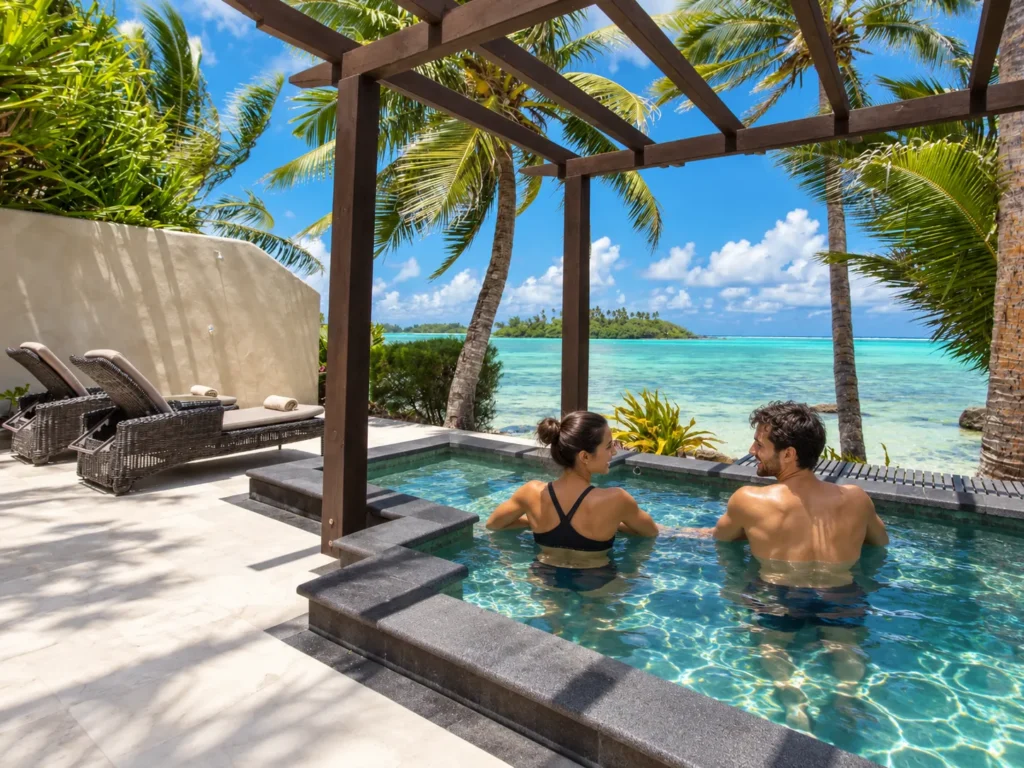
Pacific Resort Aitutaki: Aitutaki’s quiet, polished side
Pacific Resort Aitutaki reflects the island’s character in a refined way: everything you need is on site because there isn’t much beyond it. Open only to guests aged 12 and over, the resort has 29 beachfront bungalows and villas, the Rapae Bay restaurant for grilled local seafood, the more casual Black Rock bar beside the pool and the Tiare Spa. Island nights with a Polynesian buffet are part of the weekly rhythm, which on Aitutaki often counts as the evening’s main entertainment. Choose it if you want Aitutaki’s calm with the comforts of a full-service resort and easy access to lagoon cruises from the main island.
- Best for: Couples who want full-service luxury and good food on a quiet island
- Location: On the main island’s lagoon shore, a short drive from Aitutaki airport
- Rates: Premium Beachfront Bungalows cost from around US$700 a night between November and March and about US$930 from June to October, VAT included and room only on direct rates
- Don’t miss: Sunset drinks at Black Rock, followed by a seafood dinner at Rapae Bay
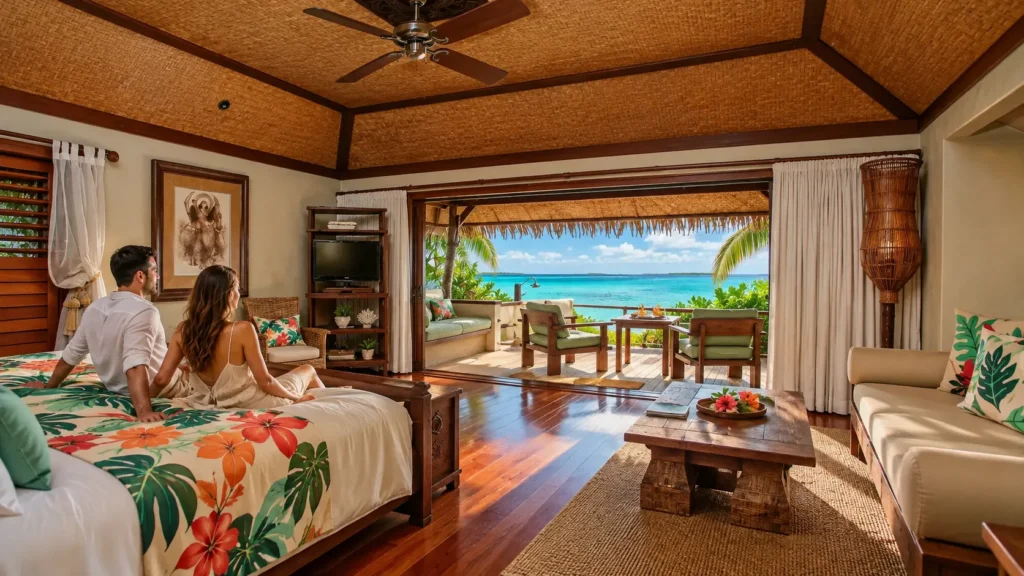
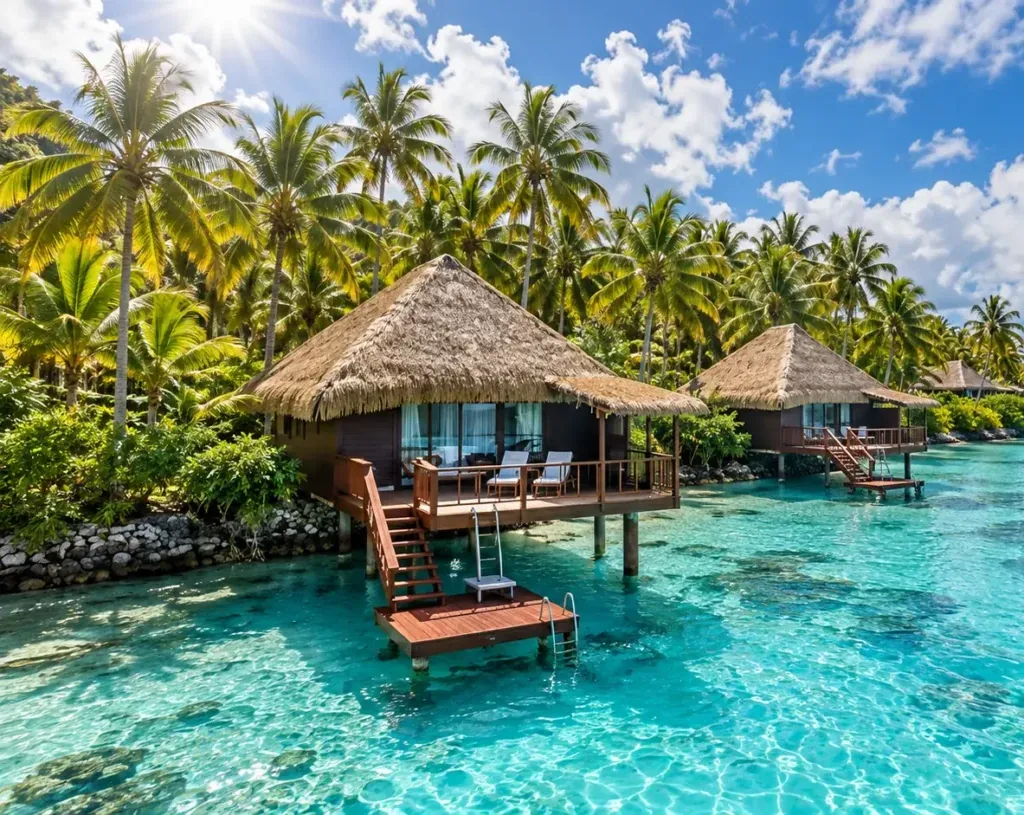
Aitutaki Lagoon Private Island Resort: living on the lagoon itself
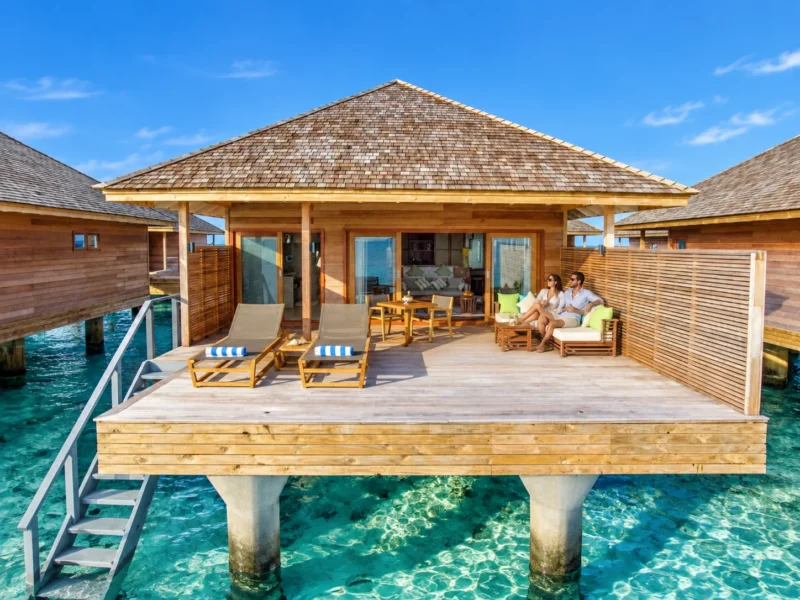
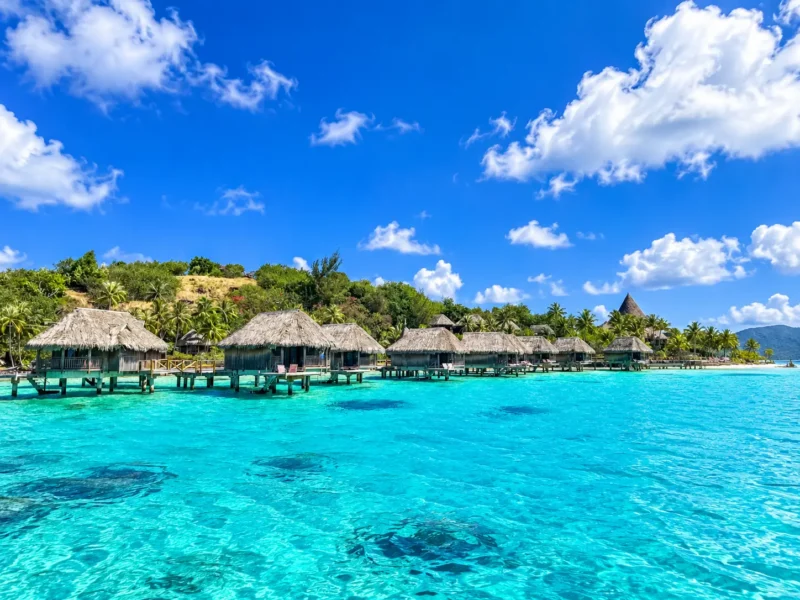
If Aitutaki’s appeal is the water, this resort takes it to its logical conclusion. It occupies Akitua, a motu a two-minute ferry ride from the main island, and is the only private island resort in the Cook Islands, as well as home to the country’s only overwater bungalows. Kayaks, stand-up paddleboards and snorkelling gear are complimentary, so the lagoon starts at your steps. It is adults-only (no children under 16), with a restaurant, bar, beachfront pool and day spa. It shows Aitutaki at its most secluded; for context, see how its bungalows compare with the best overwater villas in the world, or the wider private island vs beach resort debate.
- Best for: Honeymooners who want to wake up over the lagoon
- Location: Akitua motu, reached by a short private ferry from the main island
- Rates: Beachfront Bungalows from around NZ$510 (about US$300) a night in low season and about US$450 in high season, taxes and breakfast included; overwater bungalows run roughly US$780 to US$1,150. Rates vary widely by date, so check live prices
- Don’t miss: Paddling out at dawn, when the lagoon is at its stillest
Good to know: Living on a motu means relying on the ferry for trips to the main island, so plan any scooter days in advance.
Two of these four are adults-only and a third takes no one under 12. If a child-free stay suits you, the guide to the best adults-only island resorts shows how they compare with similar properties elsewhere.
Which island should come first?
Start on Rarotonga. International flights land there, often late at night, and a couple of nights let you recover before the domestic hop. It also means you build from the busier island towards the quieter one, which feels right on a honeymoon. Finish with at least one night back on Rarotonga before a long-haul departure: domestic flights are reliable, but weather happens, and missing an international connection would cost far more than one extra lagoon sunset is worth.
If schedules push Aitutaki to the start of the trip, it still works. Rarotonga has enough beaches, food and walking to make the second half feel like a change of mood, not a step down. For wider route planning, the Cook Islands destination guide covers the outer islands too.
Hotel comparison
| Hotel | Island | Island character it reflects | Booking |
|---|---|---|---|
| Little Polynesian Resort | Rarotonga (south coast) | Quiet, snorkel-friendly lagoon with the whole island in reach | Check rates |
| Te Manava Luxury Villas | Rarotonga (Muri) | Independent, social and active | Check rates |
| Pacific Resort Aitutaki | Aitutaki (main island) | Calm, polished, everything on site | Check rates |
| Aitutaki Lagoon Private Island Resort | Aitutaki (Akitua motu) | Secluded, water-first, overwater living | Check rates |
The verdict
Spend more time on Rarotonga and save your best days for Aitutaki. Rarotonga fills a week effortlessly with the cross-island trek, Muri’s lagoon, the Saturday market, food trucks and an evening scene. Aitutaki has one big idea, its lagoon, and it is spectacular enough to justify the flight and at least three nights.
My default is six nights on Rarotonga and four on Aitutaki for a ten-night trip, flipping it only if rest is the whole point. Choose your Rarotonga coast to match how you want to use the island, and your Aitutaki stay according to how close to the water you want to sleep. Do that, and the two islands feel like one well-paced trip instead of two halves competing for attention.
Some links on this page are affiliate links. If you book through them, Lagoon Edit may earn a commission at no extra cost to you. It never affects which resorts we recommend.