Deia vs Cap Rocat comes down to one question: do you want Mallorca’s mountains or its bay? Pick La Residencia if you want a stone village in the Serra de Tramuntana, walks to dinner and winding scenic drives. Pick Cap Rocat if you want a fortress on the cliffs of the Bay of Palma, a quiet adults-only stay and a short, easy run from the airport. They are only about an hour apart by road, yet they feel like different islands.
The contrast is mostly about setting. La Residencia sits inside a working village, with olive terraces above it and the sea seen from a distance. Cap Rocat is a restored 19th-century coastal fortress on a private estate, where the sea is the main event and the nearest village is a drive away. Neither has a broad sandy beach, so swimming habits and driving tolerance will settle the choice faster than room type.
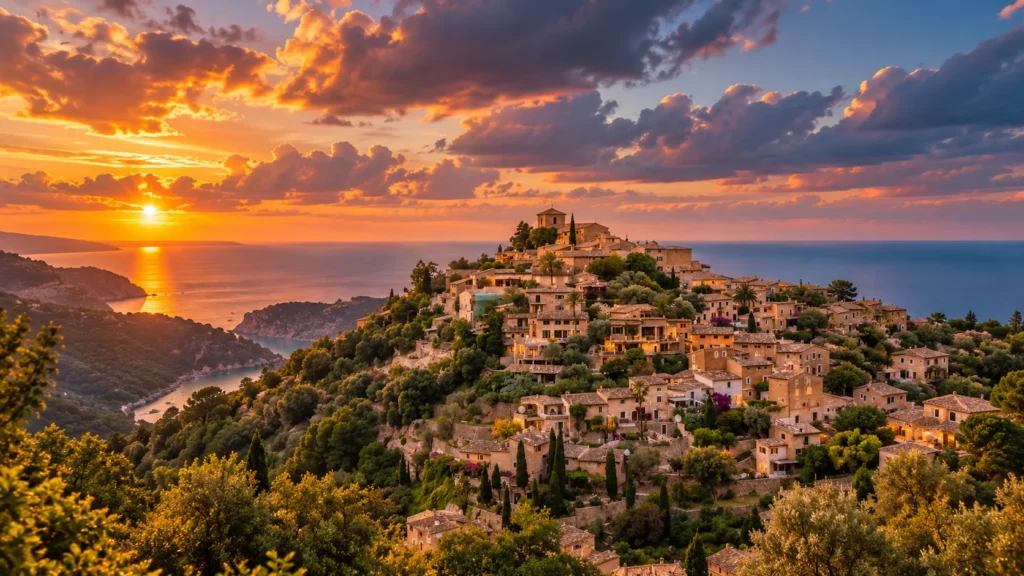
The quick answer: Deià for variety, Cap Rocat for seclusion
For a first luxury trip to Mallorca, I’d choose Deià. The village gives you restaurants within walking distance, the road to Valldemossa and Sóller on your doorstep and a landscape that changes every few kilometres. For a celebration, a final few nights before flying home or a stay with no sightseeing agenda, I’d choose Cap Rocat, where almost everything happens inside the estate walls.
| Question | La Residencia (Deià) | Cap Rocat (Bay of Palma) |
|---|---|---|
| Setting | Mountain village, terraces and gardens | Clifftop fortress above the bay |
| From Palma airport | Around 40 to 60 minutes by road, much of it on the winding Ma-10 | Roughly 15 to 25 minutes by car |
| Swimming | Garden pools; Cala Deià is a walk or short drive away | Saltwater pool plus rocky sea access from the estate |
| Eating out | Village restaurants and Cala Deià seafood | Mostly on site; a car for anything else |
| Best season | Spring to autumn; the hotel is seasonal | Strongest from late spring to early autumn for the Sea Club |
| Children | Welcome | Adults-only |
| Rates | About €730 a night in shoulder season, around €1,290 from May to September | About €650 a night in April, May and October, around €1,030 in summer |
Prices are indicative and were last updated in October 2026. Rates change with season, exchange rates and availability, so check live prices before booking.
Setting: village lanes or fortress ramparts
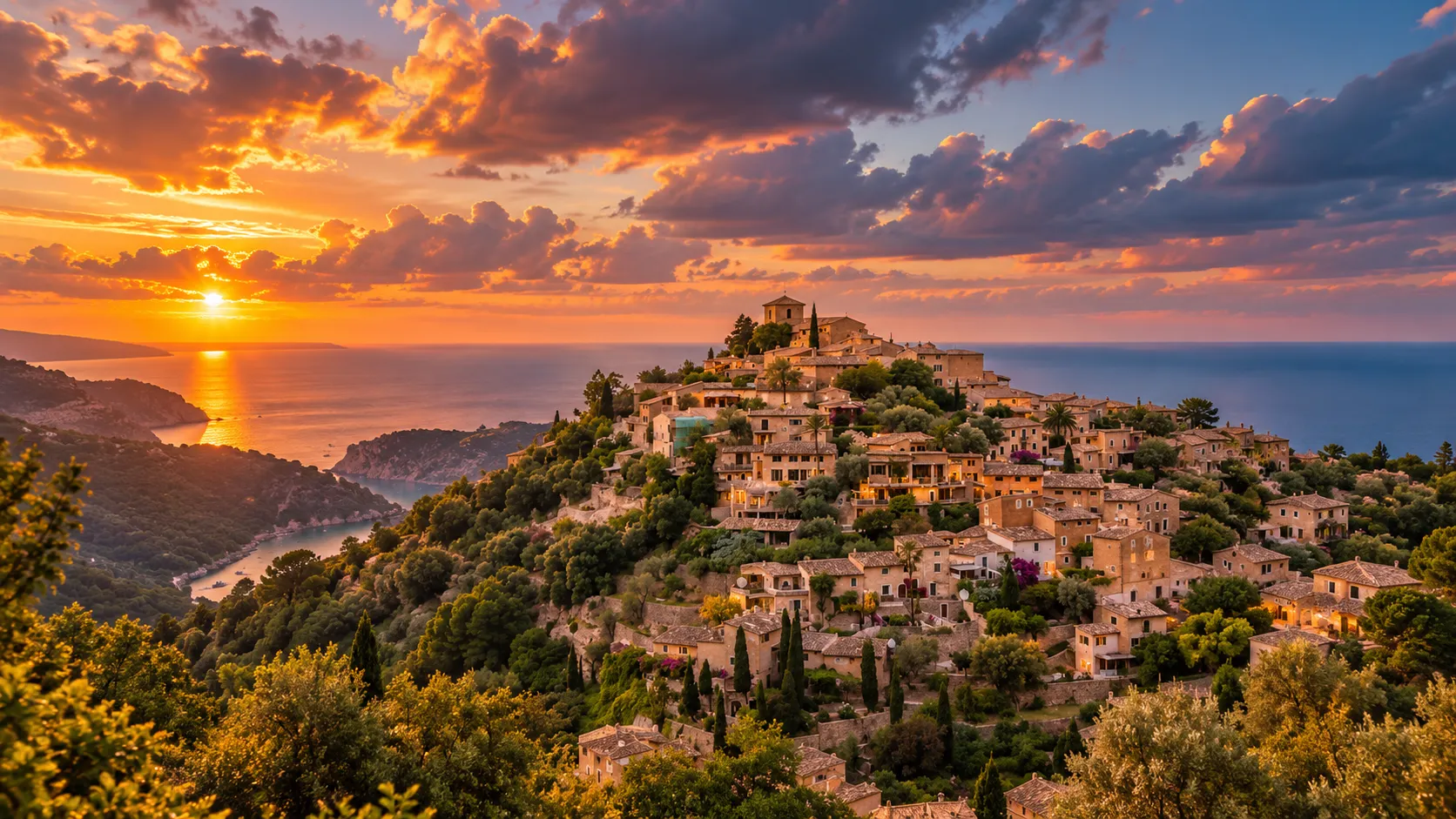
Deià is one of the Tramuntana’s best-known villages, with honey-coloured houses stacked up a slope, cypresses and terraces dropping toward a small cove. La Residencia is woven into that scene across a cluster of old manor buildings. You step out onto village streets, and the hotel’s own gardens feel like an extension of the hillside. The mood is relaxed, artistic and a little bohemian, and a day can be as simple as a walk, a long lunch and an hour by the pool.
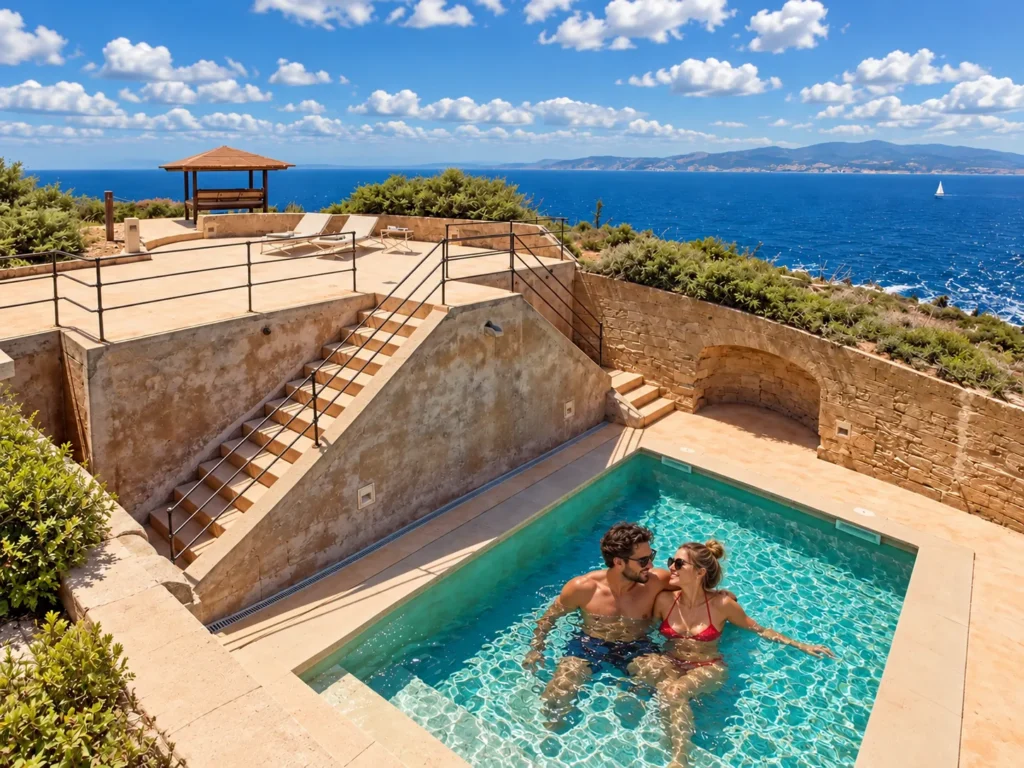
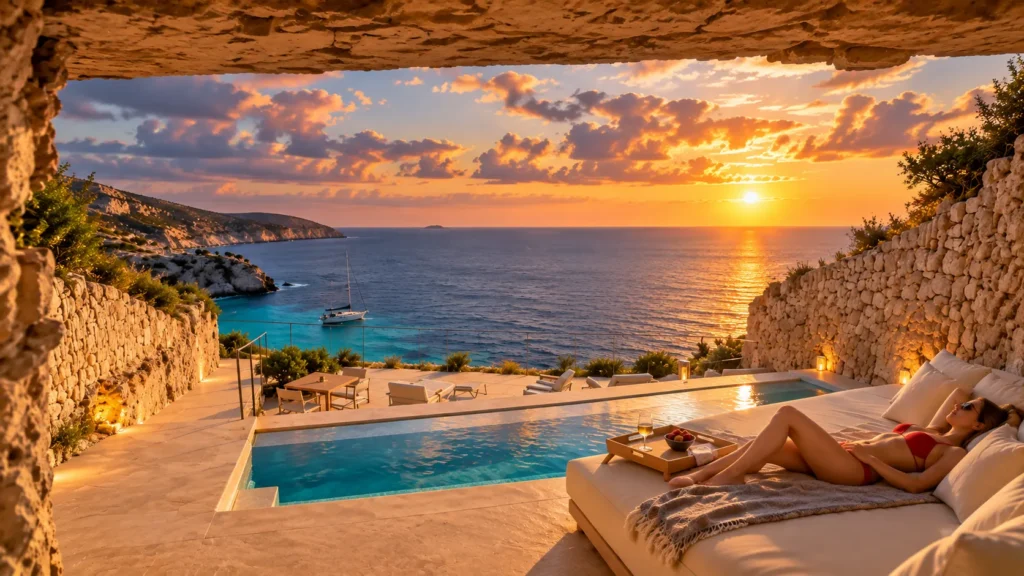
Cap Rocat takes the opposite approach. The estate occupies a former military fort with dry moats, ramparts, tunnels and a drawbridge-style entrance, all built to watch the Bay of Palma. Suites and terraces are cut into stone that was designed to face the water, so views and privacy are part of the architecture. There is no village at the gate. What you get is a sense of being tucked away, even though Palma is close on the map.
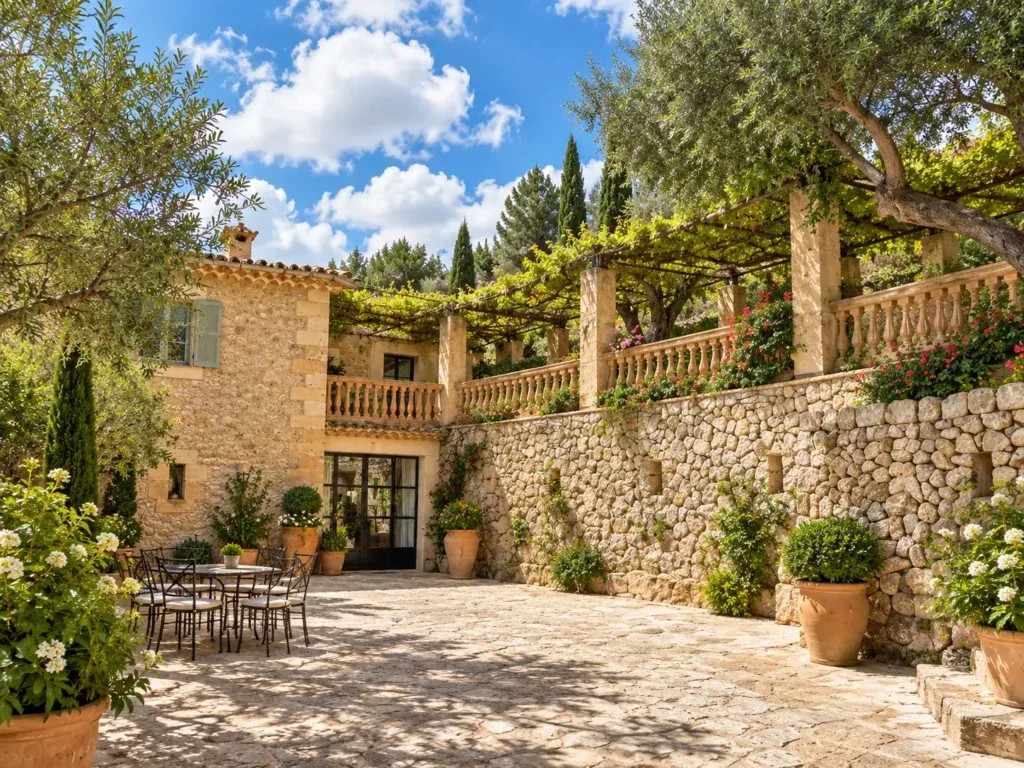
Driving: mountain curves versus a straight run to Palma
The drive is the practical difference people underestimate. Reaching Deià from Palma airport usually takes 40 minutes to an hour, and the final stretch follows the coiling Ma-10 through the mountains. It is scenic, but tour coaches and cyclists slow it in summer, and tired passengers can find it wearing after a flight. A private transfer or taxi is simple, though a hire car is worth having if you want to see Valldemossa, Sóller or Sa Foradada.
Parking is the second factor. Popular Tramuntana stops such as Son Marroig, the access point for Sa Foradada, fill early in July and August, and cars left on the main road risk fines. A boat from Port de Sóller avoids this on the coast. If you dislike narrow roads, the village alone is enough to fill a few days, but you will see less of the range.
Cap Rocat is far simpler. It lies near Cala Blava, on the road toward Palma’s bay, and sources put the airport at roughly 15 to 25 minutes by car. That makes it a clean first night after landing, or a calm final stop before a morning flight. If you want to dine in Palma or see the old town, it is an easy evening drive, so the estate does not lock you in the way a mountain location can. For wider pacing, the 7-day luxury Mallorca itinerary shows where each setting fits in a full week.
Swimming: pools above the sea or steps into it
Swimming is where the two stay apart most clearly. La Residencia has outdoor and indoor pools set among its gardens, and the main pool is framed by terraced hills, not the Mediterranean. The sea is a trip. Cala Deià is a pebbly cove reached on foot down a steep path, roughly 30 minutes each way according to the hotel’s own guidance, or by car if you can find a space. Water shoes help, and the cove gets busy in summer.
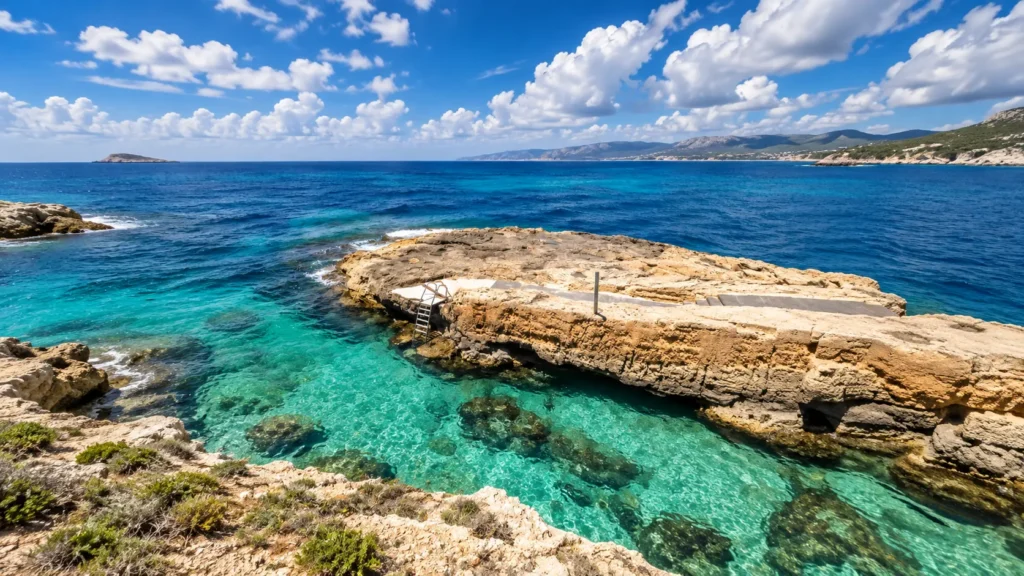
Cap Rocat gives you the sea on the estate. There is a rocky cliff-edge bathing area with a jetty, a saltwater pool built into the old moat and the Sea Club on the shoreline, which operates seasonally, roughly May to October. Entry is by steps or ladder, not a sandy shelf, so anyone expecting beach-style paddling should adjust. The upside is clear Mediterranean water just metres from lunch, with no car or hike.
Season: when each hotel makes sense
La Residencia is a seasonal hotel, and published sources point to an opening window of roughly March to mid-November, so confirm exact dates when you book. Spring brings green hillsides and good walking, while September and October have warmer sea temperatures with fewer crowds. July and August are lively and hot, and Deià’s roads and restaurants are at their busiest.
Cap Rocat leans toward summer because of its sea access and the Sea Club, though late spring and early autumn are comfortable and quieter. Midwinter is a different stay, more spa and walking than swimming, and I’d check which facilities are running before choosing those months. If your dates fall outside high summer, Deià tends to offer more to do on land, while Cap Rocat is best when you want to be at the water.
Dining: walk out or stay in
Deià is a proper dining village. Beyond the hotel’s own restaurants, there are small places in the village and a seafood restaurant at Cala Deià, Ca’s Patró March, which is known for fish and is often booked weeks ahead in summer. That variety is what lets a five-night stay in Deià feel fresh each evening, and you can often walk home afterwards.
Cap Rocat keeps meals on site. La Fortaleza is the evening restaurant, serving Mediterranean and Mallorcan cooking, while the Sea Club handles seaside lunches and dinners in season. The spa, in a former gunpowder store, includes a dramatic underground pool. It is easy to spend three days without leaving, and equally easy to reach Palma for a change, but you will need a car or taxi each time.
Where to stay: the two hotels
La Residencia, A Belmond Hotel, Mallorca: best for the Tramuntana village experience
La Residencia occupies two restored manor houses on the edge of Deià, and its character comes from the village around it. Rooms differ in position and view, so pick one with the outlook you want: village, mountains or garden. There are outdoor and indoor pools, a spa, tennis and a resident art programme, and El Olivo is the main restaurant, with other dining options on the estate. A walk into Deià for dinner makes longer stays feel varied, and the hotel works well as a base for the northwest.
- Best for: couples and families who want mountains, village life and day trips by car.
- Location: on the edge of Deià, 40 to 60 minutes by road from Palma airport; Cala Deià is a walk or short drive.
- Rates: a Classic Double costs from around €730 (US$850) a night in late March, April and October and roughly €1,290 (US$1,500) in the May to September season, including 10% VAT but before the Balearic tourist tax of up to €4.40 per person per night; suites cost more.
- Don’t miss: a morning at Sa Foradada followed by a late lunch back in the village.
Good to know: Book a room for its view and path, not its size, as the estate has stairs and levels. Reserve Cala Deià tables early if you want a summer lunch there.
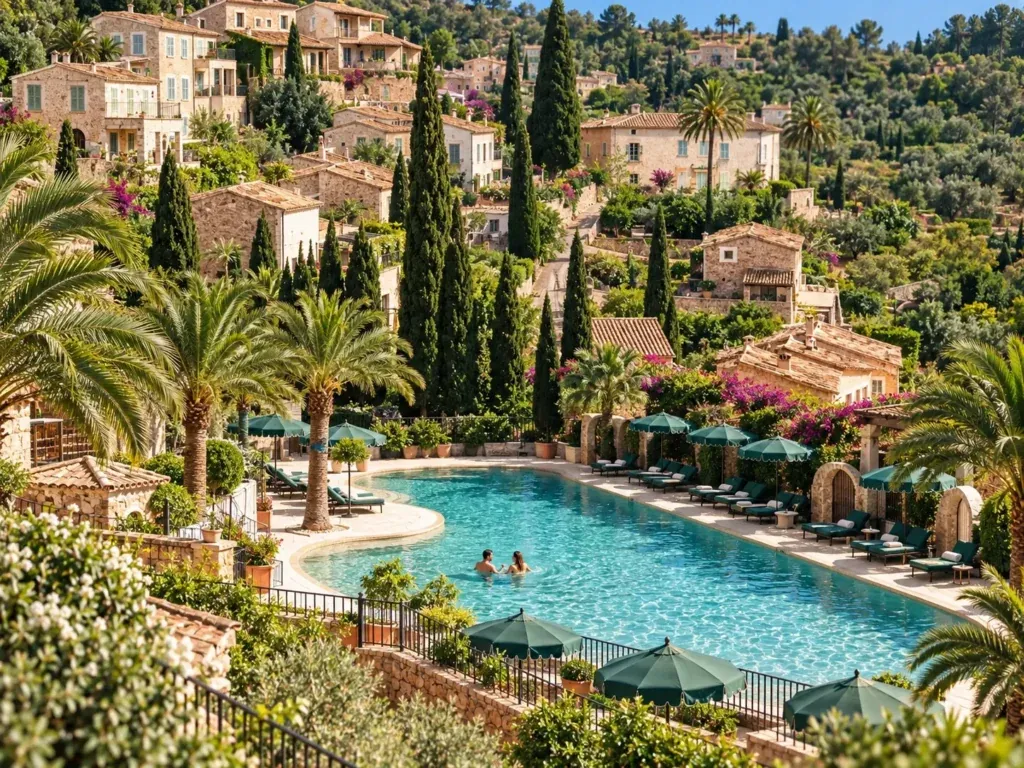
Cap Rocat, a Member of Small Luxury Hotels of the World: best for a private bay-side retreat
Cap Rocat turns an old coastal fortress into an adults-only hotel of around 30 suites, so the feel is intimate and quiet. Many suites face the sea, though some don’t because of the fort’s structure, so check the category before booking. Days run between the saltwater pool, the spa, the Sea Club and the cliff-edge swimming spot, with La Fortaleza for dinner. It is built for staying put, which suits couples celebrating something or anyone who wants the island’s coast without crowds.
- Best for: couples after privacy, sea swimming and an easy airport run.
- Location: on the Bay of Palma near Cala Blava, roughly 15 to 25 minutes from the airport by car.
- Rates: entry Sentinel Suites run from about €650 (US$750) a night in the April, May and October shoulder months to about €1,030 (US$1,200) between June and September, VAT included and tourist tax extra; Sea View Suites reach about €1,500 and Pool Suites about €2,400 in peak season, with a two-night minimum.
- Don’t miss: lunch at the Sea Club, then an evening walk on the ramparts.
Good to know: Ask about steps and the distance from your suite to the pools and sea, as the fortress layout involves levels and stone paths. Children under 14 are not accepted.
Which suits you?
Choose Deià if you like exploring, want evenings in a village and are travelling as a family or group. Choose Cap Rocat if you want the sea at the doorstep, a short transfer and no real agenda. If you are planning a longer trip, splitting the stay works well: a few nights in the mountains, then a few at the bay for the end. On a four-night break, I’d pick one rather than lose half a day to checking out and driving.
If you are deciding where Mallorca sits among other islands, it features in the best luxury islands for an anniversary trip and in the best luxury islands for a five-night trip lists. Both can help if Mallorca is still one option among several.
Comparison table
| Hotel | Setting | Best for | Booking |
|---|---|---|---|
| La Residencia, A Belmond Hotel, Mallorca | Tramuntana village | Walking, village dining, families, drives | Check rates |
| Cap Rocat | Clifftop fortress, Bay of Palma | Privacy, sea swimming, short airport transfer | Check rates |
The verdict
Deià wins for a first visit, for families and for anyone who wants more to do outside the hotel. Cap Rocat wins for couples, short transfers and a private stay by the water. If you can only pick one and the trip is about discovery, go to the mountains. If it is about rest, go to the bay.
Some links on this page are affiliate links. If you book through them, Lagoon Edit may earn a commission at no extra cost to you. It never affects which resorts we recommend.