On mamanuca vs yasawa, my answer is simple: pick the Mamanucas if you want to be on a beach within an hour of landing in Nadi, with plenty of resort choice and a reef you can snorkel straight from the sand. Pick the Yasawas if you want taller volcanic ridges, fewer boats on the horizon and a stay that feels a long way from the airport, and you are happy to fly or sail for longer to get it. Both groups sit off the dry western coast of Viti Levu, so the weather gap is smaller than the distance gap.
The quick answer
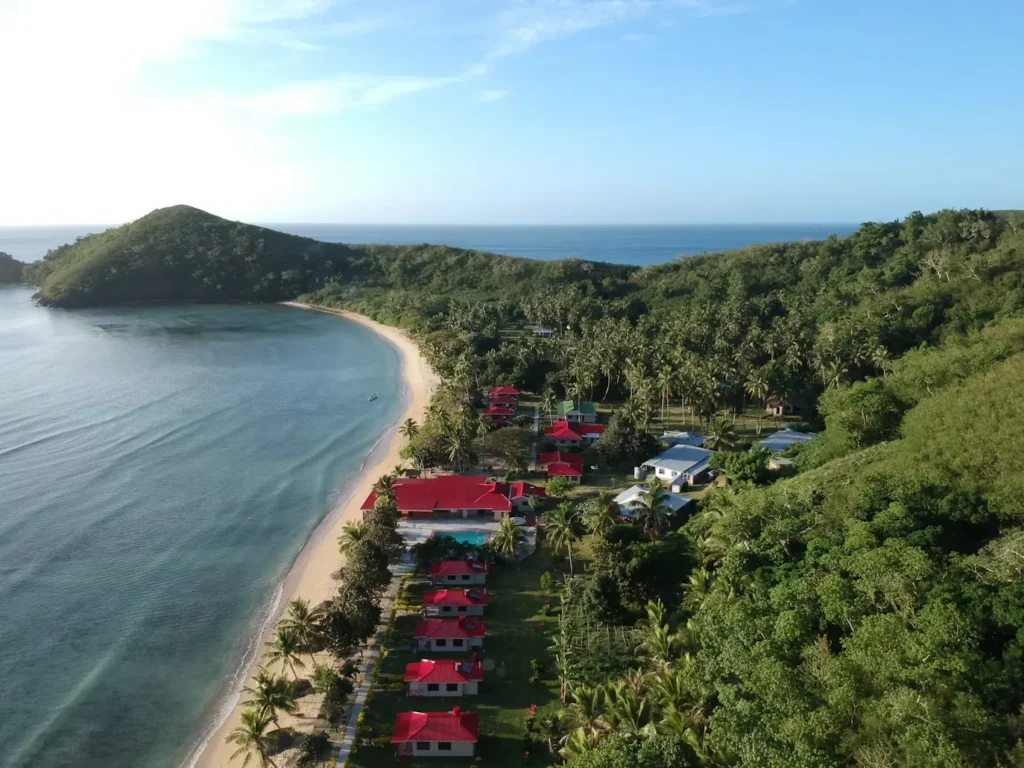
The Mamanuca group begins just offshore from Port Denarau and spreads west towards the Great Sea Reef. The Yasawa chain starts where the Mamanucas end and runs north for roughly 80 kilometres, around 20 main volcanic islands with steeper hills and a much thinner scatter of resorts. One region is built for ease; the other is built for distance.
- Choose the Mamanucas for a short first stay, young children, surfing, more dining and activity options, and the simplest arrival after a long-haul flight.
- Choose the Yasawas for dramatic landscapes, seasonal manta rays, village life that is less shaped by tourism, and a quieter, more self-contained resort stay.
- Combine them if you have eight nights or more and want two distinct moods: the busy, sunny lagoon first, then the empty northern beaches.
Mamanuca vs Yasawa at a glance
| Factor | Mamanuca Islands | Yasawa Islands |
|---|---|---|
| Distance from Nadi | Closest islands a short boat hop from Port Denarau; most resorts within about an hour | Southern islands a couple of hours by catamaran; the far north around four hours by boat or 30 minutes by air |
| Main transfer modes | South Sea Cruises catamarans several times a day, private speedboat, helicopter (around 15 minutes), seaplane | Yasawa Flyer catamaran once daily, seaplane, helicopter, resort-run light aircraft |
| Weather | Dry western rain shadow; sunny most of the May–October dry season | Same rain shadow; more exposed open-water crossings when the trade winds blow |
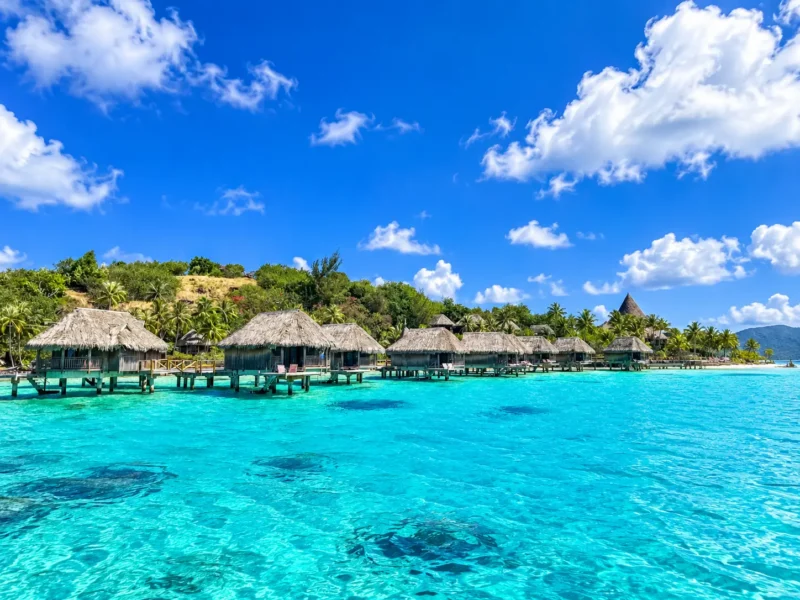
| Landscape | Low, sandy islands and wide lagoons | High volcanic ridges, long beaches, limestone caves |
| Reef and marine life | Easy house reefs, surf breaks such as Cloudbreak, many dive sites close together | Manta rays from around May to October in the central islands, quieter reefs |
| Day-trippers | Plenty: floating bars, Monuriki day cruises, island-hopping boats | Few: mainly the daily Flyer and the occasional long-day cruise |
| Village visits | Available, often as short organised trips | Villages closer to resorts and less visited |
| Luxury resort choice | Wide: adults-only, family, wellness, private island | Narrow: a handful of high-end options |
| Best for | Families, first-timers, short trips, surfers | Couples, repeat visitors, longer stays |
Getting there: distance and transfer modes
Transfers are the single biggest difference between the two regions, so plan them before you fall for a villa. Everything begins in the Nadi area: Port Denarau for scheduled boats, Vuda Point Marina for some private speedboats, and Nadi International Airport for helicopters, seaplanes and light aircraft.
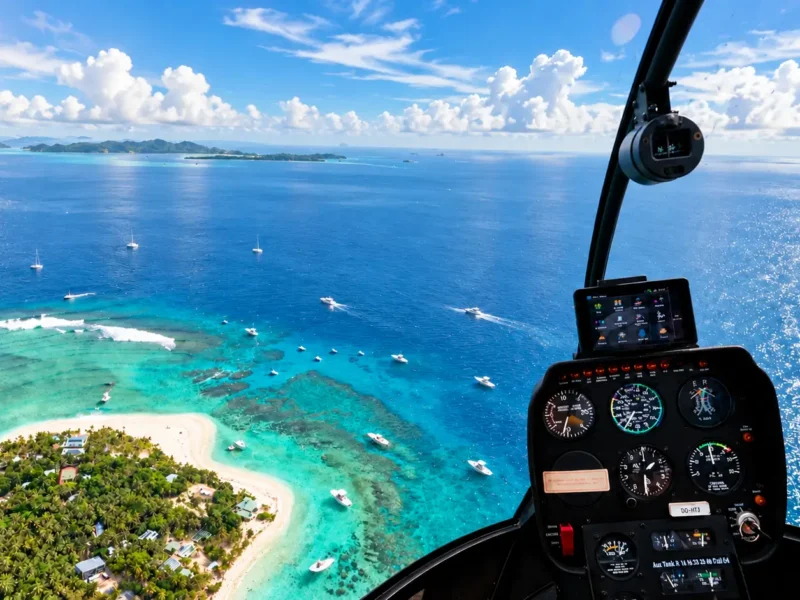
Mamanucas. South Sea Cruises runs fast catamarans out of Port Denarau several times a day, looping through the group and dropping guests at resort jetties or by tender. A direct run to Malolo takes about 55 minutes; other sailings stop at several islands first. Private speedboats cut that to 30–45 minutes for most resorts, and a helicopter lands you on most islands in around 15 minutes. Because there are so many sailings, a late-morning international arrival still leaves you time to swim before dinner.
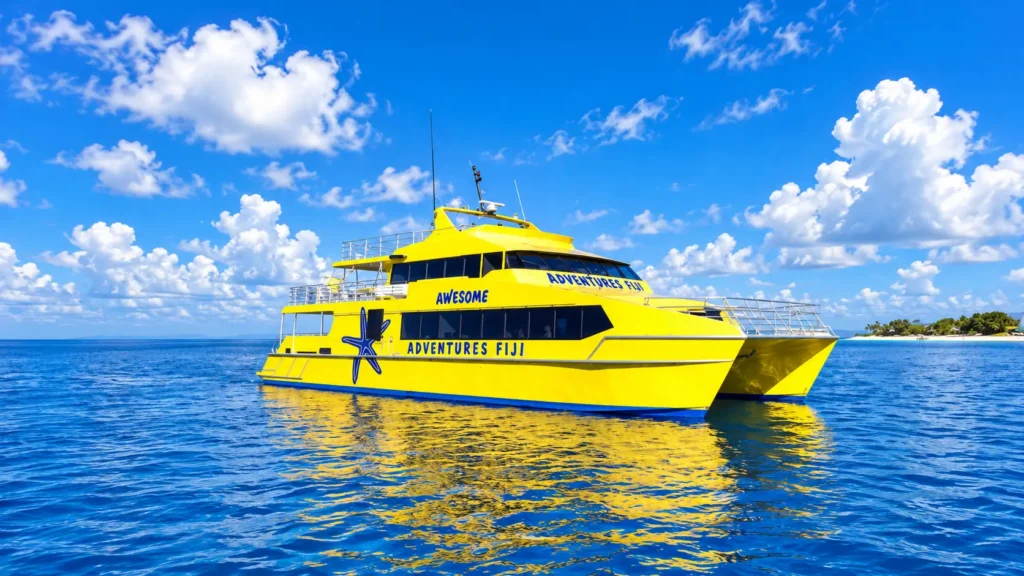
Yasawas. The yellow Yasawa Flyer leaves Port Denarau once a day at 8.30am and works its way north, reaching the Blue Lagoon area around 12.45pm. It is comfortable and scenic, but there is one sailing each way, so a delayed flight into Nadi means a night on the mainland. For the higher-end resorts, most guests fly instead: seaplanes and helicopters operate in daylight only, and Yasawa Island Resort runs its own light-aircraft service to a private airstrip. Small aircraft bring tight baggage limits, typically around 20–23kg per person, so pack soft bags.
Weather and the western rain shadow
Both groups lie in the lee of Viti Levu’s mountains, the so-called “burning west”, where the south-east trade winds drop most of their rain on Suva’s side before reaching Nadi. That is why both groups get noticeably more sunshine than the east of Fiji, and why neither has a clear weather advantage for most of the year.
The difference shows on the water. The Mamanuca lagoon is enclosed by reef and short crossings, so boats run in conditions that would make a four-hour run up the Yasawa chain uncomfortable. The dry season, roughly May to October, brings lower humidity and the steadiest seas, and it overlaps with manta season in the Yasawas. From November to April it is hotter, with heavier afternoon downpours and the risk of cyclones; that is when the shorter Mamanuca transfer and wider choice of indoor options give you a bigger safety margin.
Beaches, reefs and what you do all day
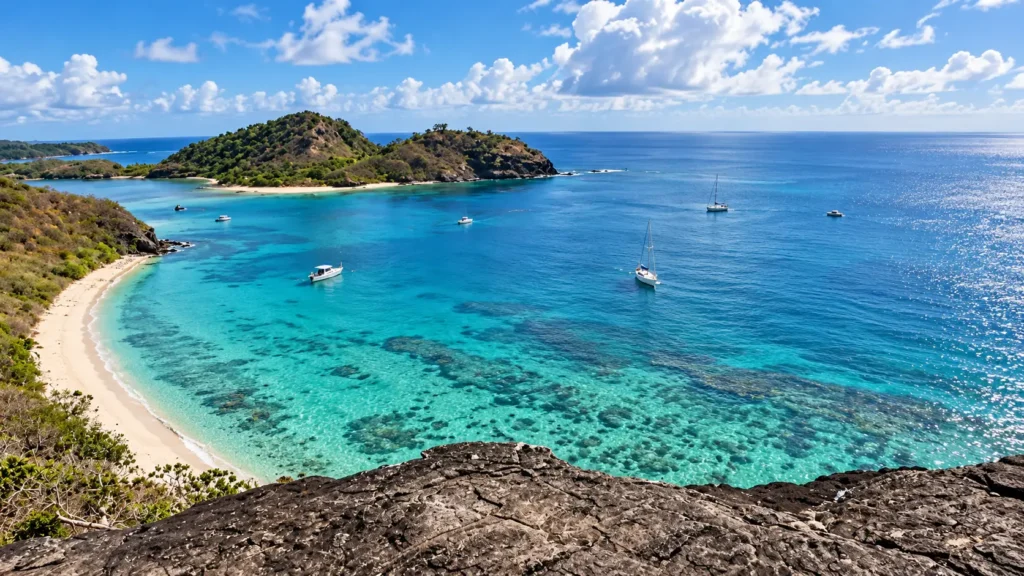
Mamanuca beaches are mostly low, bright sand fringing shallow lagoons, which makes them good for paddling children and first-time snorkellers. The group’s outer edge holds Fiji’s best-known surf, including Cloudbreak off Tavarua, and its dive sites sit close together, so you can fit two dives and lunch into a morning. Day trips are easy: the Cloud 9 floating bar on the Ro Ro reef, a cruise to Monuriki (the island used in the film Cast Away), or a sail to a sandbar.
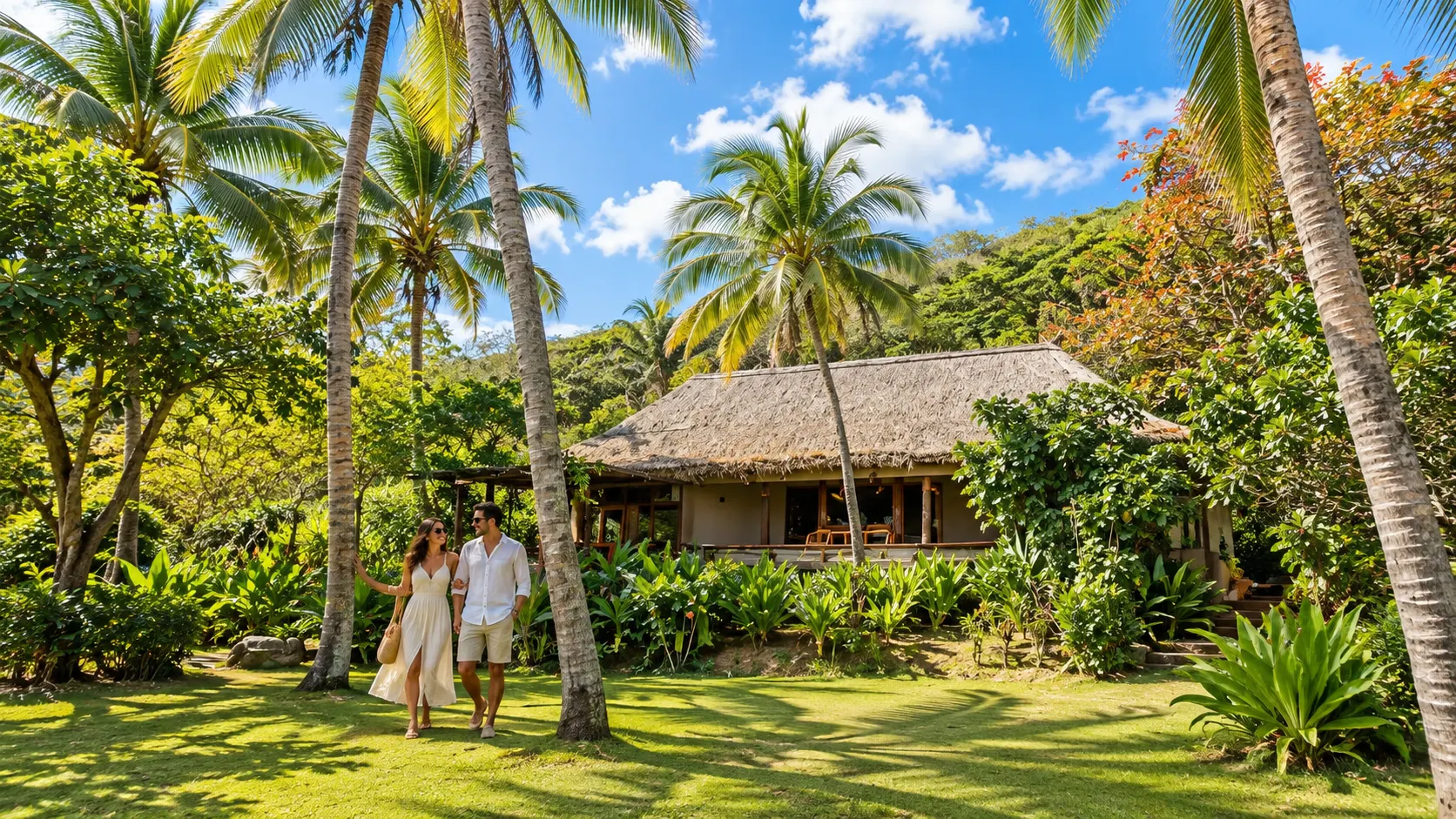
The Yasawas change the backdrop. Islands rise steeply from the water, so a short walk often ends at a ridge with views down both coasts. From around May to October, manta rays feed in the channel between Drawaqa and Naviti in the central islands, and further north the Sawa-i-Lau limestone caves have a swim-through to an inner chamber. Reefs here see fewer snorkellers, though the trips are longer and more weather-dependent.
Village visits and local life
You can visit a village in both regions, and in each case you should go with the resort’s arrangement, bring a small bundle of kava root for the sevusevu welcome, and cover shoulders and knees. In the Mamanucas these visits are well established and often bundled into half-day excursions, sometimes with a school visit or market stop.
In the Yasawas the villages tend to sit closer to the resorts, and fewer outsiders pass through, so a visit can feel less staged. Many resorts in the chain have long-standing ties with nearby communities as landowners and employers. Sundays are for church and family, so ask before planning anything noisy near a village that day.
Crowds and day-trippers
This is where the Mamanucas lose ground. Their proximity to Denarau brings day cruises, snorkel boats and island-hopping backpackers, and the busiest spots, Cloud 9, Monuriki and the sandbars, can fill up by late morning. High-end resorts manage this well on their own beaches, but out on the water you will share the lagoon.
The Yasawas see the daily Flyer pass by and a trickle of long-day cruises, and that is about it, especially in the northern islands. Backpacker lodges are spread through the chain, but they cluster around certain bays, so a luxury resort further north often has the view to itself.
Families vs couples
For families, the Mamanucas win clearly. The short transfer protects jet-lagged children, there are kids’ clubs and multi-bedroom residences, and if something goes wrong you are an hour from Nadi’s medical facilities. The Yasawas suit older children who enjoy hiking and snorkelling, but some of the region’s luxury options limit younger guests to certain weeks.
Couples have good choices in both groups. The Mamanucas offer Fiji’s best-known adults-only stay and overwater rooms; the Yasawas offer a quieter, more remote kind of romance. If you are comparing adults-only stays further afield, see my guide to the best adults-only island resorts, and if French Polynesia is also on the list, my Fiji vs Bora Bora honeymoon comparison covers that choice.
Four resorts that show what each island group is like
These four hotels each illustrate a different point on the line from Port Denarau to the top of the Yasawa chain. Look at where each sits and how you get there, and you will see the regional difference more clearly than any map shows it.
Six Senses Fiji: the Mamanucas at their most connected
Six Senses sits on Malolo, the largest island in the Mamanucas, which shows the group’s main strength: you can be at your villa about 15 minutes after a helicopter lifts off, or 30–45 minutes after a speedboat leaves Denarau. Malolo is big enough for a marina, several neighbouring resorts and a bay full of activity, so this is the busy, well-served Mamanuca experience. Pool villas and multi-bedroom residences with a free kids’ club reflect who the region attracts: families and groups who want space without a long journey. The resort’s wellness programmes add a reason to stay put on Malolo instead of island-hopping.
- Best for: families and groups who want the shortest possible transfer
- Transfer: speedboat from Port Denarau (30–45 minutes) or helicopter (around 15 minutes)
- Rates: a Hideaway Pool Villa runs from around US$1,050 a night in the February to April low season and about US$1,250 from June to October, with breakfast on most rates; taxes are extra
- Don’t miss: a boat trip out to the Cloud 9 floating bar or a surf break, both close by
Good to know: lunch and dinner are not included, so add a realistic food budget; on Malolo you can also try other venues nearby by boat.
Prices are indicative and were last updated in October 2026. Rates change with season, exchange rates and availability, so check live prices before booking.
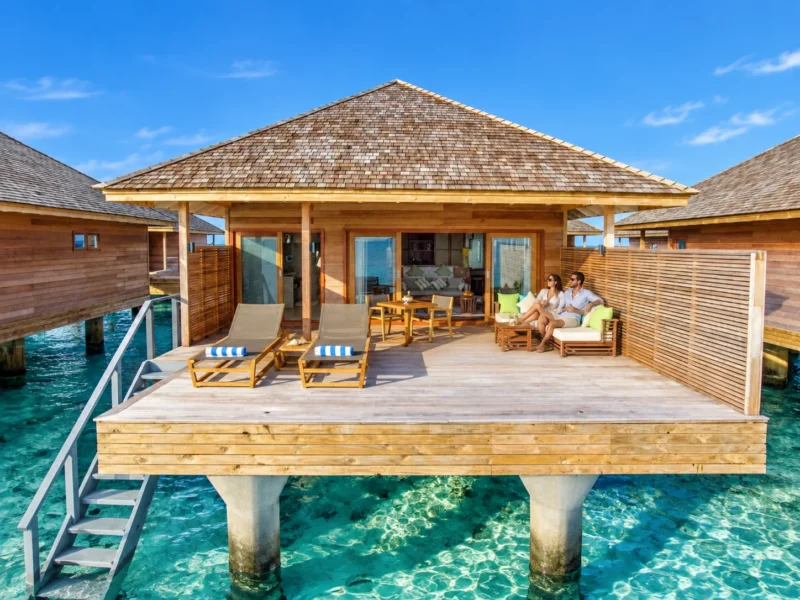
Likuliku Lagoon Resort: the Mamanucas’ quiet, adults-only side
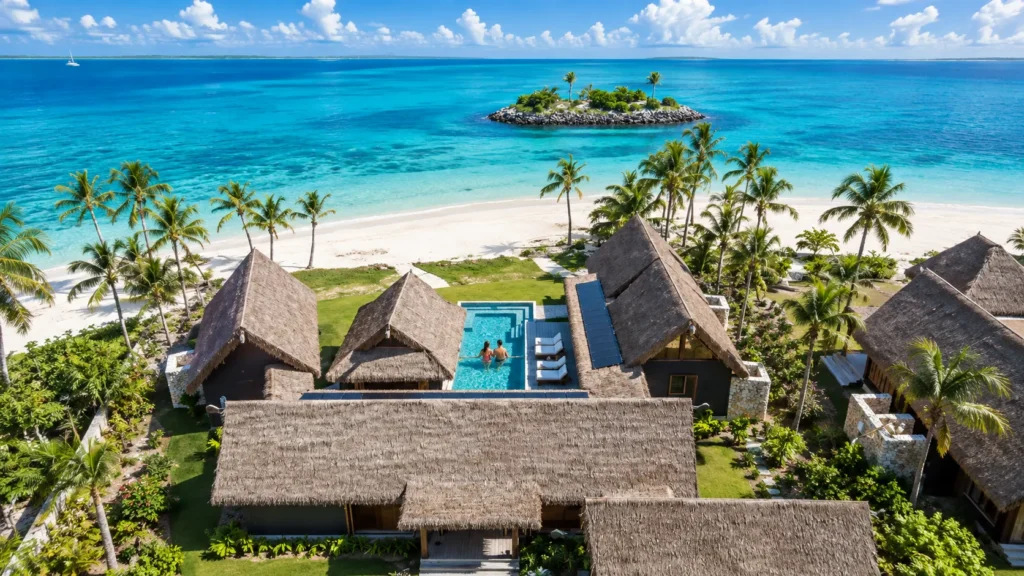
Likuliku is also on Malolo, yet it shows how different a Mamanuca stay can be depending on which bay you choose. It faces a protected lagoon on the island’s north coast, and its ten overwater bures, the first built in Fiji, stand over water too shallow and calm for passing boat traffic. The adults-only policy and full-board rates keep the mood quiet, so the region’s day-tripper bustle stays at a distance. South Sea Cruises catamarans call here three times a day, with a direct run of about 55 minutes, which shows how well the Mamanuca scheduled network serves even the quieter resorts.
- Best for: couples who want calm and overwater rooms without a long transfer
- Transfer: scheduled catamaran from Port Denarau (about 55 minutes direct), or private speedboat, seaplane or helicopter
- Rates: a Beachfront Bure for two starts at around US$1,050 a night in the quieter months (February and March are cheapest) and around US$1,200 in the June to October high season, with three meals a day but drinks and taxes extra
- Don’t miss: snorkelling the protected lagoon in front of the overwater bures
VOMO Island Fiji: the bridge between the two groups
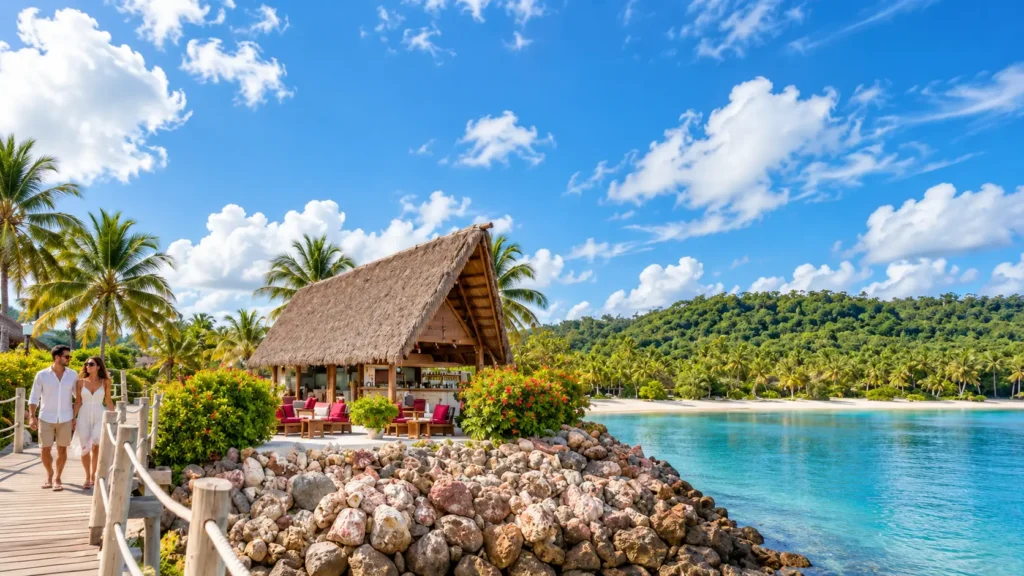
VOMO is usually listed as a Mamanuca resort, but it sits on the northern edge of the group, looking towards the Yasawas, and it feels like a preview of them. It is a private island with a steep hill to climb and a tiny satellite islet, Vomo Lailai, for picnics, so you get a little of the Yasawas’ height and solitude without their journey times. Getting there is still Mamanuca-easy: about 15 minutes by helicopter from Nadi airport, or a 20-minute drive to Vuda Point Marina and then around 35 minutes by speedboat. A kids’ village and multi-bedroom residences mean families can stay here too, which is harder further north.
- Best for: anyone who wants a taste of Yasawa seclusion with a Mamanuca-length transfer
- Transfer: helicopter from Nadi (around 15 minutes) or speedboat from Vuda Point Marina (around 35 minutes)
- Rates: Hillside Villas cost from around US$1,100 a night in low season (mid-November to mid-December and mid-January to March) and about US$1,350 in high season, covering all meals and soft drinks for two but not tax
- Don’t miss: the hike to the island’s summit, then sunset at the Rocks Bar facing Vomo Lailai
Good to know: both VOMO transfers are charters, not scheduled services, so they are booked through the resort and cost more than a seat on the public catamaran.
Yasawa Island Resort & Spa: the far north in full
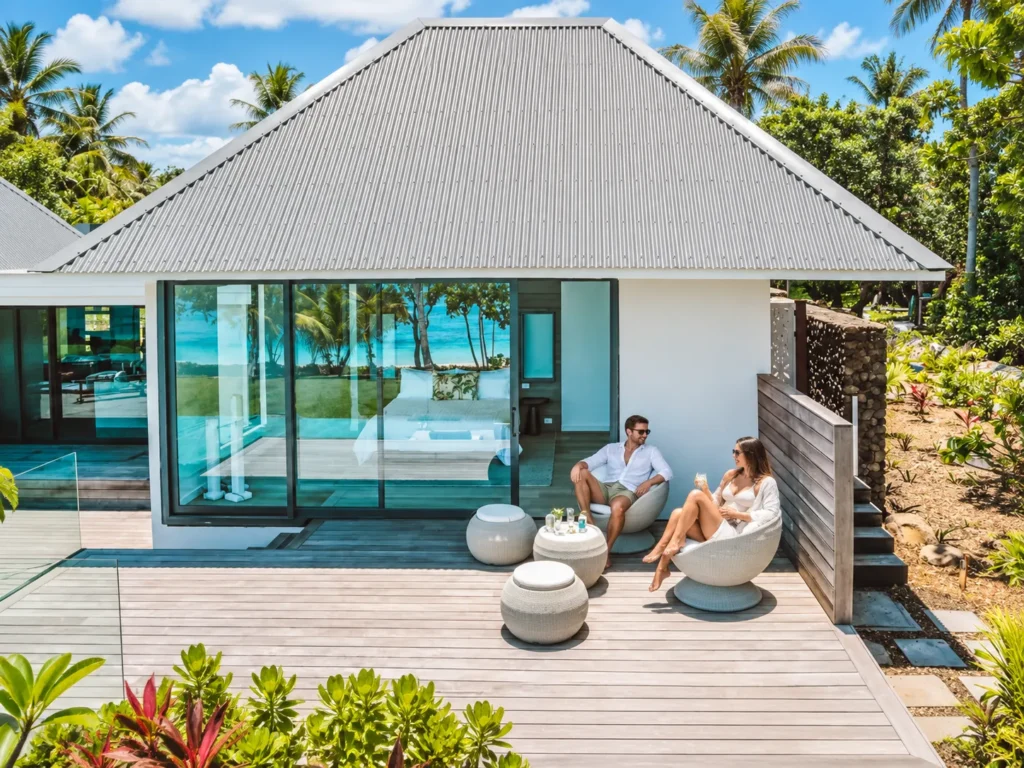
This resort is the clearest example of what the Yasawas offer and what they ask of you. It is the only resort on Yasawa Island itself, near the top of the chain, with 18 beachfront bures and a long run of empty beaches nearby. The Flyer would take most of a day to get this far, so the resort runs its own 30-minute flights from Nadi to a private airstrip, followed by a short drive; all transfers must be booked through the resort, and the daily flight time shapes your arrival and departure days. Full-board rates include most activities, which suits a region where there is nowhere else to go for dinner. Children under 16 are only accepted during set family weeks, which tells you how strongly the far north leans towards couples.
- Best for: couples and repeat visitors who want the remote Yasawas without a four-hour boat ride
- Transfer: resort-arranged flight from Nadi (about 30 minutes), then around seven minutes by road
- Rates: expect around US$1,100 a night per bure for two from November to March and roughly US$1,150 between April and October, with all meals and non-alcoholic drinks included; tax is added on top
- Don’t miss: a private beach picnic, included in the rate, on one of the island’s empty coves
Good to know: baggage on the light aircraft is limited to around 20–23kg per person, with excess charged per kilo, so leave extra luggage in Nadi.
Can you combine the Mamanucas and Yasawas?
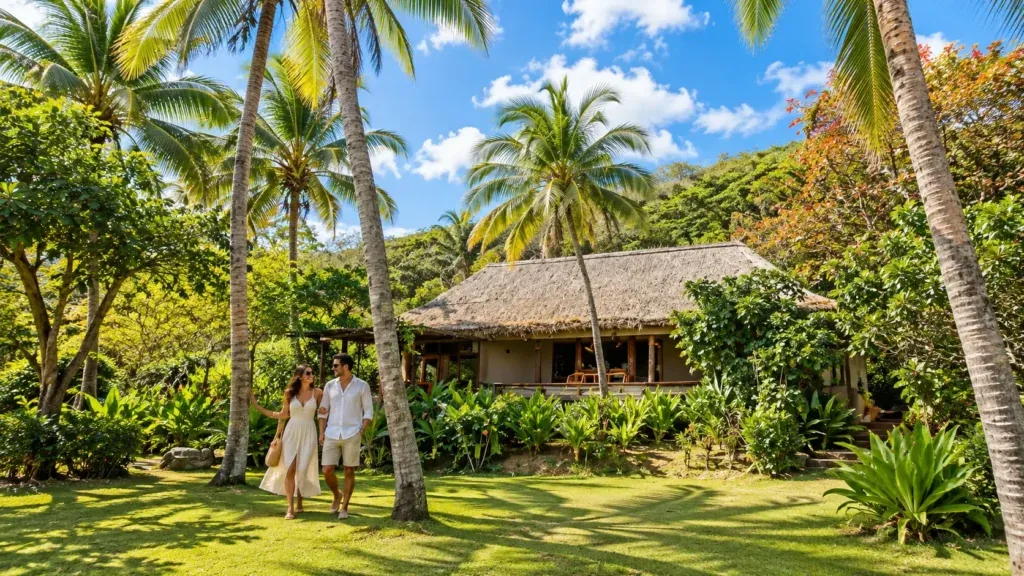
Yes, and the geography makes the order obvious: start in the Mamanucas, close to the airport, then move north to the Yasawas. That way the easy arrival absorbs any flight delay, and the quieter region comes at the end. The Yasawa Flyer stops at many Mamanuca resorts on its way north, so a scheduled link exists between the two groups. For high-end resorts reached by air, though, you will usually route back through Nadi, so check timings with both resorts before booking.
Watch your last day. If your Yasawa resort relies on a single daily flight or the morning Flyer, an early international departure may need a night near Nadi. Whether one region or two suits your trip length is a separate question, and my one island or two Fiji itinerary guide covers how to split the nights. If remoteness is what draws you to the Yasawas, the best private island resorts in the world and the private island vs luxury beach resort comparison are useful next reads.
Resort comparison
| Resort | Island group | Setting | Fastest transfer | Booking |
|---|---|---|---|---|
| Six Senses Fiji | Mamanucas (Malolo) | Busy, well-served island; pool villas and residences | Helicopter, about 15 minutes | Check rates |
| Likuliku Lagoon Resort | Mamanucas (Malolo) | Sheltered lagoon; adults-only, full board | Helicopter or seaplane; catamaran about 55 minutes | Check rates |
| VOMO Island Fiji | Northern edge of the Mamanucas | Private island facing the Yasawas | Helicopter, about 15 minutes | Check rates |
| Yasawa Island Resort & Spa | Northern Yasawas | Only resort on its island; 18 beachfront bures | Resort flight, about 30 minutes | Check rates |
The verdict
The Mamanucas are the better choice for most first visits: shorter, more flexible transfers, more resort styles, easy reefs and a clear advantage for families. Accept that you will share the lagoon with day boats, and choose your bay carefully if quiet is a priority. The Yasawas are the better choice when scenery and solitude are the point of the trip, and you are happy to plan around one daily boat or a small plane.
If I had to sum it up in one line: the Mamanucas are Fiji made easy, the Yasawas are Fiji made remote. With a week or less, I’d choose one group and stay put. With longer, start close to Nadi and finish in the north.
Some links on this page are affiliate links. If you book through them, Lagoon Edit may earn a commission at no extra cost to you. It never affects which resorts we recommend.